Strength isn't measured by how much you can withstand, but by how well you can adapt. As you face today’s challenges, choose to be Shinayakana. Bend with the pressure, keep your roots deep, and wait for the wind to die down; you’ll still be standing long after the oaks have fallen. Check back tomorrow for more timeless wisdom.
The most dangerous form of strength is the one that cannot adapt. In the volatility of modern times, where market shifts happen in nanoseconds and careers are redefined by a single algorithm update, rigidity is a liability. The Japanese proverb of the day, “The bamboo that bends is stronger than the oak that resists,” offers a masterclass in strategic yielding.
The oak tree uses its weight and stubbornness to stay strong during a storm, while the bamboo tree stays strong by being both flexible and rooted. For the modern professional, this isn't just poetic language; it's a plan for how to survive in a world that punishes those who don't give in.
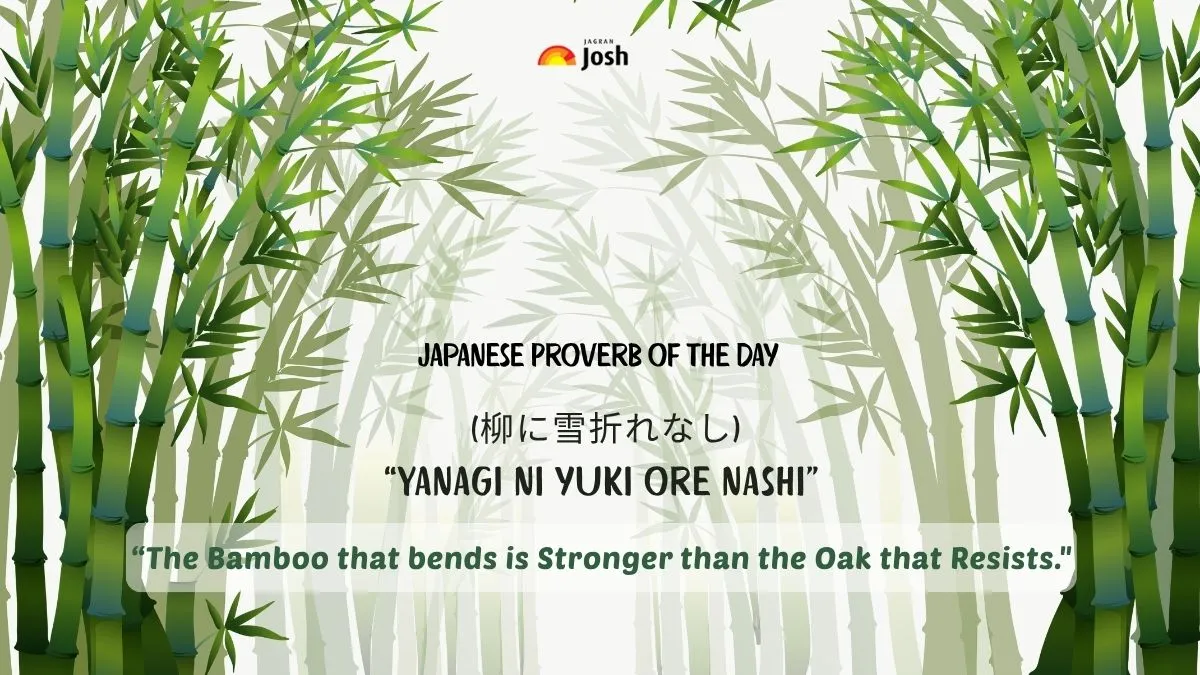
Japanese Proverb of the Day
Japanese Proverb: "Yanagi ni yuki ore nashi" (柳に雪折れなし)
Literal English Translation: “The Bamboo that bends is Stronger than the Oak that Resists."
Meaning of the Japanese Proverb “The Bamboo that bends is Stronger than the Oak that Resists."
This Japanese proverb dissects the paradox of power. We often conflate strength with resistance, yet nature proves that resistance often leads to catastrophic failure.
-
The Oak Logic: The oak tree invests its energy in becoming immovable. In a standard environment, it is dominant. However, because it cannot move with an external force, it reaches a breaking point where the wood must either hold or shatter.
-
The Bamboo Logic: Bamboo has hollow strength. It is very strong in tension but still flexible. Instead of taking the full force of the wind, it bends and lets the kinetic energy out.
In a philosophical sense, this teaches you that yielding is an active choice, not a passive surrender. It is the art of preserving your roots while letting the temporary storm pass over you.
Everyday Lessons from this Japanese Proverb in Modern-Day?
Application is the difference between a quote and a philosophy. Here is how you can implement bamboo strength today:
| Context | The Oak Response (Rigid) | The Bamboo Response (Flexible) |
| Corporate Strategy | Sticking to a 5-year plan despite a market collapse. | Using Agile methodologies to pivot resources monthly. |
| Social Discourse | Refusing to acknowledge new evidence to save face. | Practicing Intellectual Humility; updating your stance based on facts. |
| Skill Acquisition | Mastering one hyper-specific tool that becomes obsolete. | Developing a T-shaped skill set that adapts to various roles. |
| Personal Resilience | Assuming you must be perfect and breaking under pressure. | Embracing Kintsugi-style growth, learning from the bend and the break. |
What is the Origin History of this Japanese Proverb?
The cultural DNA of this proverb is found in the intersection of Zen Buddhism and the Bushido code. While the Oak vs. Willow/Bamboo trope exists globally, the Japanese interpretation focuses on the concept of Ju (softness/gentleness).
"A mind that is stretched by a new experience can never go back to its old dimensions. Like the bamboo, the warrior finds strength in the void." — Attributed to historical Zen teachings on combat.
Historically, this philosophy birthed Jujutsu (The Art of Softness). Samurai realized that if an opponent pushes, you don't push back; you pull, using their own momentum to topple them. This controlled yielding became a hallmark of Japanese tactical superiority during the Sengoku period.
Interesting Fact about this Japanese Proverb of the Day
In Japanese, the concept of being flexible or pliant is captured by the word Shinayakana (しなやかな).
The English word flexible can sometimes mean not structured, but Shinayakana means "elegance, grace, and tough resilience." It means that something is soft to the touch but can't be broken. Applying this to the proverb, it means that being supple in how you live makes you stronger, not weaker.
Read More Japanese Proverbs and Their Meanings Here!
"If you do not enter the tiger's cave, you will not catch its cub."
“Fall Seven Times, Stand Up Eight.”
"A Frog in a Well Knows Nothing of the Great Ocean."
“Tomorrow’s Wind will Blow Tomorrow."
"Even monkeys fall from trees."
Being strong isn't about how much you can handle; it's about how well you can change. As you deal with today's problems, choose to be Shinayakana. When the wind dies down, bend with the pressure and keep your roots deep. You will still be there long after the oaks have fallen. Come back tomorrow for more advice that will last.