Glacier Burst vs Cloudburst: What Is the Difference?
More than 800 people went missing in Nepal flash flood. Glacier burst and cloudburst can both trigger sudden floods in mountainous regions. Know the difference between a glacier burst and cloudburst, their causes and how they cause flash floods.
Heavy rainfall, melting glaciers and sudden water releases can cause devastating floods in mountainous regions. Two terms that are often confused are cloudburst and glacier burst. Both can cause flash floods, but they are very different natural phenomena. A cloudburst is an event involving extremely intense rainfall over a small area, while a glacier-related flood can occur when a glacial lake or glacier suddenly releases a huge volume of water or ice. Keep reading to know in detail.
What Is a Cloudburst?
A cloudburst is a sudden and extremely heavy spell of rainfall over a small area. It involves very intense rainfall in a short period. It usually affects a relatively small geographical area. It is more common in mountainous and hilly regions. The sudden rainfall can quickly fill rivers, streams and drains.
What Is a Glacier Burst?
The term glacier burst is commonly used to describe a sudden release of water or a collapse involving a glacier or glacial lake. A more precise scientific term is Glacial Lake Outburst Flood (GLOF) when a lake formed by glacier melt suddenly releases its stored water.
Glacier Burst vs Cloudburst
| Feature | Glacier Burst / GLOF | Cloudburst |
| Main Cause | Sudden release of glacial water or collapse of glacier/ice-rock mass | Extremely intense rainfall |
| Water Source | Glacial lake, glacier, or snow/ice | Clouds and atmospheric moisture |
| Rainfall Required? | Not necessarily | Yes |
| Main Hazard | Sudden flood carrying water, ice, and debris | Flash flood, landslide, and waterlogging |
| Location | Mainly high-altitude mountainous areas | Often mountainous areas, but can occur elsewhere |
| Speed | Can occur very suddenly | Rainfall can produce rapid flooding |
| Debris | Can contain large rocks, ice, and sediment | Usually water and sediment, with debris from landslides |
| Example | GLOF from a glacial lake | Intense rainfall triggering a flash flood |
How Does a Cloudburst Cause a Flash Flood?
A cloudburst can produce a large amount of rain in a very short time. Heavy rain falls over a small area. Mountain streams and rivers rise rapidly. The ground may not be able to absorb the sudden volume of water. Water rushes down steep slopes. It can carry soil, rocks and other debris. This can result in a flash flood.
How Does a Glacier Burst Cause a Flash Flood?
A glacier related flood works differently. A glacial lake stores a large amount of water. The lake may be held back by ice, rock or a moraine. Water is suddenly released. The flood moves rapidly through the valley. It can carry ice, rocks, mud and sediment.
Nepal Flood 2026: Was It a Cloudburst or Glacier Burst?
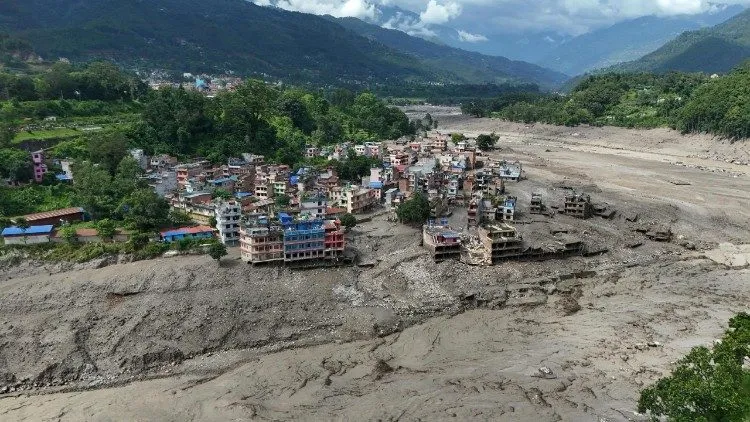
A major flash flood hit Nepal’s Rasuwa district on August 26, 2026, near the border with Tibet. The Bhote Koshi River and surrounding valleys were severely affected. The satellite analysis indicated that a large section of a glacier at around 5,200 metres altitude had broken away. The ice and rock mass crashed into the valley and generated a powerful surge of water and debris.

Jasreet Kaur is a journalist with over 3 years of experience in digital media and news content creation. She specializes in covering Trending News, including major National and International developments, with a focus on delivering accurate, engaging, and reader-friendly stories. Prior to this, she worked with Zee News as a Content Writer, where she gained extensive experience in news reporting and content strategy. Driven by curiosity, credibility, and a passion for impactful journalism, Jasreet aims to contribute to informed public discourse while supporting positive growth in organizations, society, and the world.