GK Questions and Answers on Coral Reefs Awareness
Test and expand your environmental knowledge with essential GK questions and answers on coral reefs. Learn key facts about marine ecosystems, coral polyps, threats like ocean bleaching, and effective conservation efforts to help protect these vital underwater habitats.
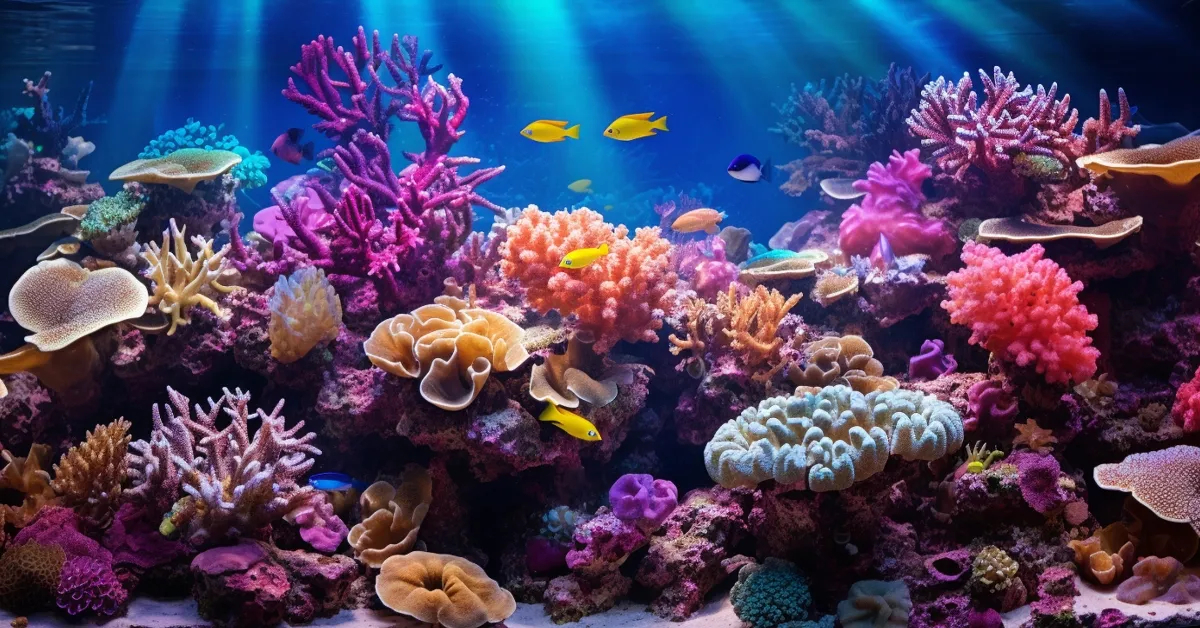
Ever wondered what those vivid, colourful plant-like or rock-like structures at the bottom of the sea are? Yes, they are known as coral reefs and are living beings too! Referred to as the “rainforests of the ocean", coral reefs support much marine life. From protecting coastlines from powerful waves to providing us with delicious seafood to creating medicines, they have many uses for humans. Unfortunately, due to pollution and increasing water temperature, they are being destroyed. Coral reef awareness is basically knowing about these underwater treasures and how to save them from becoming extinct. Feel like you are knowledgeable about these fascinating reefs? Try out this interesting trivia quiz and see how many you know. Can you complete the quiz and achieve a full score?
What are Coral Reefs and Why Do They Need Our Help?
Before we dive straight into our quiz, let's take a closer look at what coral reefs actually are and why spreading awareness about them is so super important today.
What are Coral Reefs?
Many people mistake corals for stones or sea plants, but actually, corals are small, soft-bodied organisms known as polyps. Polyps develop hard limestone skeletons to protect themselves from the dangers of the surrounding environment. After millions of years, many small skeletons form huge underwater towns, which are known as coral reefs.
The corals have a unique relationship with small organisms called zooxanthellae, who live within their bodies. Corals get their colours from the zooxanthellae, and they provide them with food, which is made by them through photosynthesis.
Why is Coral Reef Awareness Important?
- Cities of the Oceans: Despite covering only 1% of the total ocean floor area, coral reefs house 25% of all marine plants and animals, such as fish, turtles, and crabs!
- Natural Barriers: They are nature's gigantic sea barriers, absorbing the energy of huge ocean waves and defending coastal villages and towns from damage.
- Medicines and Livelihoods: A number of contemporary drugs use compounds derived from reef creatures, while countless local fishermen rely on them for their sustenance and income.
Unfortunately, under conditions of ocean warming or pollution, the stressed corals lose their symbiotic algae and become completely white.
This process is referred to as bleaching, and the coral colonies will die if the waters remain warm for an extended period of time. The increased awareness will help protect our oceans better!
Now that you know all the basics about the subject, let's find out how well you've learned the material!
GK Quiz On Coral Reefs Awareness
Q1. What are coral reefs actually made of, scientifically speaking?
a) Marine plants
b) Colonies of tiny animals called polyps
c) Underwater rocks and colourful minerals
Ans.: b) Colonies of tiny animals called polyps
Explanation: Though they seem to be colourful stones or even unusual plants, corals are indeed marine animals! These creatures consist of thousands of minute soft-bodied animals known as polyps, forming large colonies. They obtain calcium from the seawater and form their skeletons.
Q2. What is the name of the world's largest coral reef system, which can even be seen by astronauts from outer space?
a) Red Sea Coral Reef
b) New Caledonia Barrier Reef
c) Great Barrier Reef
Ans.: c) Great Barrier Reef
Explanation: The Great Barrier Reef lies along the coastline of Queensland in Australia and is known as the biggest living thing on Earth. This reef covers more than 2,300 kilometres, and it is so large that one can easily see it from outer space! There are numerous fish species living here.
Q3. What is the process called when corals get stressed by hot water and kick out their colourful algae, turning completely white?
a) Coral Bleaching
b) Coral Oxidation
c) Coral Melting
Ans.: a) Coral Bleaching
Explanation: The temperature in the oceans becomes too hot due to global warming, and the corals become stressed out. This causes them to expel the tiny organisms that provide them colour and food, making the corals turn white. If the temperature does not cool down, the corals die off due to starvation.
Q4. Why are coral reefs often given the popular nickname "Rainforests of the Sea"?
a) Because it rains heavily over the ocean where they grow
b) Because they support a massive variety of different animal life
c) Because they are covered in green water plants
Ans.: b) Because they support a massive variety of different animal life
Explanation: Tropical rainforests found on land are renowned for containing thousands of species of both flora and fauna. Likewise, coral reefs are known to be highly diverse areas. Although they constitute a very small part of the seafloor, one-fourth of the entire marine life depends on them for survival!
Q5. How do healthy coral reefs help protect human cities and villages living near coastal beaches?
a) By blocking ocean winds from coming onto land
b) By breaking the power of heavy storm waves before they hit the shore
c) By filtering all the salt out of ocean water
Ans.: b) By breaking the power of heavy storm waves before they hit the shore
Explanation: The coral reefs function like underwater speed bumps! Whenever there is an occurrence of any storm or cyclone in the sea, resulting in huge waves heading towards the coast, the irregular structure of the coral reef helps to absorb all the energy of the waves.
Q6. Which tiny microscopic organisms live inside corals in a friendly partnership, giving them food and bright colours?
a) Zooxanthellae
b) Plankton
c) Seaweed
Ans.: a) Zooxanthellae
Explanation: Zooxanthellae (zoo-zan-thel-ay) are minute algae found living inside the coral polyps. Zooxanthellae use the energy from sunlight to produce food through the process of photosynthesis and pass it on to the coral. The corals give them shelter and food in exchange.
Q7. What simple action can people living far away from the ocean do to help protect coral reefs?
a) Recycling plastic waste so it doesn't end up in the sea
b) Using extra water while washing dishes
c) Catching more fish from rivers
Ans.: a) Recycling plastic waste so it doesn't end up in the sea
Explanation: The plastic waste that is discarded on land ends up flowing into the river and finally to the ocean. Plastic bags and garbage suffocate the turtles and the corals because they block out the sunlight. The way to clean up our oceans is by minimising the use of plastic.

Kriti Barua is a skilled digital journalist and communications professional with 4+ years of experience, currently writing for the General Knowledge section at Jagran New Media. She has established herself as a subject matter expert in History, Geography, Trending National and International News, Sports, Science, and Defence, producing clear, reliable, and search-optimised content that connects with readers worldwide.
Kriti holds a BA degree from Delhi University and a one-year diploma in TV Production and Journalism, an academic background that adds research depth and strong storytelling instincts to her writing. Her experience spans brand writing, content marketing, and digital media, giving her a sharp understanding of what makes content both helpful to readers and visible in search.
At Jagran New Media, she applies this expertise to national and international news coverage, query-based articles, and in-depth pieces across her specialist subject areas. Her content is defined by easy language, factual accuracy, strong keyword strategy, and reader-friendly storytelling.


![[Official] BPSC 70th CCE Marksheet 2026 Live: बीपीएससी 70वीं सीसीई मार्कशीट bpsconline.bihar.gov.in जारी, लॉगिन क्रेडेंशियल से करें डाउनलोड](https://img.jagranjosh.com/images/2026/July/2272026/BPSC-70-th-CCE-Marksheet-2026.jpg)