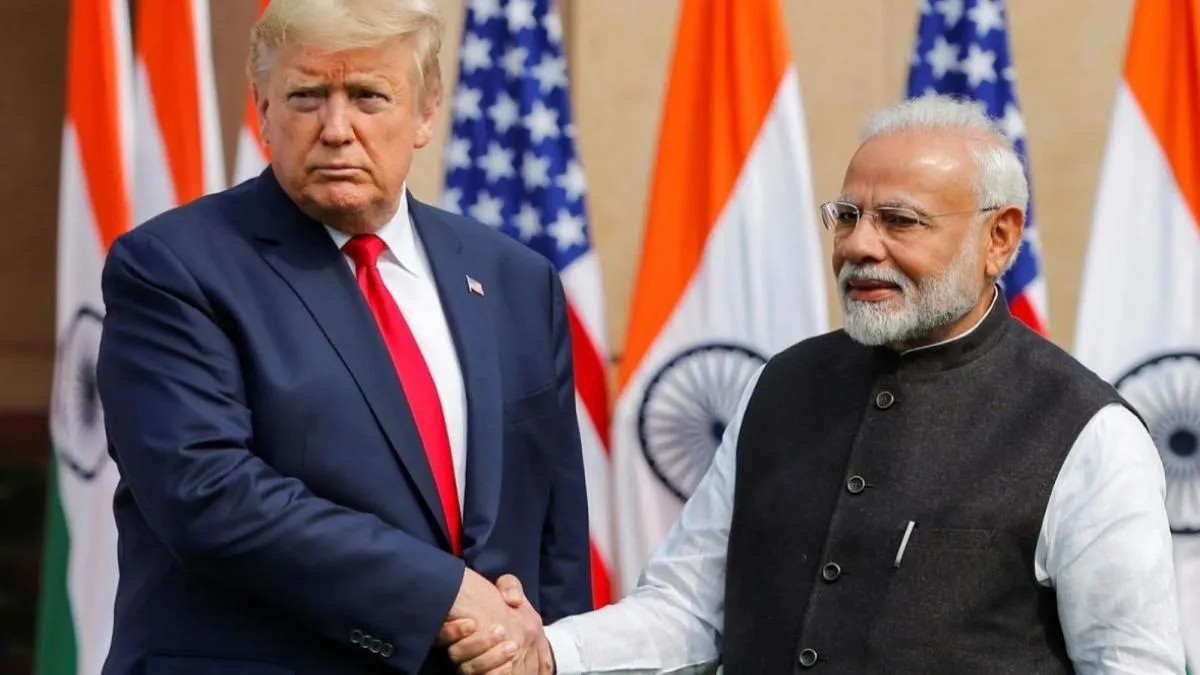
Former President of the United States Donald Trump spoke with Prime Minister of India Narendra Modi on the phone about a range of issues, including potential bilateral cooperation and recent developments related to the strategic Strait of Hormuz.
The call came during an upward trend towards global emphasis on using the sea for security and accessing energy supply lines that run through the narrow body of water connecting the Persian Gulf with the Arabian Sea.
High-level meetings like this one often do not contain detailed notes regarding what was said but reflect continued cooperation regarding geopolitical stability, economic interests, and military alignment between countries.
Therefore, this phone call, combined with other recent US - India phone calls and meetings which also addressed regional security and global economic issues(as well as tensions in the Middle East), deemed; a very good example of how important it has become for the US and India to work together.
Check Out: Top 7 U.S. Cities That Require the Highest Salaries in 2026
What Did Trump and PM Modi Discuss?
1. Bilateral Cooperation
President Donald Trump and Prime Minister Narendra Modi spoke about working to strengthen bilateral cooperation between the United States and India.
Some areas of cooperation included military alignment, defence, and economic cooperation. The two leaders expressed their commitment to strengthening diplomatic relationships; enhancing collaboration in technology, trade, and regional security was one focus of their conversation.
2. Security of the Strait of Hormuz
A significant amount of their conversation was dedicated to the security of the Strait of Hormuz as one of the most critical choke points for shipping in the world.
Both leaders shared their concerns about safe navigation through the Strait since it is so critical for the global flow of energy.
The leaders discussed their desire for peace and stability in the region, in order to preserve access to shipping lanes.
3. Energy and Trade Stability
Leaders recognized the importance of ensuring uninterrupted energy flows across the Strait of Hormuz.
Any disruption or interruption of such energy flows would negatively impact global oil prices and supply chains as well as India's reliance on energy imports.
Therefore, this issue impacts not only India but also global stability from a trade perspective.
4. Regional Geopolitical Environment
Leaders discussed a broad range of geopolitical developments that are affecting the wider Middle East region, including how rising tensions in that area can affect maritime security and instability globally.
Additionally, both leaders agreed that it is critical that there is a coordinated response to rising tensions in an effort to avoid escalation and maintain peace in the region.
5. Strategic Partnership Perspective
The engagement provided for ongoing future development of the long-term United States -India strategic partnership.
Each leader believes their nations have common interests in defence cooperation, as well as Indo-Pacific security and collaboration in the fight against terrorism.
They believe that their mutual desire to collaborate to maintain a stable global order and to work together more closely to address both global challenges and new security threats reasserts the importance of their two countries’ working together.