Key Points
- Feb 13, 2026: Aurora visibility best in Alaska; possible in northern US states.
- Optimal viewing time: 10 PM-2 AM local time, away from city lights.
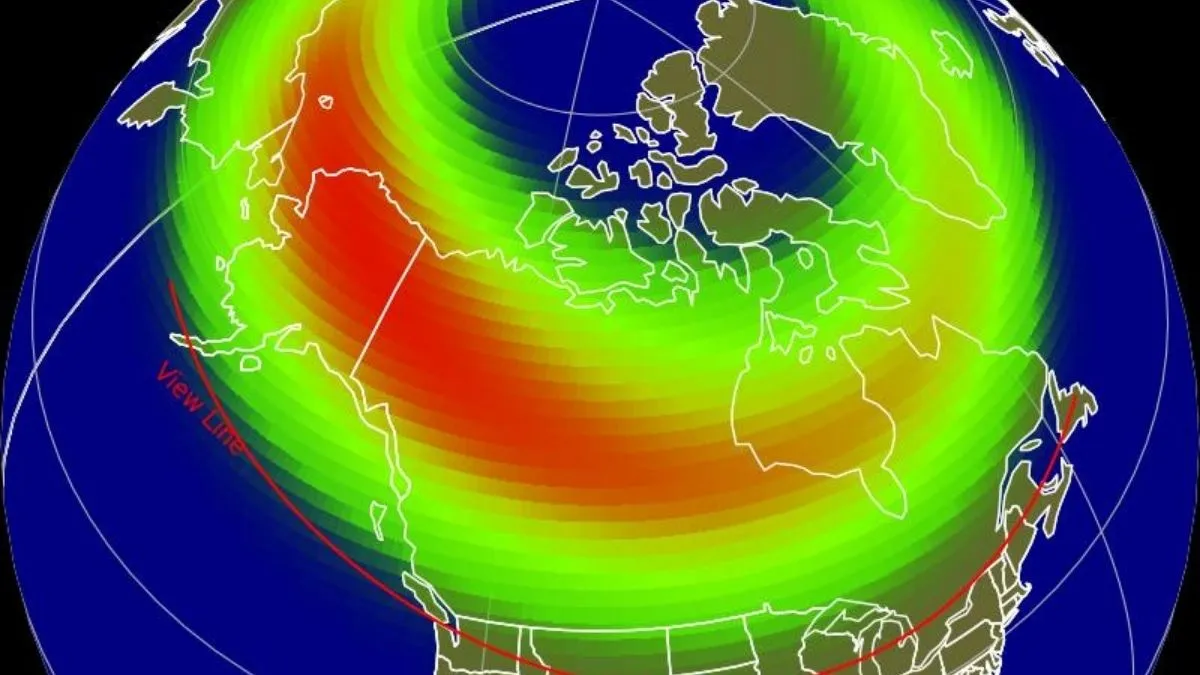
- Kp index indicates aurora confined mostly to Alaska and Canada.
The Aurora Borealis forecast for tonight, Friday, February 13, 2026, remains a top priority for stargazers as the Sun’s Solar Maximum phase continues to trigger frequent geomagnetic disturbances.
According to the latest data from the NOAA Space Weather Prediction Center (SWPC), the Earth is currently navigating a period of moderate solar wind following a series of significant X-class flares earlier this month.
While the current Kp index is inclining toward a calm 2 or 3, residual energy from active sunspot region AR4366 keeps the possibility of a viewline shift alive for northern-tier residents.
To capture the best of the northern lights tonight, you should head away from city lights between 10:00 PM and 2:00 AM local time.
Where are the Best Places to See the Northern Lights Tonight?
Visibility for the aurora is highly dependent on the viewline, a boundary mapped by NOAA that indicates how far south the lights may be visible on the horizon. For tonight, the most promising viewing locations for the Aurora Borealis remain in the high-latitude states.
-
Alaska: Always the premier destination; Fairbanks and Nome expect high visibility under clear skies.
-
Minnesota and North Dakota: The Voyageurs region and the Canadian border areas have a 15-20% chance of horizon glows.
-
Montana and Washington: High-altitude areas near Glacier National Park may see faint green hues if the Kp index spikes.
-
Maine: The Aroostook County area remains the best bet for East Coast observers.
| US State | Likely Visibility | Recommended Viewing Time |
| High / Overhead | 11:00 PM – 3:00 AM | |
| Low / Horizon | 10:00 PM – 1:00 AM | |
| Low / Horizon | 10:00 PM – 1:00 AM | |
| Very Low | Midnight |
Understanding the Kp Index and Your Viewing Chances
What causes the northern lights to dip further south into the U.S.? It all comes down to the Kp index, a scale from 0 to 9 used to characterize the magnitude of geomagnetic storms.
-
Kp 1-3: Aurora is confined mostly to Alaska and Canada.
-
Kp 5 (G1 Storm): The lights may reach Michigan, Maine, and Washington.
-
Kp 7+ (G3 Storm): The aurora can be seen as far south as Pennsylvania or Oregon.
Official sources like the Aurora Dashboard (Experimental) indicate that while we aren't currently in a G-scale storm, the rapid growth of sunspots suggests a "flare factory" environment where conditions can change in under an hour.
Also Read - Northern Lights vs Southern Lights: What’re the Key Differences?
Expert Tips for Catching the Aurora Borealis Tonight
Check the Weather: Cloud cover is the Aurora Killer. Ensure you have clear skies using local satellite maps.
Use Your Phone: Modern smartphone cameras can often see the aurora before the human eye can. Use a Night Mode or a 3-5 second exposure.
Look North: Unless a massive solar storm is underway, the lights will appear as a faint green or red glow on the northern horizon.
WATCH: Geomagnetic Storm Category G1 Predicted
— NOAA Space Weather Prediction Center (@NWSSWPC) February 12, 2026
Highest Storm Level Predicted by Day:
Feb 13: None (Below G1) Feb 14: None (Below G1) Feb 15: G1 (Minor)
Issue Time: 2026 Feb 12 1455 UTChttps://t.co/ZbtuNtJdza
The Aurora Borealis forecast is still changing as we get closer to the weekend. Tonight is a good time to see the far north, but Solar Cycle 25 is still changing, so a surprise CME (Coronal Mass Ejection) could light up the sky at any time. Keep an eye on NOAA alerts for updates in real time.



Comments
All Comments (0)
Join the conversation