Key Points
- The Statue of Liberty represents Libertas, the Roman goddess of freedom.
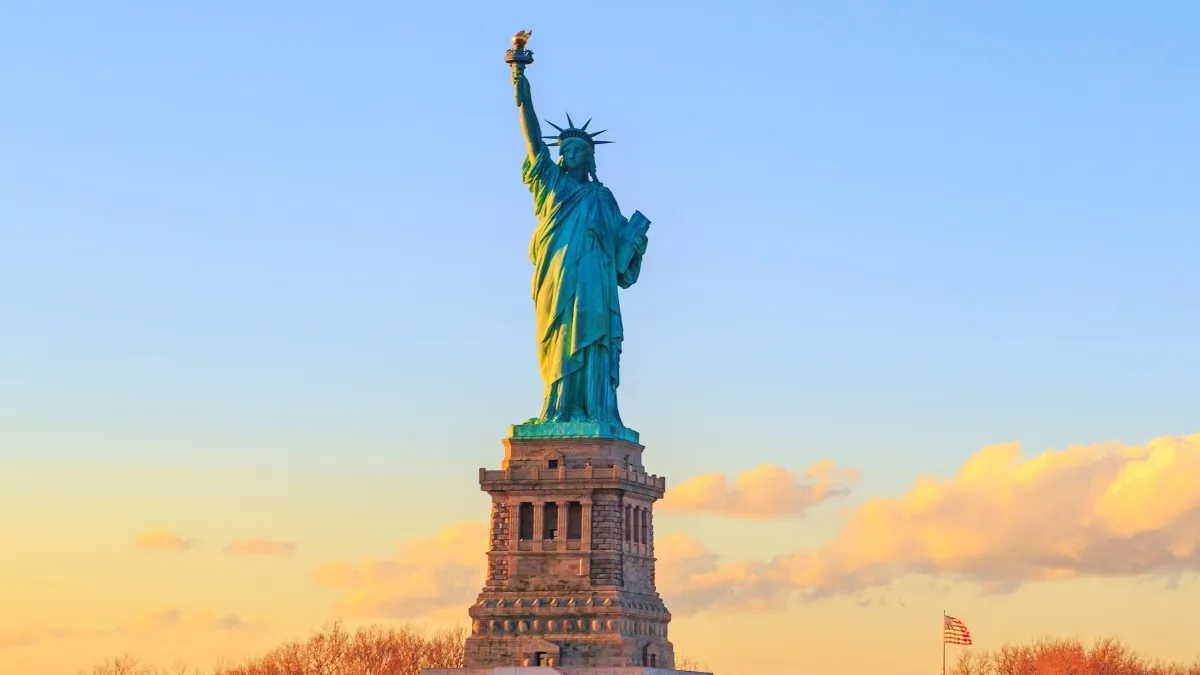
- The Statue of Liberty is green because of the patina.
- The Statue of Liberty turned into a green patina in 30 years
The Statue of Liberty is not just a monument but a symbol of enlightenment and the American Declaration of Independence. It represents Libertas, the Roman goddess of freedom, in a robe holding a torch and a tablet.
The Statue of Liberty was designed by French sculptor Frédéric Auguste Bartholdi and built by Gustave Eiffel.
The Statue of Liberty was a gift from France in 1886, symbolizing friendship. It was shiny brown in color, like a penny, when it was unveiled. This change in color transformed a shiny statue into an iconic statue that is recognized globally.
According to the National Park Service, the Statue of Liberty is clad with 62,000 pounds of copper sheets that are only 3/32 of an inch thick.
Read this article below to find out Why the Statue of Liberty is Green, its original color and the time behind the color changes.
Why is the Statue of Liberty Green?
The Statue of Liberty is green because of the patina. It is a shield that developed when the copper exterior oxidized in response to the air, rain, and salt in the New York Harbor.
The reason why the Statue of Liberty has changed colors is that the exterior is layered with copper sheets that are very thin, numbering in the hundreds.
The Copper sheets reacted with air to form a patina or verdigris. The verdigris protects the metal from corrosion and degradation, which is why copper, brass, and bronze statues are so long-lasting.
Starting shiny in 1886, the copper dulled quickly in the industrial harbor. By the early 1900s, green spread fully, embraced as natural beauty despite early repaint debates.
What Color was the Statue of Liberty Originally?
The Statue of Liberty originally had a bright reddish-brown color, like a new penny, due to its pure copper sheets hammered in France. It was first unveiled in this color in 1886.
First, it turned pinkish due to cuprite, then dark brown-black due to tenorite. This transition was captured in public photos.
How Long did the Statue of Liberty Take to Turn Green?
The Statue of Liberty turned into a green patina in 30 years. It was largely achieved between 1916-1920 by chemical weathering, hastened by harbor conditions.
Rain-splashed areas turned green first, while protected areas took longer.
Pollution from coal factories introduced sulfates, accelerating brochantite growth. Colorized photographs show the torso green by 1906 and the head by 1920.
Key stages:
-
1886-1890s: Red-brown to chocolate brown.
-
1900-1910: Black streaks with green patches.
-
1920 onward: Uniform blue-green stabilized.
Do you know Who Designed the Statue of Liberty?
Will the Statue of Liberty Change color again?
The patina is now stable and protects the copper well, so there will be no dramatic color shift under today’s clean air regulations, such as the 1970 Clean Air Act.
There may be slight toning from acid rain, but it heals by itself.
The 1986 restoration cleaned up loose flakes, allowing new even patina to grow green. It is expected to remain that color for centuries.
| Timeline Stage | Years Post-1886 | Dominant Color Notes |
| Fresh Copper | 0-5 | Shiny reddish-brown |
| Initial Oxidation | 5-20 | Dull brown, pink hints |
| Green Transition | 20-30 | Patchy to full blue-green |
| Stable Patina | 35+ | Iconic enduring green |
Solve this GK Quiz On the Statue of Liberty With Answers here.
The green patina on the Statue of Liberty resulted from the intelligent chemistry of copper, turning a French gift into America’s eternal symbol of freedom. This natural shield demonstrates that beauty comes out of change, encouraging everyone to appreciate science in the radiance of history.



-1770106590108.jpg)

Comments
All Comments (0)
Join the conversation