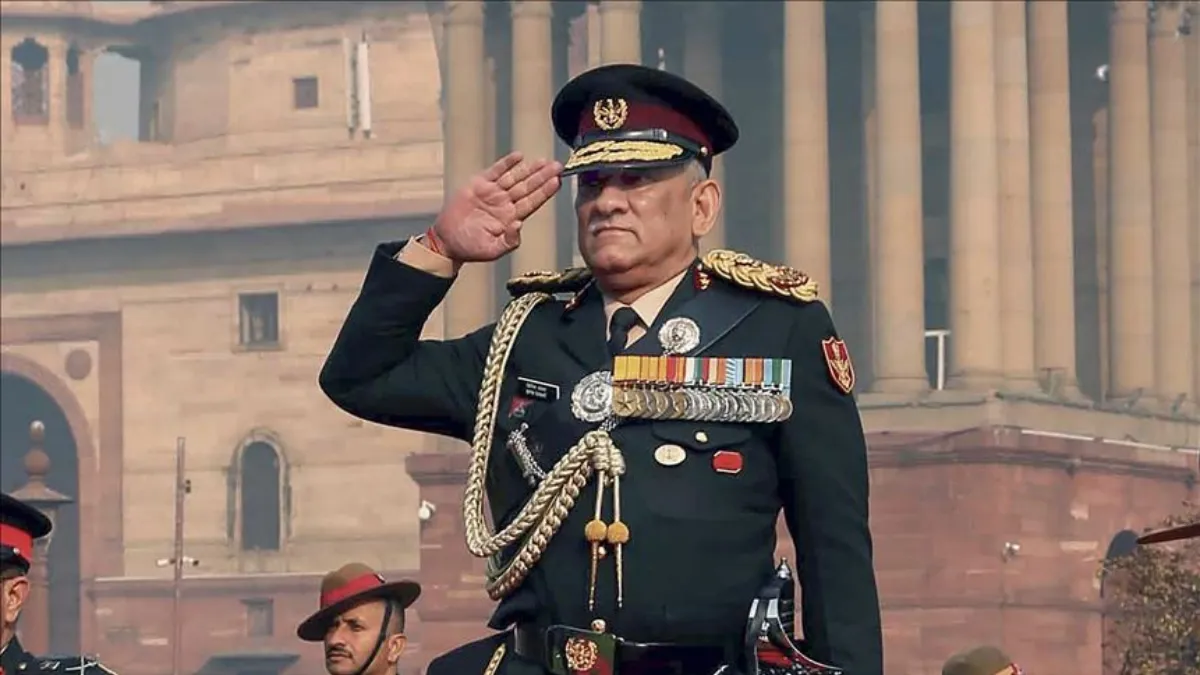
On January 15, 1949, the country's history was made by General Kodandera Madappa Cariappa (K. M. Cariappa) who was the first Indian to assume the position of Commander-in-Chief of the Indian Army, replacing British General Sir Roy Bucher, born January 28, 1899.
This was a critical shift that signaled the end of colonial military leadership 18 months after the Independence which represented the Indian sovereignty of its armed forces during the Partition havoc and the 1947-48 Kashmir War.
The four years of Cariappa (1949-1953) provided the basis of a disciplined, secular, and self-reliant Army and obtained him the coveted Field Marshal rank in 1986 - one of only two Indians, along with Sam Manekshaw.
General K. M. Cariappa: Early Life and Military Rise
Cariappa was born to a government official in the family of Kodagu, Karnataka, and Cariappa went against family opposition and joined Central College, Bangalore, before winning the British Indian Army entrance in 1919.
Joining the 88th Carnatic Infantry, he served in WWII in Iraq, Syria, Iran, and Burma and became the first Indian to lead the troops (1942). He was in the Army as the Deputy Chief of General Staff in 1947, which led him to manage the Army division in Partition; he had to redistribute 260,000 people fairly regardless of communal riots.
He became a promoted Lieutenant General in 1947 and led Western Command in the first Indo-Pak War, regaining Zojila Pass to connect Srinagar-Leh.
Mission as Commander-in-Chief
Cariappa assumed leadership on January 15, 1949 at an age of 50, being chosen among others such as General Shinagesh and General Nathu Singh. Key challenges:
-
Incorporation of princely forces of the state.
-
Modernization of equipment after the WWII excess.
-
Creating nation-first ethos in a caste/regional fracture.
He introduced the Guards Brigade (1949) and Parachute Regiment (1952) - the first ever all-India recruiting formations - and placed great emphasis on training officers at the Indian Military Academy.
IN CASE YOU MISSED| List of Top 6 Longest Ruling Queens in World History
Key Reforms and Legacy
Military Vision:
-
Stress on physical health, knowledge of English, and anti-corruption.
-
Slogan: Do to every soldier as you would your own son.
-
Innovated border road system and mountain warfare.
After Retirement: High Commissioner to Australia/New Zealand (1953-56); made Field Marshal (1986). Passed away May 15 1993; Cariappa Day in Karnataka.
Awards: OBE, mentions-in-dispatch (4), Padma Vibhushan (posthumous).
The appointment of Cariappa on January 15 gave birth to Indian Army Day, which is commemorated with Delhi Cantonment parades. There are statues at Coorg and Delhi and his sportsmanship is commemorated with Cariappa National Cricket Stadium.
His original field survives amid the theme of Networking& Data Centricity of 2026, in the 1.4 million Indian force, whether on Siachen missions or UN missions.
Field Marshal Cariappa was a lead by example role model, and switched a colonial heritage into an Indian steel cage.
ALSO READ| Top 10 Kings and Queens Who Defined Indian History

-1768222025659.jpg "What is the Bhairav Commando Battalion?")




Comments
All Comments (0)
Join the conversation