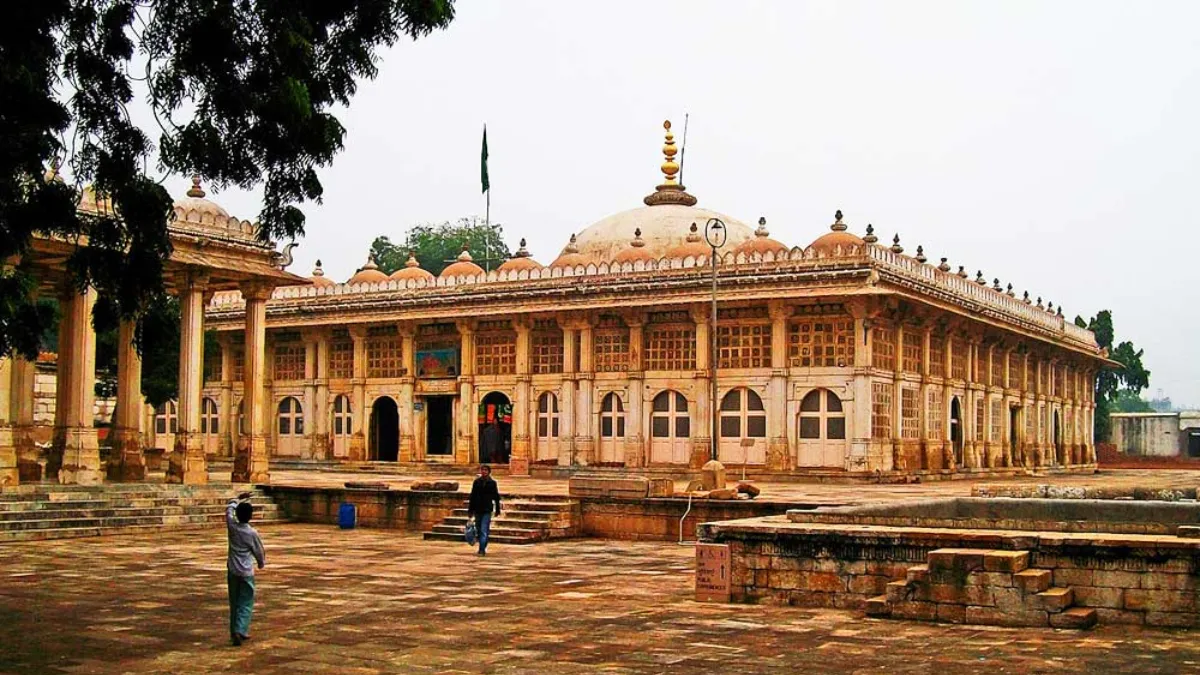
The largest urban center in Gujarat and the fifth most populous in India, Ahmedabad is known as the Manchester of India because of its leading presence in the cotton textile trade, just like the tradition of industrialization in Manchester, England - the former cotton milling capital of the world.
The city is situated along the river Sabarmati and it has more than 500 textile mills and denim products worth 25 percent of the total in India; it is an important economic factor with exports of approximately ₹50,000 crore a year.
Its informal name was coined by industrialists, Ambalal Sarabhai and Kasturbhai Lalbhai in the early 20th century, in a reference to the fast industrialization of Ahmedabad after the first mill in 1861.
What is the Textile Boom History of Ahmedabad?
The textile history of Ahmedabad started with the Shahpur Mill (1861) and 33 mills by 1900 which were powered by:
-
Closeness to the cotton belt of Gujarat (Kutch, Saurashtra).
-
Sabarmati climate is humid and good for spinning/weaving.
-
Rail access and port access through Kandla in British times.
By Independence, it was competing with Mumbai as the Cottonopolis of India with 1 lakh employees. During the Naroda and Vatva powerloom clusters maintained their lead even after mills were closed, following liberalization after 1991.
ALSO READ| Which River Is Known As The Diamond River Of India?
Why "Manchester of India"? Key Similarities
| Aspect | Ahmedabad (India) | Manchester (England) |
| River Location | Sabarmati (dyeing-friendly) | Irwell/Mersey |
| Core Industry | Cotton textiles (25% national denim) | Cotton mills (19th C global leader) |
| Industrial Start | 1861 (Shahpur Mill) | 1781 (Arkwright Mill) |
| Workforce | 5 lakh+ direct/indirect | Peak 500,000 mill workers |
| Modern Role | Denim/garments export hub | Post-industrial culture/tech |
Both cities leveraged water-powered machinery and raw material access.
Economic Profile and Current Status
-
Textile Cluster: The biggest powerloom center in Asia; it has 1.2 million powerlooms that produce 60 million meters per day.
-
GDP Contribution: ₹2.5 lakh crore (district); 14% Gujarat GSDP.
-
The Major Manufacturers: Arvind Ltd (the 4th largest denim manufacturer in the world), GTEX, Rajesh Exports.
-
Export: US/EU markets; ₹1.2 lakh crore turnover (2025).
Other "Manchesters" in India
| Nickname | City | Specialty |
| Manchester of India | Ahmedabad | Cotton textiles |
| Manchester of South India | Coimbatore | Cotton/spinning |
| Manchester of North India | Kanpur | Woollen/leather |
| Manchester of Deccan | Solapur | Cotton/silk |
In addition to mills, Ahmedabad is a mixture of the historic (UNESCO-recognized old city, Sabarmati Ashram) and the contemporary (GIFT City fintech hub). Metro 8.9 million people; India first World Heritage City. Problems: Dyeing unit pollution, urban sprawl.
It is enhanced by festivals such as Navratri and kite festivals. Ahmedabad, the commercial capital of Gujarat, is continuing with the tradition of textile production but has adopted pharma, gems, and IT (₹20,000 crore sector).
WHAT'S NEXT| Which River Is Known As The Old Man River?



-1767073462439.jpg)
-1768241794469.jpg)
-1768222025659.jpg)
Comments
All Comments (0)
Join the conversation