Since Independence in 1947, India has had a colourful and palpitating political history, with leaders emerging from all regions of the country.
The head of government, the Prime Minister, is the most important person involved in creating and implementing India’s domestic and international policies.
Over the years there have been states that have significantly contributed to India’s political leadership more than others.
The number of Prime Ministers a state has produced is often a reflection of its political culture, history, and role in the national arena.
By examining which state in India has produced the greatest number of Prime Ministers, we gain an appreciation for regional politics and identify areas with a longstanding contribution to governance in India.
Check Out: What Is NYT Connections? The New York Times Puzzle Game Explained
Which Indian State Has Produced the Most Prime Ministers?
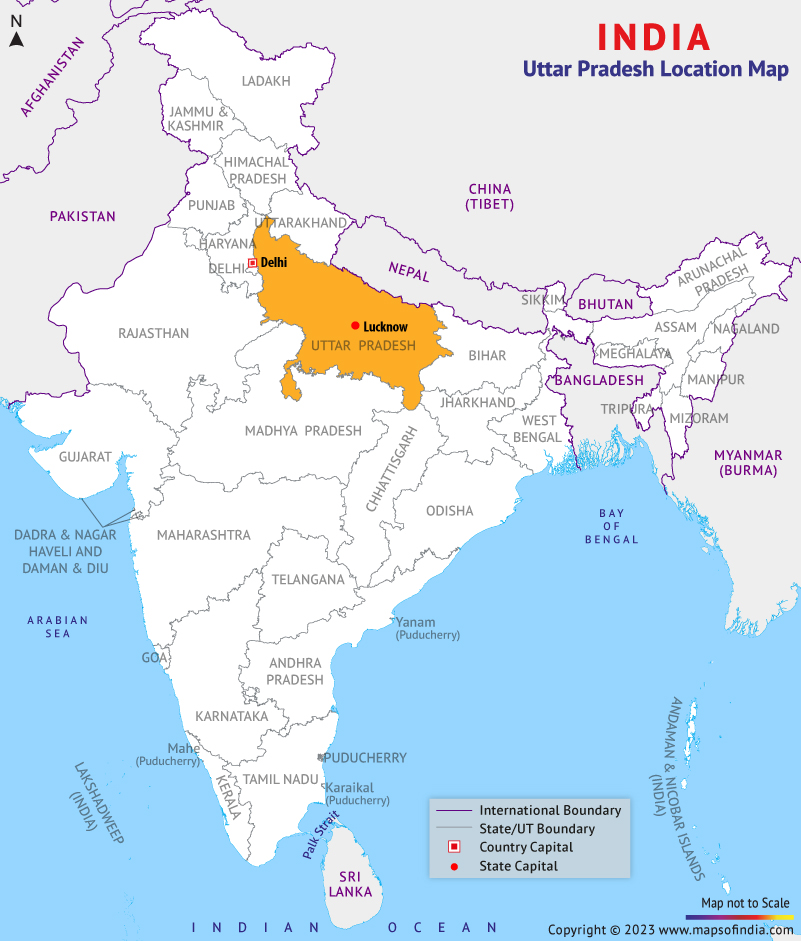
Source: Maps of India
Uttar Pradesh has produced the most Prime Ministers in India, making it the top-ranked state that has producedten Prime Ministers after independence.
Uttar Pradesh is home to many of India's most important political leaders, such as Jawaharlal Nehru, Indira Gandhi and Atal Bihari Vajpayee.
Uttar Pradesh is a major political state in the Indian political domain due to its population, historical significance to India's independence and current political influence.
These reasons remain critical for making Uttar Pradesh an important political state in India today.
Top 5 Prime Ministers from Uttar Pradesh
1) Jawaharlal Nehru
Nehru was the first Prime Minister of India, serving from 1947 to 1964.
He was a major leader of the independence movement and was instrumental in building and establishing the Democrat institutions of India, its Industrial base, and foreign policy.
He strongly believed in science and the advancement of science, by focusing on IND B ishowingmodernity through education.
Thus, Nehru had a major part to play in laying the basis for the Political and Economic growth of India through scientific advancement and through education.
2)Indira Gandhi
Indira Gandhi is the only female Prime Minister of India (1966-1977, 1980-1984) that has served in these roles. Indira Gandhi was known for being a strong leader with a centralized government.
She played an important role during this time in the Green Revolution, nationalizing banks, and shaping India's foreign policies. Indira Gandhi's time as prime minister is viewed as one of the most significant times in Indian politics.
3)Atal Bihari Vajpayee
Atal Bihari Vajpayee served as Prime Minister three times with the most widely recognized term being from 1998 to 2004.
He has been revered for his oratory abilities, statesmanship, and economic reform. He helped strengthen India's position in the world, led the nation in conducting nuclear tests, and led the improvement of infrastructure through projects like the Golden Quadrilateral highway project. The impact of his leadership can still be felt today.
4) Charan Singh
Charan Singh was Prime Minister of India for a short time between 1979 and 1980. As a champion of farmers and rural areas, he worked to create agrarian reform and support agricultural development among rural Indians.
Although his time in office was brief, Charan Singh's policies emphasized the importance of agriculture in the Indian economy.
5) V. P. Singh
V. P. Singh served as the Prime Minister of India from 1989 to 1990. V. P. Singh is well-known for enacting the recommendations of the Mandal Commission concerning the provision of reservations for backward classes and combatting corruption in his administration.
Singh's leadership instigated numerous social reform initiatives and greatly changed the socio-political climate of India despite only being Prime Minister for approximately 1 year.


-1770293202448.jpg)
Comments
All Comments (0)
Join the conversation