What is the Strongest Metal on Earth?
The determination of the strongest metal on Earth will depend on the criteria used to measure strength. Among all natural metals, the one that ranks first is a metal with a tensile strength of 1,510 MPa and a melting point of 3,422°C.

The answer to which material is the strongest in the world will depend on the different physical criteria, such as tensile strength, yield strength, hardness, impact strength, and other factors.
Using various criteria in the definition, tungsten can be referred to as the strongest metal that exists on Earth because of its incredible tensile strength and very high melting point of about 3,422°C. It is very hard because of its density and hardness.
In the case of man-made alloys, however, steel alloy metals are considered to be the strongest metals due to their superior strength compared to tungsten. Titanium, on the other hand, is the metal with the highest strength-to-weight ratio. This discussion proves the fact that strength depends on various physical characteristics.
Which is the Strongest Metal on Earth?
The element known as tungsten is the strongest element in existence because of its great tensile strength, which stands at 1,510 MPa, and its impressive melting point of 3,422 degrees centigrade (6,192 degrees Fahrenheit), higher than any other metal.
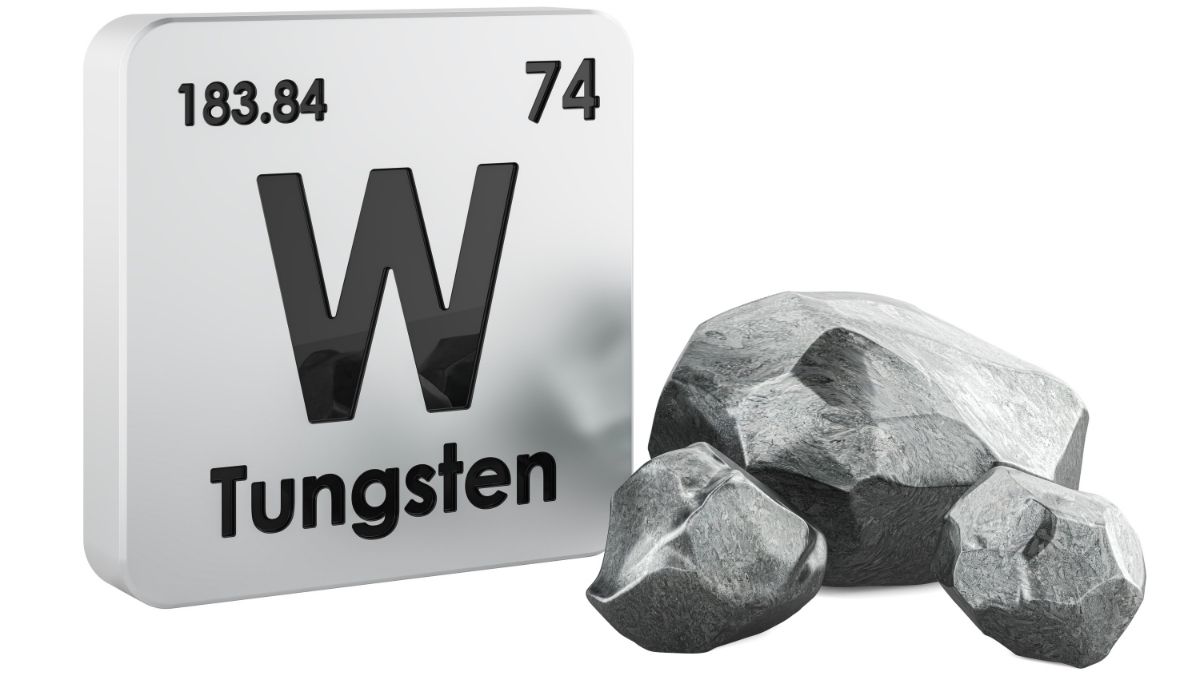
Found in the eighteenth century, tungsten has been used extensively in various fields such as filaments for bulbs, cutting tools, military guns, and space technology. Although there are a number of metals produced by humans that outshine others in particular situations, no pure metal beats tungsten in any way.
List of 5 Strongest Metals on Earth
| Rank | Strongest Metal Name | Tensile Strength (approx.) | Highest Melting Point |
| 1 | Tungsten | 1,510 MPa | 3,422°C (6,192°F) |
| 2 | Steel (Alloys) | 400 – 2,500+ MPa* | ~1,370 – 1,540°C |
| 3 | Chromium | 689 MPa | 1,907°C (3,465°F) |
| 4 | Titanium | 434 – 1,200 MPa | 1,668°C (3,034°F) |
| 5 | Tantalum | 285 – 900 MPa | 3,017°C (5,463°F) |
Note: High-carbon and Maraging steel alloys can exceed 2,500 MPa, far surpassing pure metals.
1. Tungsten
Tungsten is the strongest pure metal on earth. Tungsten is a very strong metal with high metallic density and hardness because of its crystal structure. It is known as the hardest metal in terms of its tensile strength, reaching 1,510 MPa, and the highest melting point of any metal, reaching 3,422°C or 6,192°F. Tungsten was discovered in 1781, and its name comes from the Swedish word 'tung sten' meaning "heavy stone." It is used in military shells, aircraft components, machining tools, light bulbs, filaments, and X-ray devices.
2. Steel
Steel, an alloy consisting of iron and carbon, which might have chromium, nickel, or cobalt, is the most widely used metal in the world. Steel is the main component for buildings, roadways, cars, and machinery. Depending on its structure and heat treatment, it can be made to reach tensile strength of more than 2,500 MPa, making it stronger than any other pure metal. Among all steel kinds, Maraging Steel is considered to be the strongest one and is commonly used in planes, missiles, and measuring instruments.
3. Osmium
It is said that osmium is the heaviest element of all those found in nature, having a density value of 22.59g/cm3. Despite having less tensile strength than the other elements, it has greater strength with respect to mechanical strength, compressive strength, and wear resistance. Since osmium is the least occurring and most expensive metal in existence, it is available in small quantities in platinum ores and sands of rivers. Because of its very high strength, osmium can be used to manufacture fountain pen tips, electrical contacts, and scientific instruments.
4. Titanium
The titanium metal is known to have the highest strength-to-weight ratio among all other metals, with a tensile strength value of 1,400 MPa, and it weighs 45% lighter than that of steel. Moreover, this metal is known to be extremely versatile, owing to its ability to resist heat, being resilient, and being non-reactive to chemicals. The first individual who discovered this metal is Reverend William Gregor, an Englishman. This metallic material, being silver in color, has applications in several fields like aircraft, military, medicine, sports equipment, and shipbuilding.
Also Read - What is the Scientific Name of Onion?
What Qualities Make Tungsten the Strongest Metal on Earth?
The metal tungsten becomes the hardest metallic element in the world thanks to an exceptional combination of characteristics:
-
Strength: It has a tensile strength of 1,510 MPa, exceeding that of any other pure metal by far; even iron, with a tensile strength of 540 MPa, does not match the strength of tungsten, while copper, with 210 MPa, is much softer.
-
Melting Point: The melting point of tungsten is the highest among all the metals: 3,422°C (6,192°F). Therefore, this material forms an important component in jet engines, rocket engines, nuclear reactors, and incandescent lamps.
-
Hardness: Its hardness level is between 7.5 and 8.5 on the Mohs scale, which makes it very resistant to scratches. As tungsten carbide, formed together with carbon, tungsten nearly reaches the hardness level of diamonds.
-
Density: It equals the density of gold, 19.3 g/cm³. It means that the atoms are compacted so densely that the metal gets enormous momentum; therefore, it serves well as an armor-piercing projectile.
Check Out - Which City in Known as the Burning City of India?
One can easily determine what the best metal on Earth is, depending on certain properties such as tensile strength, density, and weight-to-strength ratio. While tungsten is one of the best in terms of tensile strength and melting point, steel beats tungsten in terms of strength. However, the hardest metal on the planet is chromium, while osmium is the densest, and titanium is the strongest metal per unit weight.

Harshita Singh specializes in US affairs and general knowledge, simplifying intricate geopolitical and historical subjects into clear, digestible insights for learners. Holding a BA (Hons) in English from the University of Delhi and with over three years of experience in educational writing, she produces authoritative, thoroughly researched content that empowers readers to engage confidently with global current affairs. For inquiries, you can reach out to her at harshita.singh@jagrannewmedia.com.


