Key Points
- Nigersaurus, a 30-foot herbivore, lived ~110 million years ago and had over 500 teeth.
- Named in 1999 by Paul Sereno, remains were found between 1965-1972 by Philippe Taquet.
- It replaced teeth every 14 days and used its unique mouth to vacuum up vegetation.
When you think of dinosaur teeth, your mind likely jumps to the terrifying, bone-crushing daggers of a Tyrannosaurus rex. However, the title for the most peculiar dental arrangement belongs to a much gentler giant.
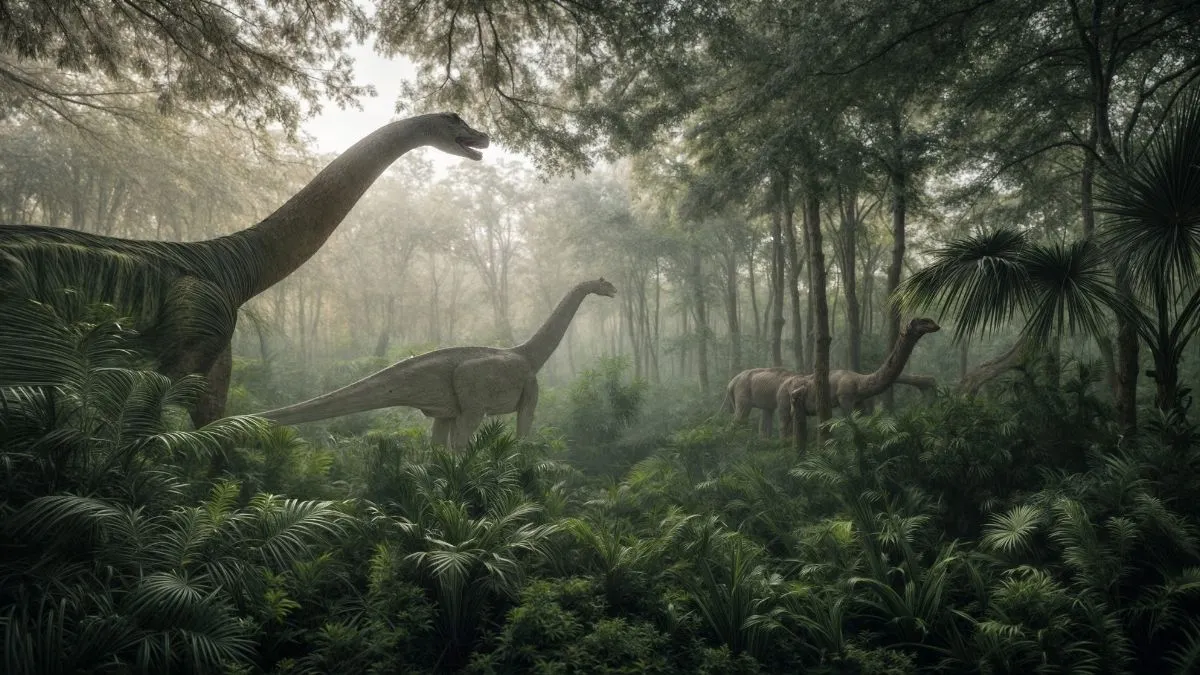
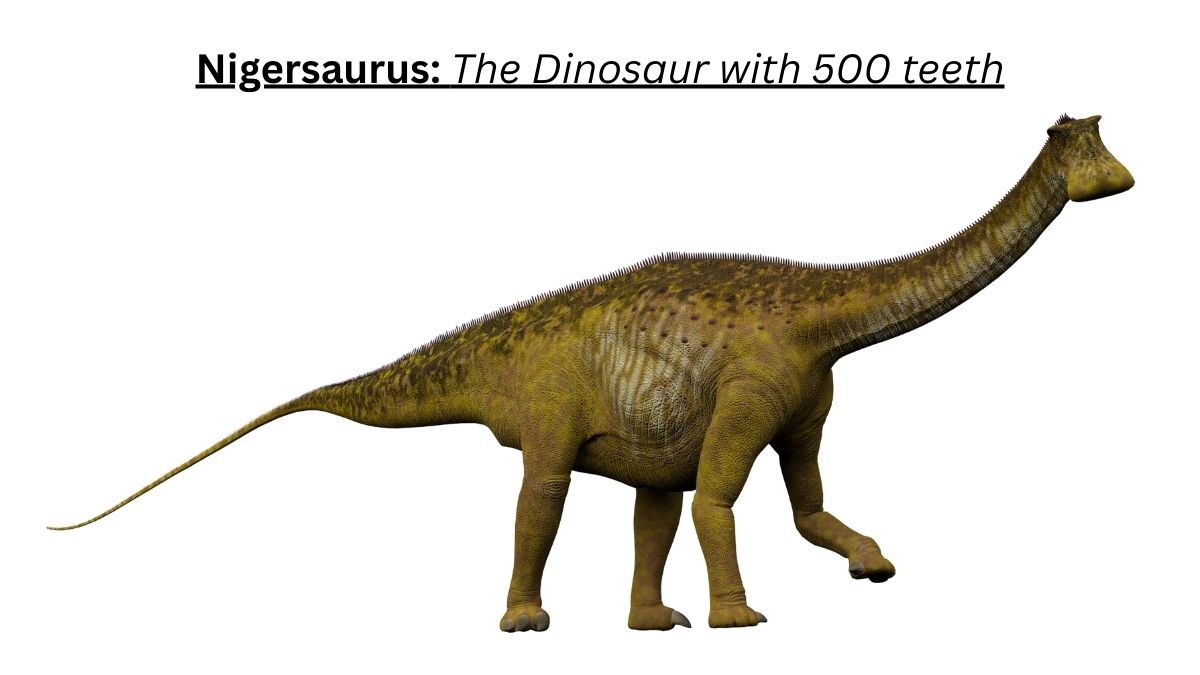
The Nigersaurus, a 30-foot-long herbivore that lived approximately 110 million years ago, has become a digital sensation for its staggering 500+ teeth.
Commonly dubbed the Mesozoic Cow, this creature didn't use its teeth to hunt; instead, it acted as a prehistoric lawnmower. Unlike other long-necked dinosaurs that reached for the treetops, recent paleontological studies and CT scans reveal that the Nigersaurus spent its days with its head tilted toward the ground, vacuuming up ferns and horsetails. With a jaw wider than its skull, it is the only known tetrapod to have a mouth that functioned like the intake of a modern vacuum cleaner.
Which Dinosaur has 500 Teeth?
The dinosaur with 500 teeth is officially known as Nigersaurus taqueti. It belongs to the sauropod family, the same group as the massive Brachiosaurus, but it was much smaller, roughly the size of a modern African elephant.
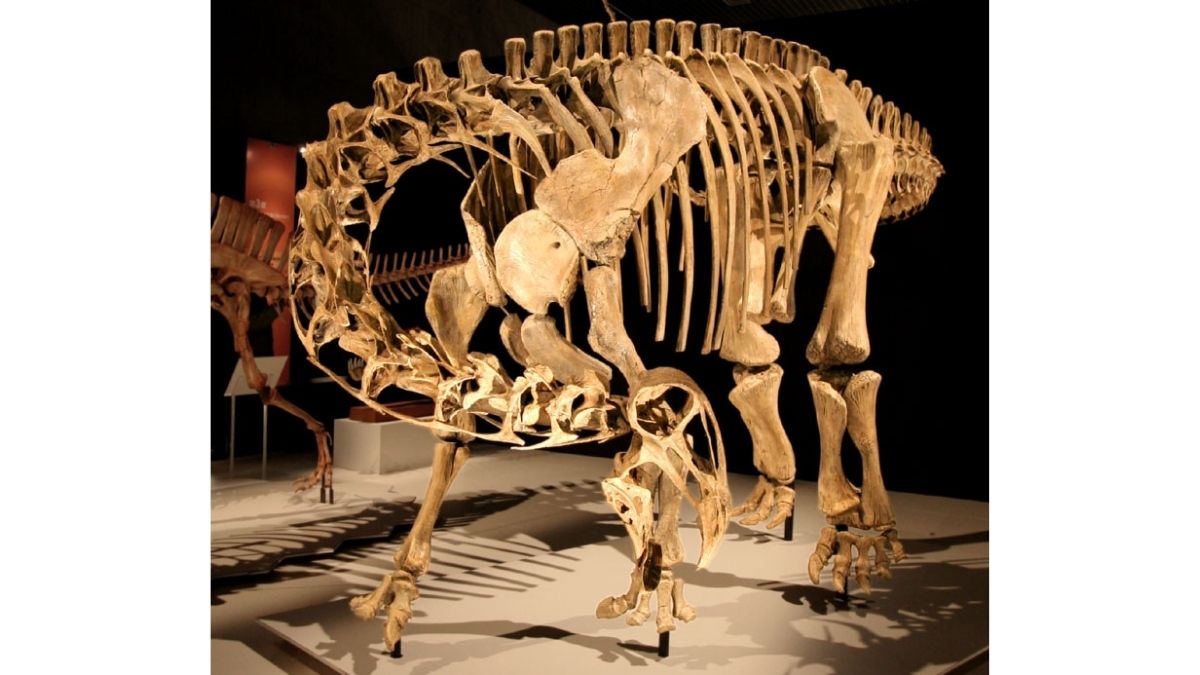
Skeleton of Nigersaurus in a museum. Courtesy - Wikimedia
According to National Geographic and Paul Sereno’s research, here are the key dental facts:
-
The Dental Battery: It didn't just have one row of teeth. It possessed a dental battery where columns of teeth were stacked behind one another.
-
Tooth Count: There were about 60 columns in the upper jaw and 68 columns in the lower jaw.
-
Rapid Replacement: It holds the record for the fastest tooth replacement. It grew a new set of teeth every 14 days.
-
Structure: The teeth were needle-like and perfectly aligned at the very front of its mouth to clip vegetation at ground level.
Also Read - List of Top 5 Smartest Dinosaurs of the Mesozoic Era: Ranked
Who Named Nigersaurus?
The Nigersaurus was officially named and described in 1999 by the renowned American paleontologist Paul Sereno and his team. However, the first remains were actually discovered decades earlier, between 1965 and 1972, by French paleontologist Philippe Taquet.
To honor Taquet’s early work in the Republic of Niger, Sereno chose the specific name Nigersaurus taqueti. The genus name literally translates to Niger lizard, referencing the country of its discovery.
Sereno's team later used CT scans to reconstruct the fragile, feather-light skull, which was so thin that light could pass through the bones.
How to Pronounce Nigersaurus
The pronunciation of this dinosaur has caused significant debate online, but there is a clear phonetic standard used by the scientific community. It is named after the country Niger, which follows the French pronunciation of the region.
Correct Phonetic Pronunciations:
-
Standard English: Nye-jer-SORE-us (rhymes with tiger)
-
Scientific/French-influenced: Nee-zhayr-SORE-us (similar to the pronunciation of the country Niger)
Note: Experts recommend avoiding ‘Nig-er-saurus’ to prevent confusion with offensive slurs and to stay true to the geographical namesake.
Check Out - List of 9 Animals with the Hardest Shell (and Armour) in the World
While the Nigersaurus is famous for its 500 teeth, it technically isn't the dinosaur with the most teeth; that record belongs to Hadrosaurs (duck-billed dinosaurs), which could have up to 1,000. However, the Nigersaurus remains the most unique for its front-loading, vacuum-style dental array.




Comments
All Comments (0)
Join the conversation