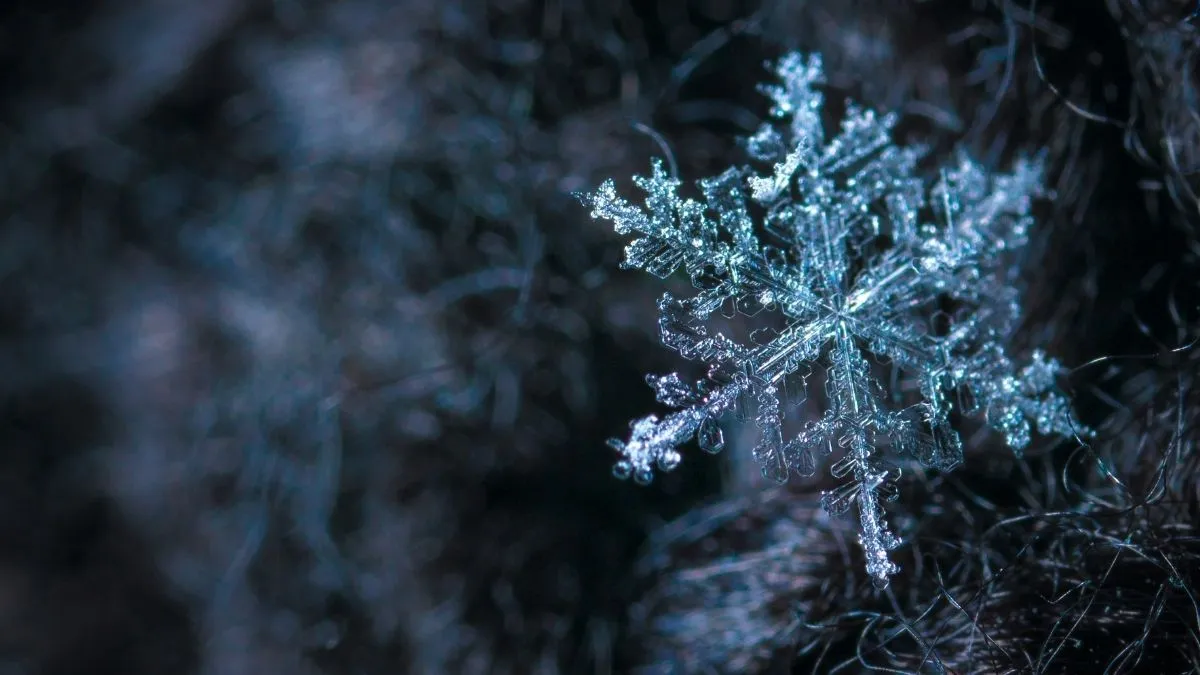
Key Points
- Snowflakes form when supercooled water vapor freezes around particles in clouds.
- Temperature and humidity dictate snowflake shape; needles form around -5 to -10°C.
- No two snowflakes are alike due to varying atmospheric conditions.
What are snowflakes? Every winter, the world gets a shower of white, delicate crystals from space that turn the ground into a winter wonderland. But how many of us have really thought about how complicated this common thing is on a microscopic level? There is a fascinating scientific story behind the simple beauty of a snowfall that has to do with physics, temperature, and humidity.
Researchers have been fascinated by the incredible variety of these frozen water crystals for a long time. Studies keep showing that their structure can change in almost any way. From the air above the Bahamas to the poles, the water vapor that forms snow may have traveled around the world, adding a global context to this local phenomenon.
So, let’s sit back and learn what snowflakes are and about the intricate shape of snowflakes, which can turn a simple snow day into a profound moment of scientific appreciation.
What are Snowflakes?
A snowflake is not a frozen raindrop; rather, it is a cluster of tiny ice crystals, sometimes as many as 200, that fall from a cloud. They begin when supercooled water vapor freezes around a microscopic speck of dust or pollen in the atmosphere, the nucleus.
This initial formation occurs in clouds where the temperature is below freezing. As the crystal falls, it grows by attracting more water molecules from the surrounding air, leading to its eventual visible size and shape.
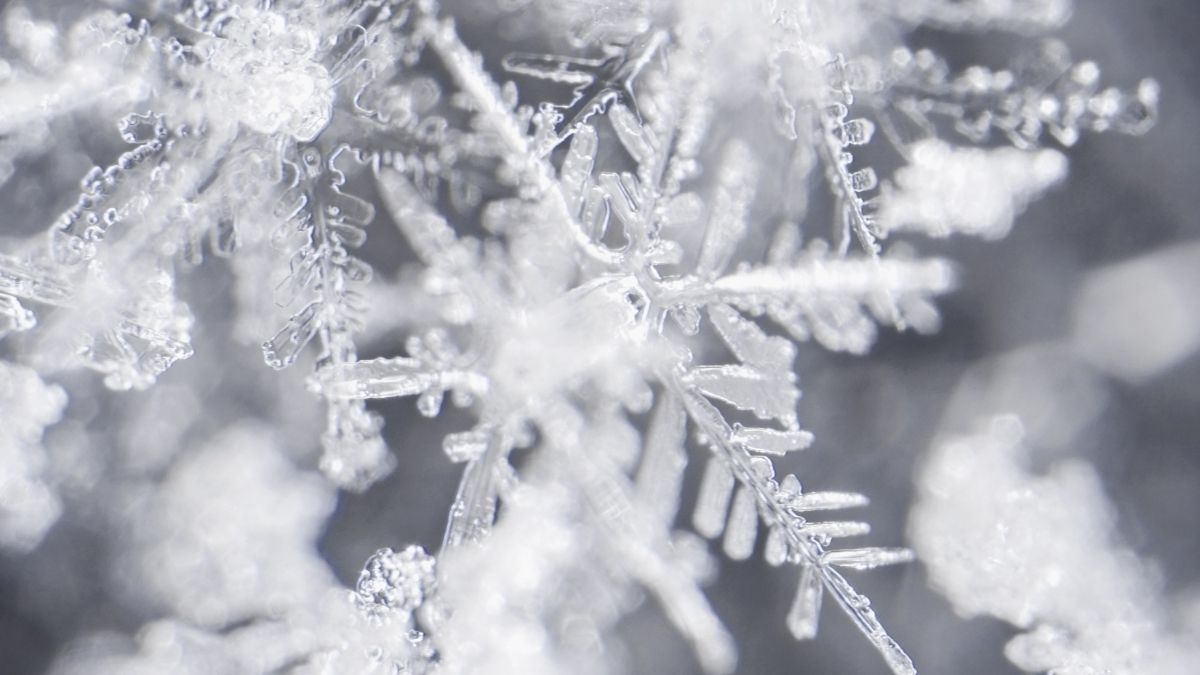
Close-up image of real snowflakes
How do Snowflakes get Their Shape?
The shape of a snowflake is mostly determined by how the temperature and humidity change as it falls through the air.
Temperature's Role: Different temperature ranges cause crystals to form in different shapes:
-
Between -5 and -10 degrees Celsius, needles start to form.
-
At temperatures between -12°C and -16°C, plates and stellar crystals (the classic six-branched shape) form.
Role of Humidity: More water vapor in the air makes growth faster and more difficult, which results in structures that are more complex and branched. On the other hand, lower humidity makes growth easier and more compact.
Do You Know - When was the Year without a Summer? Know What Caused It
How many Sides do Snowflakes have?
A snowflake is made up of six sides, or "arms," of a single ice crystal. This is because of how ice molecules are put together. When water molecules freeze, they stick together in a rigid, repeating pattern that makes a hexagonal (six-sided) lattice structure. When water molecules stick to the growing crystal, they do so at the same 120-degree angle. This keeps the snow crystal's six-fold symmetry.
Why are no two Snowflakes alike?
Scientists say that the saying "no two snowflakes are alike" is mostly true. A typical snowflake has about a quintillion (1018) water molecules in it.
Every snowflake has its own winding path from the cloud to the ground. The temperature, humidity, and air currents change a little bit along the way.
These little changes in the environment decide where and how each new water molecule attaches, which makes an endless number of growth patterns.
Even though two snowflakes may look the same to the naked eye, their molecules are almost always different.
Also Read - List of Top 7 Animals that Turn White in Winter: Revealed
What is the Color of Snow?
Despite the fact that snowflakes are made of clear, transparent ice crystals, snow appears white to the human eye. This is a trick of light and science. The millions of ice crystals and air pockets in a snowpack have very complex surfaces that scatter all the colors of visible light, including red, green, blue, and everything in between, equally. Because it reflects all colors back to the observer, the snow looks like pure white light.
Check Out - When does Winter Start and End in the U.S. in 2025?
The next time it snows, remember that you are seeing a beautiful display of weather conditions, where tiny changes in temperature and moisture create an endless gallery of geometric art. We may be able to predict the exact conditions for the biggest and most complicated stellar dendrites in the future thanks to improvements in atmospheric modeling. This would make us appreciate these natural ice formations even more.



Comments
All Comments (0)
Join the conversation