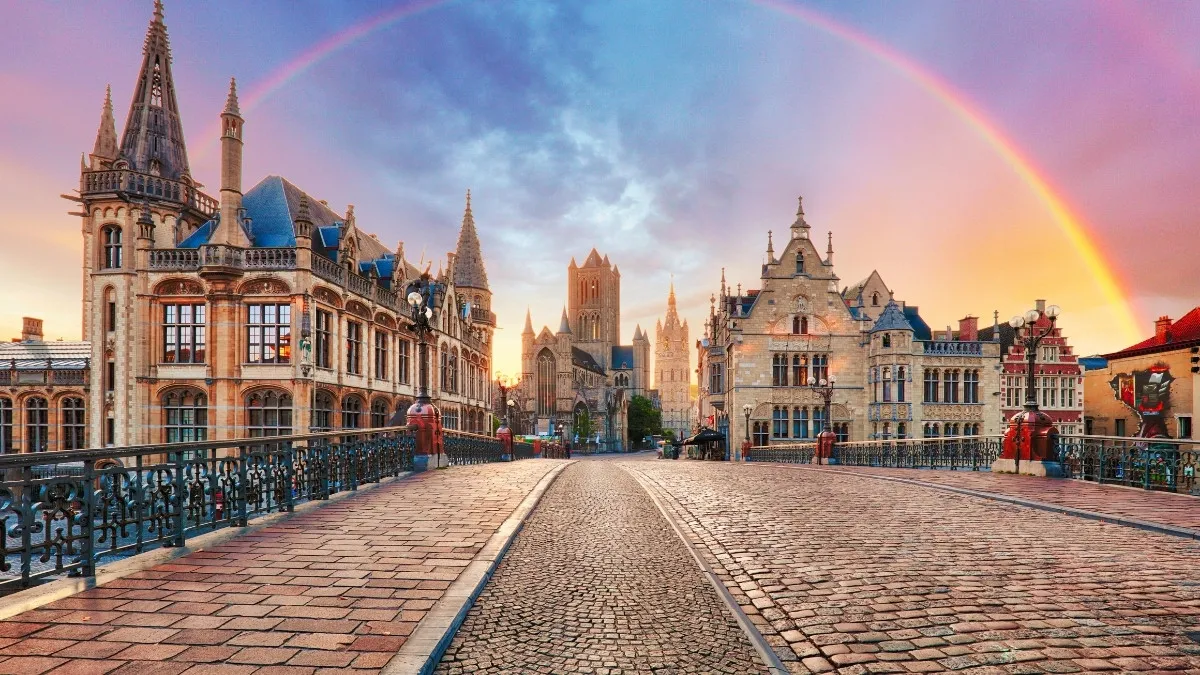
Schengen Area: The Schengen Area is a group of 29 European countries that allow free movement without internal border checks. Schengen Area makes travel across much of Europe seamless and is vital for tourism, business, and migration. According to the European Commission, over 400 million people live in the Schengen Area, making it one of the largest travel zones in the world. Learn what is Schengen Area, why is Europe called Schengen, Schengen countries, its visa rules and its 90-day rule.
What is the Schengen Area?
The Schengen Area is a zone covering 29 European countries that have eliminated routine passport and border checks at their shared borders. Citizens and visitors can travel freely between these countries without additional controls.
The Schengen Area was created by the Schengen Agreement, signed in 1985 and implemented in 1995. The Schengen Agreement was signed by Belgium, Germany, Luxembourg, the Netherlands, and France. It covers most EU countries and a few non-EU nations.
Why is Europe called Schengen?
Europe is called Schengen because the agreement that created the zone was signed in the village of Schengen, Luxembourg. The name became widely used to describe the region of Europe with free movement.
Belgium, Germany, Luxembourg were the first Schengen countries and over time, more countries joined the zone, and the term “Schengen” became synonymous with visa-free travel in Europe. The Schengen Area is now a major part of European identity and travel.
Read | 7 Poorest Countries in Europe by GDP PPP in 2025
What are Schengen Countries?
The Schengen Area includes 29 countries, most of which are in the European Union, but some are not. These countries allow free movement and share common visa rules.
| Country | EU Member | Joined Schengen | Country | EU Member | Joined Schengen |
| Austria | Yes | 1995 | Liechtenstein | No | 2011 |
| Belgium | Yes | 1995 | Lithuania | Yes | 2007 |
| Bulgaria (Air/sea borders only) | Yes | 2024 | Luxembourg | Yes | 1995 |
| Croatia | Yes | 2023 | Malta | Yes | 2007 |
| Czech Republic | Yes | 2007 | Netherlands | Yes | 1995 |
| Denmark | Yes | 1996 | Norway | No | 1996 |
| Estonia | Yes | 2007 | Poland | Yes | 2007 |
| Finland | Yes | 1996 | Portugal | Yes | 1995 |
| France | Yes | 1995 | Romania (Air/sea borders only) | Yes | 2024 |
| Germany | Yes | 1995 | Slovakia | Yes | 2007 |
| Greece | Yes | 2000 | Slovenia | Yes | 2007 |
| Hungary | Yes | 2007 | Spain | Yes | 1995 |
| Iceland | No | 1996 | Sweden | Yes | 2001 |
| Italy | Yes | 1997 | Switzerland | No | 2008 |
| Latvia | Yes | 2007 |
How strict is the Schengen visa process?
The Schengen visa process is strict but standardized across member countries. Applicants must provide proof of travel, accommodation, financial means, and a clear purpose for their visit.
-
The visa application is submitted to the embassy or consulate of the main destination country.
-
Processing times vary, but most visas are issued within 15 days.
-
The Schengen visa allows travel to all Schengen countries for up to 90 days within a 180-day period.
What is the Schengen Area 90-day Rule?
The Schengen Area 90-day rule allows visitors to stay for up to 90 days within any 180-day period. This rule applies to tourists, business travelers, and short-term visitors.
-
The 90-day period is calculated across all Schengen countries, not per country.
-
Overstaying the limit can result in fines, deportation, or future visa bans.
-
The rule ensures fair access and prevents abuse of the visa-free travel system.
Check Out | What is the Capital of Myanmar?
Conclusion
The Schengen Area is a vital part of Europe, allowing free movement across 29 countries and making travel seamless for millions. Understanding its rules and member countries helps travelers, businesses, and migrants navigate Europe with ease. The Schengen Area continues to shape the continent’s identity and connectivity.





Comments
All Comments (0)
Join the conversation