SBI Data Leak: Are Your Bank Details At Risk? SBI Flags 3,897 Customer Records In Breach; Check How To Protect Your Data
SBI Data Leak: SBI has reported a suspected data exposure after identifying 3,897 customer records containing personally identifiable information during a preliminary analysis. Here is what customers should know about the reported SBI data breach and seven ways to protect themselves from fraud.
The SBI Data Leak: State Bank of India has recently flagged a suspected data exposure. A hacker group, Siriusim, claimed to have leaked 3.75 lakh customer records, according to reports on darkweb.
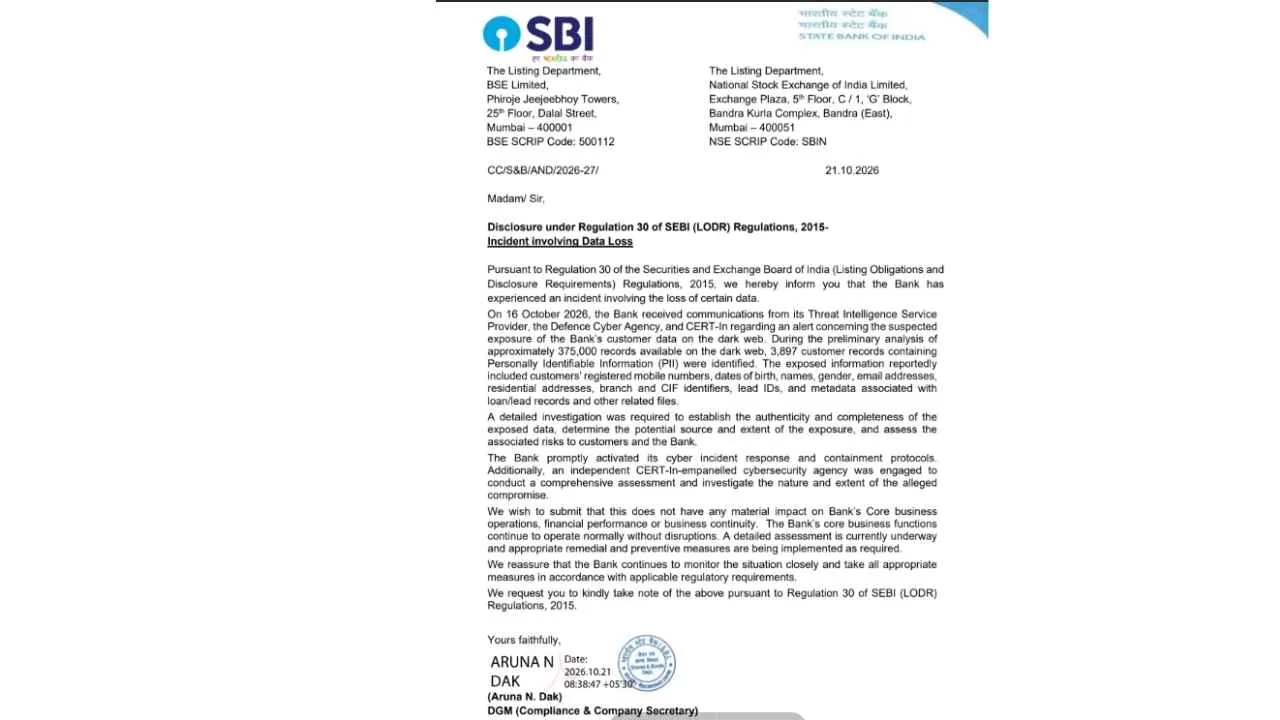
The SBI bank states that on October 16, 2026, it received alerts from its Threat Intelligence Service Provider, the Defence Cyber Agency, and CERT-In regarding the suspected exposure of customer data on the dark web. During a preliminary analysis of approximately 3.75 lakh records available on the dark web, SBI identified 3,897 customer records containing personally identifiable information (PII).
The exposed details reportedly include names, mobile numbers, dates of birth, gender, email IDs, residential addresses, branch and Customer Information File (CIF) identifiers, lead IDs, and metadata associated with loan/lead records and other related files.
Something important to note is that you do not need to panic. A data leak does not automatically mean your bank account has been hacked.
If you are wondering how this will help hackers, it can give scammers the information they need to make fraudulent calls and messages appear genuine and serious.
Here is what customers should know and do next.
Official Statements From SBI
SBI stated that the incident has had no material impact on its core business operations, financial performance or business continuity.
What Happened In The SBI Data Breach?
-
Hacker's Claim: An anonymous hacker group, allegedly claimed responsibility for exposing 3.75 lakh customer records and reportedly 2,722 PDF files on dark web, according to media reports.
-
SBI's Preliminary Findings: On October 16, 2026, SBI received alerts from its Threat Intelligence Service Provider, the Defence Cyber Agency, and CERT-In regarding the suspected exposure of customer data on the dark web. During its preliminary analysis of approximately 3.75 lakh records available on the dark web, the bank identified 3,897 customer records containing personally identifiable information (PII).
-
Information Potentially Exposed: The information reportedly included customers' registered mobile numbers, dates of birth, names, gender, email addresses, residential addresses, branch and Customer Information File (CIF) identifiers, lead IDs, and metadata associated with loan/lead records and other related files.
-
Difference in Figures: The approximately 3.75 lakh figure refers to the records available on the dark web that SBI analysed, while 3,897 customer records were identified as containing PII during its preliminary assessment. These figures should not be interpreted as confirming that all 3.75 lakh records were compromised customer records.
What Data Was Exposed in the SBI Data Leak?
According to media reports, the exposed information reportedly includes personal details and banking-related application metadata
| Data Category | Information Reportedly Exposed |
| Personal details | Names and gender |
| Contact information | Registered mobile numbers and email addresses |
| Personal records | Dates of birth and residential addresses |
| Banking identifiers | Branch identifiers and Customer Information File (CIF) identifiers |
| Loan-related information | Lead IDs and metadata associated with loan/lead records |
| Related files | Metadata associated with other related files |
This information can be valuable to fraudsters even if it does not include account passwords or PINs. When scammers know a customer's name, phone number and loan-related details, they can make fraudulent communications sound more credible.
Is Your SBI Bank Details At Risk?
The reported exposure does not establish that every SBI customer’s data was affected. However, customers should remain alert because the investigation is ongoing. You should not panic, and this does not mean hackers can access your account. There is also an important distinction between personal information and financial authentication credentials.
The SBI communication provided here lists personal information and loan-related metadata among the potentially exposed data. It does not specify whether passwords, NetBanking credentials or UPI PINs were exposed. Customers should avoid assuming that these credentials were either compromised or unaffected without further confirmation. Customers should nevertheless remain alert while the investigation continues.
How To Protect Your Data After The SBI Data Leak
Customers can take the following steps to reduce the risk of fraud and protect their banking information.
| No. | Safety Measure | What You Should Do |
| 1 | Never Share OTPs or UPI PINs | Never disclose OTPs, UPI PINs, NetBanking passwords or other authentication credentials to callers claiming to represent SBI. |
| 2 | Verify Calls and Messages | Be cautious of unexpected calls about KYC updates, loan approvals, blocked accounts or urgent verification. Confirm requests through official SBI channels. |
| 3 | Monitor Bank Transactions | Check account statements regularly and enable SMS and email transaction alerts, where available. Report unauthorised transactions immediately. |
| 4 | Avoid Suspicious Links and Applications | Do not click unknown links or install applications at the request of unverified callers. Never share your screen with suspicious contacts. |
| 5 | Secure Your NetBanking Account | Use a strong, unique password, change it if you suspect it has been compromised, and keep banking applications and phone software updated. |
| 6 | Verify SBI Customer Care Details | Obtain customer-care numbers from SBI's official website. Avoid relying on numbers shared by unknown callers, social media posts or search advertisements. |
| 7 | Report Suspected Banking Fraud | Contact SBI immediately, call India's national cybercrime helpline at 1930, and file a complaint through the National Cyber Crime Reporting Portal. Preserve relevant messages, screenshots and transaction details. |

Aishwarya Samant is a journalist with over 4 years of experience navigating the fast-paced corporate media landscape. She specializes in decoding business news, world economy, personal finance, and stock market trends, often adding a subtle touch of political perspective to keep things interesting.
Having worked with reputed organizations like ZEE, TV9, News24, and NewsX, she is no stranger to the newsroom hustle and the demands of real-time storytelling. Her writing style is fast-paced, engaging, and crafted to connect seamlessly with diverse audiences across platforms. She approaches every story from the reader’s point of view, breaking down complex topics into clear, relatable narratives backed by solid facts and credible sources. While she’s confident in expressing strong viewpoints, she ensures balance with insights. Sharp, fact-driven content that informs, engages, and keeps readers coming back for more.