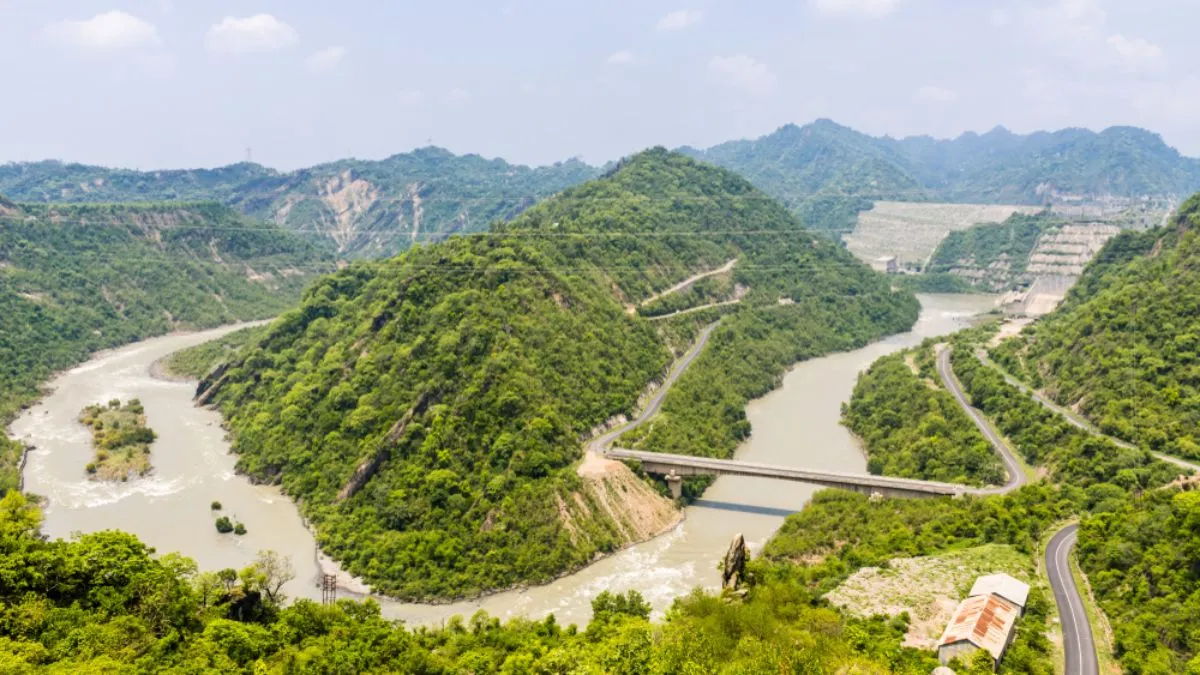
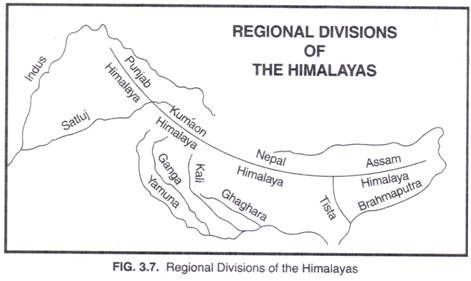
Punjab Himalayas lie between Which Rivers? As we know, the Himalayas are divided into four different longitudinal extents of different regional sections, which are the Punjab Himalayas, the Kumaon Himalayas, the Nepal Himalayas, and the Assam Himalayas. All four Himalayas lie in different regions. Today, in this article, we talk about the Punjab Himalayas.
As we know, the Himalaya is an important part of the Himalayan mountain system, and the Punjab Himalayas are also known as the Kashmir and Himachal Himalayas. This region is defined using its natural river boundaries, which is important for indian geography, the physical division of the Himalayas. But do you know, the Punjab Himalayas lie between Which Rivers? This question is common, and everyone wants to know.
Understanding the exact location, features, and rivers of the Punjab Himalayas helps in building a clear picture of India’s physical geography. In this article, it is clearly explained about the Punjab Himalayas, and also, the Punjab Himalayas lie between which Rivers.
Read this Also: How Many Rivers are in Punjab? Check all its Tributaries and Facts
Punjab Himalayas lie between Which Rivers?
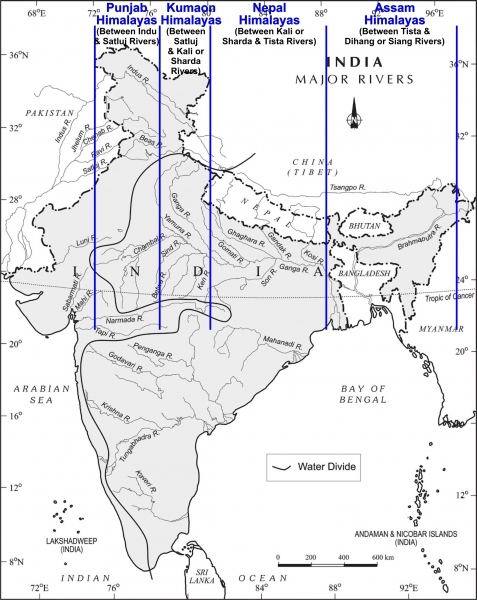
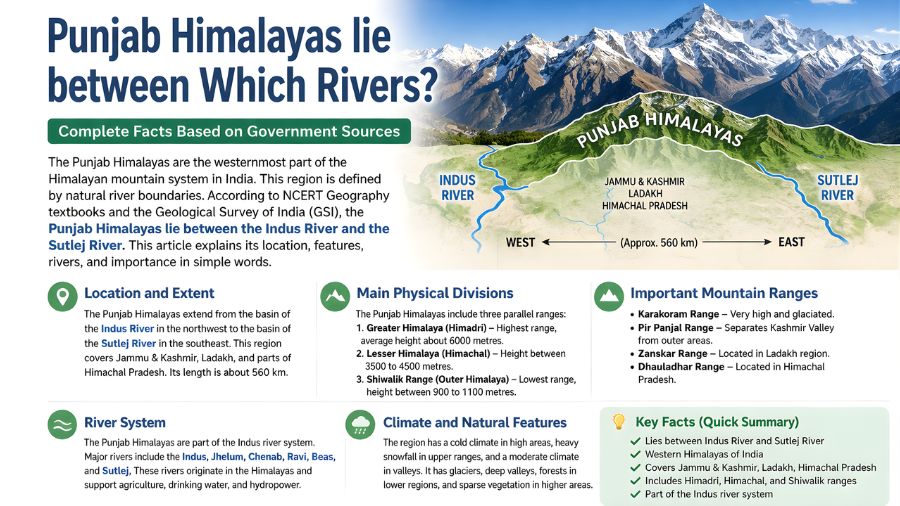
The Punjab Himalayas lie between the Indus River and the Sutlej River. This classification is based on river boundaries, which are used in standard Indian geography sources to divide the Himalayas into regions. All the major rivers of the Indus River flow through the Punjab Himalayas.
Source: Pinterest
Location and extent of the Punjab Himalayas
The Punjab Himalayas form the western part of the Himalayas in India.
Geographical Spread:
The Punjab Himalayas stretch for approximately 560 km from the Indus basin in the northwest to the Sutlej basin in the southeast.
-
Extends from the basin of the Indus River in the northwest
-
Up to the basin of the Sutlej River in the southeast
-
Covers regions of:
-
Jammu & Kashmir
-
Ladakh
-
Himachal Pradesh
Punjab Himalayas is also described as:
-
Kashmir Himalaya
-
Himachal Himalaya
Source: sudarshangurjar
Also Read: What Is The Old Name Of Punjab?
Main Physical Division of the Punjab Himalayas
The Punjab Himalayas include the three main parallel ranges of the Himalayan system:
1. Greater Himalaya (Himadri)
-
Northernmost and highest range
-
Average elevation around 6000 metres
-
Permanently covered with snow and glaciers
-
Contains major glaciers like:
-
Siachen Glacier
-
Baltoro Glacier
2. Lesser Himalaya (Himachal Range)
-
Located south of Himadri
-
Average height between 3500 to 4500 metres
-
Contains well-known mountain ranges and valleys
-
Includes famous ranges:
-
Pir Panjal Range
-
Dhauladhar Range
-
Zaskar Range
3. Shiwalik Range (Outer Himalaya)
-
Southernmost and lowest range
-
Height ranges from 900 to 1100 metres
-
Formed of loose sediments
-
Known for:
-
Duns (valleys) like Jammu Dun
Important Mountain Ranges
The Punjab Himalayas include several mountain ranges, which are:
1. Karakoram Range (northern part, very high and glaciated)
2. Pir Panjal Range (separates Kashmir Valley from outer regions)
3. Ladakh Range
4. Zanskar Range
5. Dhauladhar Range
This range lies in the rugged and terrain regions, which make the natural beauty of the Mountain Ranges of the Punjab Himalayas.
Also read: Which State Is Known As The Land Of Five Rivers?
River System of the Punjab Himalayas
The Punjab Himalayas are closely connected with the Indus River system. Major Rivers in this Region:
-
Indus River
-
Jhelum River
-
Chenab River
-
Ravi River
-
Beas River
-
Sutlej River
These rivers originate in the Himalayas and flow through deep valleys, supporting water resources and hydropower.
What are the climatic natural features of the Punjab Himalayas?
The climate of the Punjab Himalayas is a very cold region with high-altitude areas like Ladakh. I this region, heavy snowfall is also seen in the upper range. But in the Kashmir region, usually the moderate climate is seen. Here in the Punjab Himalayas, the presence of glaciers, Deep river valleys, and Forests in the lower regions and sparse vegetation in the higher altitudes is also seen.
Vegetation of the Punjab Himalayas
1. Alpine forests
2. Coniferous forests (pine, deodar)
3. Sparse vegetation in cold deserts
What are the Strategic and Economic significance of the Punjab Himalayas?
The Strategic and Economic Significance of the Punjab Himalayas are:
1. Strategic Importance
Located in the northern part of India, this region shares boundaries with neighbouring countries, making it geographically significant.
-
Borders China (Tibet region) and Pakistan
-
Includes sensitive zones like the Siachen Glacier
2. Water Resources
Rivers of this region are part of the Indus system, which supports agriculture and human settlements.
3. Natural Landscape
The region includes mountains, valleys, and glaciers, making it one of the most diverse physical regions of India.
3. Strategic Location
Located in the northern part of India, this region shares boundaries with neighbouring countries, making it geographically significant.
4. Tourism Importance
-
Kashmir Valley
-
Himachal hill stations
-
Trekking and adventure tourism
5. Hydropower Potential
Rivers like Sutlej and Chenab support major hydroelectric projects like Nathpa Jhakri Hydroelectric Project, Bhakra Nangal Project, Karcham Wangtoo Hydroelectric Plant lies on on Sutlej river, and these projects, like Sawalkote Project, Pakal Dul, Ratle, and Kiru, like hydropower projects, lie on the Chenab river, which makes the important significance foir the Punjab Himalayas significant.
Key Facts about the Punjab Himalayas
-
The Punjab Himalayas lie between the Indus River and the Sutlej River
-
Located in the western Himalayas of India
-
Include Jammu & Kashmir, Ladakh, and Himachal Pradesh
-
Consists of the Himadri, Himachal, and Shiwalik ranges
-
Major ranges: Karakoram, Pir Panjal, Zanskar, Dhauladhar
-
Part of the Indus River system
-
Rich in glaciers, rivers, and biodiversity
Source: AI Generated
The Punjab Himalayas are an important geographical unit of India’s northern mountain system, and it is clearly defined that the Punjab Himalayas lie between the Indus River and the Sutlej River, making them an important topic in both academic geography and competitive exams. This region is not only geographically significant but also plays a vital role in India’s climate, water resources, defence, and tourism sectors.



-1775391588129_t.webp)

Comments
All Comments (0)
Join the conversation