Easter, also known as Pascha, is a celebration of the resurrection of Jesus Christ around 30 AD that is featured in the Gospels of Matthew, Mark, Luke, and John- an empty tomb and triumph of God over death.
It was based on the Jewish Passover (Pesach), the memory of the Exodus, as early Christians re-calculated it to coincide with the last week of Christ in Jerusalem, and sacrifice was turned into a festival renewal.
There are Quartodecimans who saw it on the 14th of Passover (Nisan 14), and there are Quartodecimans who saw it on the next Sunday. The historic First Council of Nicaea (325 AD) resolved uniformity, the first Sunday after the Paschal full moon after the equinox (calculated as March 21) which guarantees a movable feast between March 22 and April 25 in the West.
What is the Egg Symbolism?
Being universal symbols of rebirth, eggs are presently pre-Christian Mesopotamian and Persian spring symbols of the fertility of the earth, and are depicted later as the stone rolled away at the tomb of Christ.
By the Middle Ages the Christians of Europe had stained them with crimson to remind of sacrificial blood, and this practice became embedded in the Roman Ritual of 1610 of the Catholic Church in ceremonial blessings.
Strict Lenten fasts banned eggs during 40 days but hoarded them during Easter celebrations; in Greece families continue to play games in Christos Anesti games where red-dyed eggs are tapped, and Slavic cultures continue to have elaborate designs of pysanky wax-resist designs, which are supposedly harvests.
Chocolate Eggs History
The revolution of the 19th century cocoa gave birth to chocolate eggs with French and German confectioners introducing hollow shapes made of cocoa butter, replacing weak marzipan or sugar-paste predecessors.
An underground German prototype, smuggled into the country, confused the customs agents to the extent that they almost seized it as contraband. In 1873, J.S. Fry and Sons of
Britain became the first company to mass-produce seamless hollow eggs powered by steam-driven equipment, and Cadbury followed in 1875 with cream-filled luxuries, transported on new West African plantation boomers into the mouths of the chocolate shoppers across the globe to enjoy Easter pleasure everywhere.
What is the Origin of the Easter Bunny?
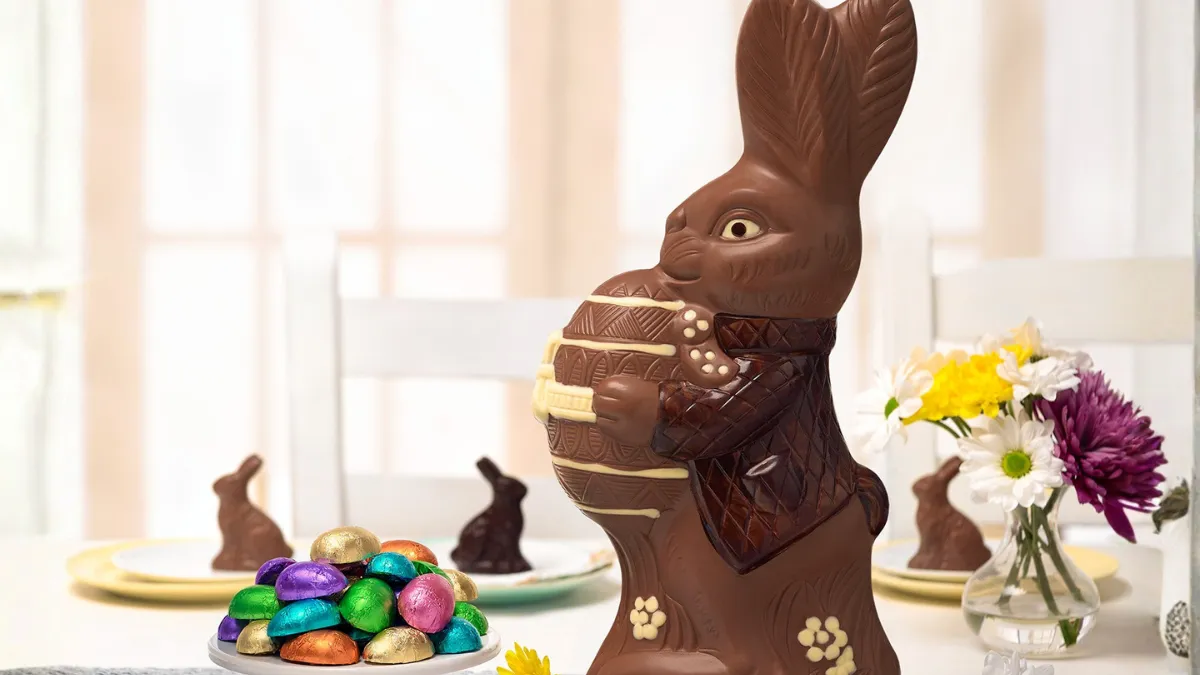
The Easter bunny - German: Osterhase - the hare sprang into American folklore through the Pennsylvania Dutch immigrants of the 1700s who explained to the children that well-behaved children would find the colorful eggs of the hare hidden in woven bonnet or hay nests.
Its first literary appearance is in a German medical book in 1572 that references egg-nesting hares, as the pre-Christian Europeans worshipped rabbits, attributing them to the power to procreate in huge numbers and their relationship with goddesses such as Eostre. Growing similar to St. Nicholas, the bunny adjudged the mischief, dispensing cakes and punishments, and established its presence by the 1800s.
Modern Easter is egg-hunt and egg-rolling games that date back to the 17 th -century Protestant egg-rolling games that imitated tomb stones, chocolate bunnies (more than 90 million annually sold in the U.S.), and spiced hot cross buns the piped crosses on which are reminiscent of Calvary, and spice the anointing of the tomb.
The commercialization of the world brings in a million dollars of candy sales in the United States alone with serious church services combined with worldly-wise parades. Western churches use the Gregorian calendar; Eastern Orthodox use Julian giving later dates such as May in certain years.
ALSO READ:



-1775391588129_t.webp)

Comments
All Comments (0)
Join the conversation