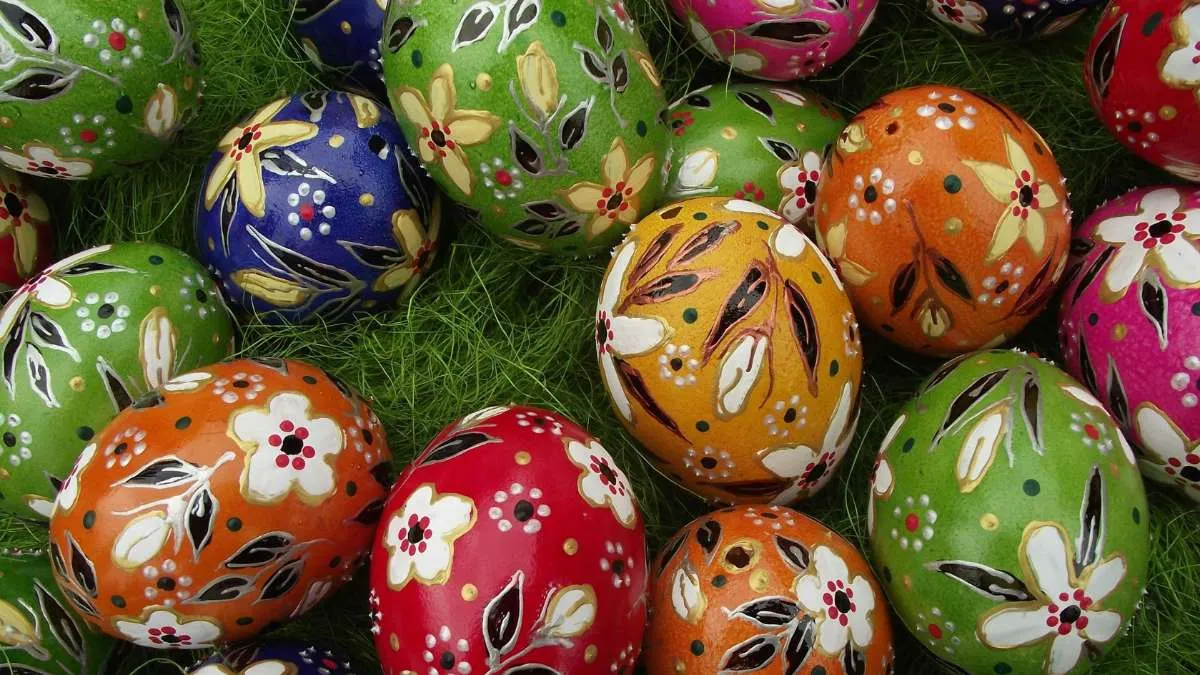
Easter is one of the important Christian holidays celebrated to mark the resurrection of Jesus Christ. The calculation of its date is based on the first Sunday following the Paschal Full Moon (on or after the vernal equinox). Therefore, the Easter date is not fixed. Economically, it is a huge money spinner. According to the National Retail Federation (NRF) the 2026 Easter spending is projected to reach a record high of 24.9 billion US dollars which will be around $195 on average, per person.
11 Interesting Facts about Easter
1. The Movable Date
As opposed to Christmas, which is set on 25th December, Easter’s date is not fixed due to its adherence to the lunisolar calendar. Namely, it is on the first Sunday following the Paschal Full Moon, which is the first full moon of the year or after the spring equinox. In the year 2026, Easter Sunday is on a Sunday (5th of April).
2. A Record-Breaking Economy
Easter is a great revenue puller. The National Retail Federation (NRF) states that in 2026, the amount of consumer spending on Easter in the United States will reach an all-time record of $24.9 billion. This is considered to be an average of about $195 per person celebrating including clothing, gifts, food and decorations.
3. The Candy Craze
It is a serious business for those in candy production. Out of such a large total amount of money, about 3.5 billion dollars is solely spent on Easter candy. This huge sugar frenzy makes Easter the second-highest candy-eating holiday of the year in the U.S., only second to Halloween.
4. German Folklore Origins
The Easter bunny is not a recent commercial creation. The folklore dates back to 1680s Germany, where it is folklore that an egg-laying hare existed that was called the Oschter Haws. When German immigrants in the 1700s settled in Pennsylvania, they took this tradition with them, and children were given small nests to construct in the hopes that the magical hare would leave attractive colored eggs.
5. The Ears First Rule
There appears to be a universal way of eating a easter bunny. Consumer research and polls claim that about 78 percent of consumers will always eat the ears of their chocolate bunnies first. It is a very small proportion of rebels who decide to begin with the feet or the tail.
6. A Mountain of Jelly beans
Around 16 billion tonnes of jelly beans are produced around the Easter season in the United States. If you take all the 16 billion of these jelly beans end-to-end, then the collective length would go around the Earth three times!
7. Strategic Production of Chocolate Bunnies
In the U.S. alone, confectioners make about 90 million chocolate bunnies annually. You may observe that near the greatest number of these bunnies are hollow, not solid. It is not merely an industry strategy to cut their chocolate expenses; a hard block of chocolate that is so thick would literally be extremely tough to take a bite out of, and might chip a tooth. The hollow design is basically to protect such incidents from happening.
8. The Effect of Peeps
The company that made marshmallow Peeps, Just Born Quality Confections, makes 5.5 million peeps a day in their factory in Bethlehem, Pennsylvania. Although they used to require 27 hours to pipe and dry manually in the 1950s, the new machinery has reduced the time to six minutes, leading to more than 2 billion Peeps per year today.
9. The Official Flower
The white Easter Lily (Lilium longiflorum) is considered to be the official flower of the holiday. The flower is an international classic traditional symbol of purity, rebirth, and resurrection, and it was treated with trumpet-like shape and stark white petals in church altars and homes around the globe.
10. The $49,000 Chocolate Treat
In 2016, luxury brand VeryFirstTo commissioned the world's priciest Easter bunny which was estimated to cost a staggering amount of 49,000. The edible masterpiece was made by a master pastry chef using 11 pounds of 75% Tanzanian cacao and under 32 hours of labor. Its actual cost shot up due to the two diamonds worth $35,000 that were used as eyes for the bunny.
11. The Commemoration of Holy Week
This is not merely a Sunday holiday, but it is the culmination of the Holy Week. The week is of a spiritual nature, starting with Palm Sunday (when Jesus entered Jerusalem), then comes Maundy Thursday (when the Last Supper took place), followed by Good Friday (when Jesus was crucified) and finally it is also marked with a feast of the resurrection on Easter Sunday.
Check out some more interesting articles from the general knowledge section to boost your knowledge of national and international topics. Stay connected with Jagran Josh for more topics like this.
ALSO READ:



-1775391588129_t.webp)

Comments
All Comments (0)
Join the conversation