Key Points
- The Hawaiian Happy Face Spider is native to Hawaii's high-altitude rainforests.
- Mothers show rare maternal care, guarding and feeding their spiderlings.
- Habitat loss and invasive species threaten the spider's survival.
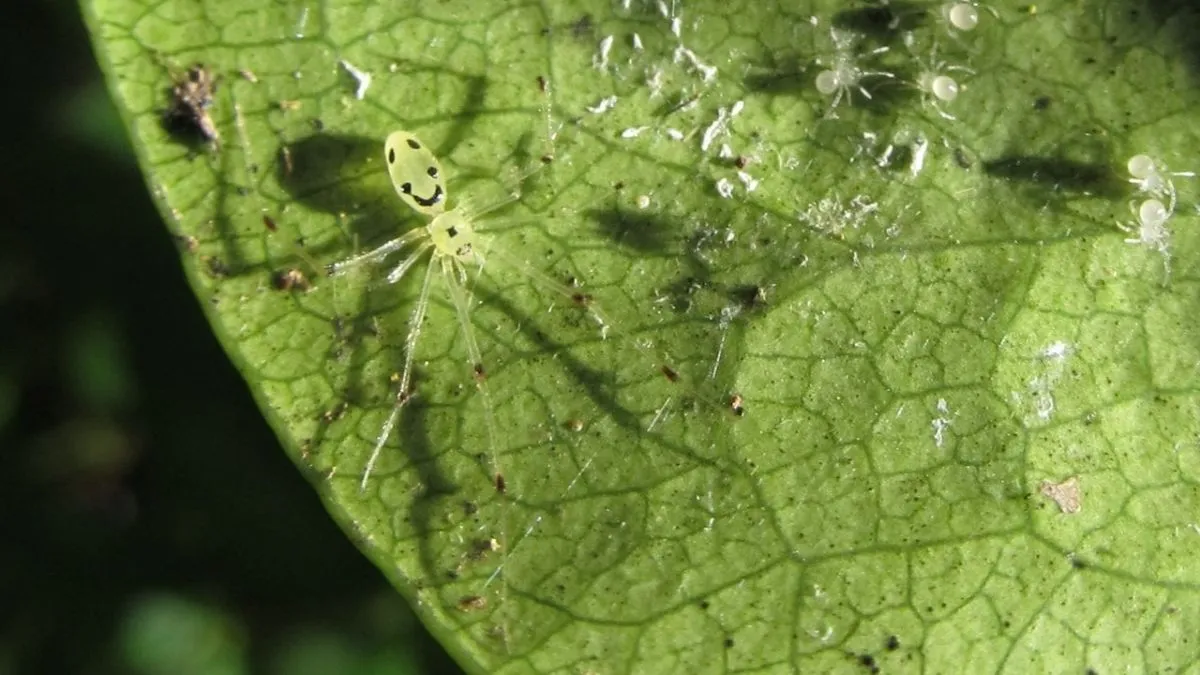
Imagine trekking through the lush, high-altitude rainforests of Maui or the Big Island, turning over a leaf, and finding a tiny creature smiling right back at you. This isn't a scene from a cartoon; it is a real-life encounter with Theridion grallator, better known as the Hawaiian Happy Face Spider.
This spider is native to Hawaii and has fascinated scientists and nature lovers alike with its clear body and bright pattern on its abdomen that looks eerily like a smiley face. The happy face spider, on the other hand, makes people curious.
It is a charming representative of Hawaii's fragile native ecosystems. However, its existence is more than just a genetic quirk; it is a story of survival, unique evolution, and a battle against extinction in the changing island forests.
The Mystery Behind the Smile of Theridion Grallator
The smiley face on the abdomen of Theridion grallator is probably its most famous feature, but not all spiders have it. Scientists have discovered that this pattern is polymorphic, which means that it changes a lot from person to person. Some spiders sport a full clown-like face with red and black markings, while others are plain yellow or orange.
Researchers say that this difference is in the genes. The smile could be there to keep you safe. People think it hides them from birds and other hunting animals.
The pattern could confuse a predator just long enough for the spider to get away, or it could make the spider look unappetizing. It is an interesting example of how evolution makes different ways to stay alive.
Check Out - What is the Scientific Name of the Redback Spider?
Where does the Happy Face Spider Live?
You will not find these spiders in your room or weaving large webs across hiking trails. The Hawaiian Happy Face Spider is a shy resident of the high-altitude rainforests, typically found at elevations between 1,000 and 6,000 feet. They live exclusively on the undersides of leaves of native plants like the kanawao and 'ōhā wai.
These happy face spiders are found on four specific islands:
-
Oahu
-
Molokai
-
Maui
-
Hawaii (The Big Island)
Because they are incredibly small, only about 5 millimeters long, spotting one requires patience and a gentle touch when inspecting foliage. They are ambush hunters, waiting quietly under leaves for prey rather than trapping them in large, sticky webs.
Also Read - What is the World’s Biggest Spider Web Discovery Known to Date?
A Devoted Mother in the Spider World
One of the most surprising facts about the Happy Face Spider is its parenting style. In the arachnid world, maternal care is very rare; most spiders lay eggs and abandon them. However, Theridion grallator is a dedicated mother.
After her eggs hatch, the mother spider stays with her spiderlings to guard them. Even more amazing, she gives them food. She catches little bugs, like fruit flies, and feeds them to her babies.
The mother made a big investment that greatly increases the babies' chances of surviving in the tough rainforest. Researchers who look at how animals' social behaviors change over time are very interested in this species because of how it behaves.
Check Out - Which Animals Cannot Walk Backwards? Revealed
Why is this Smiling Spider Threatened?
Despite its cheerful appearance, the future of the Happy Face Spider is uncertain. Experts think it is threatened, but it is not on any global endangered lists right now because there isn't enough data. Development and farming are making the native Hawaiian rainforests smaller, which means the spider has less room to live.
The biggest threat comes from invasive species introduced by humans.
-
Predators: The yellow crazy ants and green anole lizards that invade hunt these small spiders very hard.
-
Habitat Change: Non-native plants crowd out the specific native leaves the spiders need for shelter.
-
Climate Change: Rising temperatures threaten the cool, wet mountaintop environments where they thrive.
The Hawaiian Happy Face Spider is more than just a viral internet image; it is a vital part of Hawaii's natural heritage. While it is tiny and harmless to humans, its existence highlights the complexity of island evolution. Conservation efforts focused on protecting Hawaii's native forests will ultimately decide if this smiling spider continues to thrive for future generations to discover.




Comments
All Comments (0)
Join the conversation