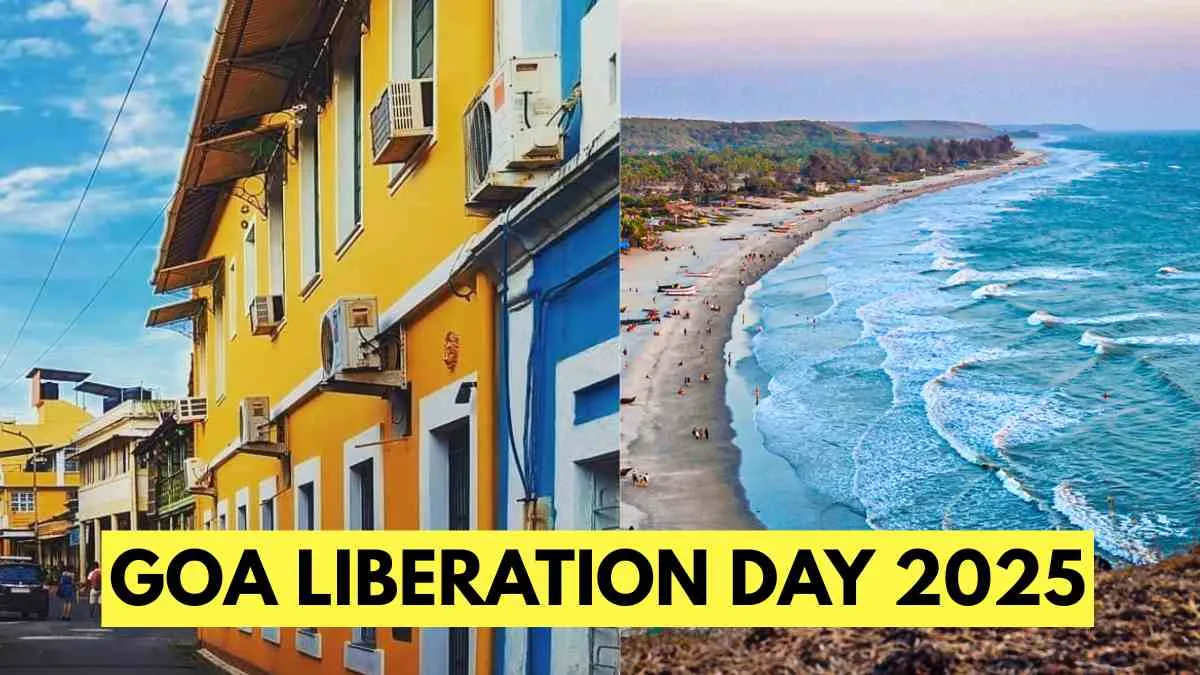
Goa’s Liberation Day in 2025 is significant to India’s Post-Independence history; it celebrates Goa’s release from Portuguese Colonial Rule after more than 400 years of occupation. The day is celebrated on 19th December every year, to acknowledge those who made sacrifices by fighting for Goa’s freedom, to those who were a part of the Indian Armed Forces and the numerous activists that worked together to secure Goa’s release from foreign domination.
Goa was unique in that it was never freed in 1947, like most of India, despite the considerable public opposition and international diplomatic efforts against Portugal. Goa Liberation Day signifies Goa’s long, difficult journey towards attaining her independence, as well as highlighting the military operations under the name of Operation Vijay, which marked the beginning of Goa’s Integration to the Indian Union and reinforced the national integrity and identity of India.
Check Out: Which is the Smallest State in India?
When is Goa Liberation Day?
Goa Liberation Day will be celebrated on Friday, December 19, 2025.
December 19 is the anniversary of Goa’s liberation from Portuguese control in 1961, and the state has ceremonies, memorials and cultural events every year on that date.
Why Goa Was Not Free in 1947 ?
Goa was still governed by Portugal on August 15th 1947 when India became an Independent Country. Goa had been occupied by Portugal since 1510 and was seen by them as an Extension of their empire rather than any type of Colony. Unlike other Colonisers, Portugal did not recognise that India had attained Independence and therefore did not negotiate the transfer of possession for Goa.
Efforts on the part of the Indian Government to establish diplomatic recognition through International channels did not produce any positive outcome, as Portugal continued to maintain all of its overseas possessions and Colonies.
The presence of heavy and oppressive Colonial laws, that prohibited any resistance from being successful in any aspect, had made it impossible for Goa to gain Independence prior to 1961. The end of Portuguese rule was accomplished by India's Military through "the action known as Operation Vijay".Through a combination of diplomatic efforts, popular resistance and military initiatives, Goa became free from its Portuguese rulers.
How Did Goa Get Its Freedom?
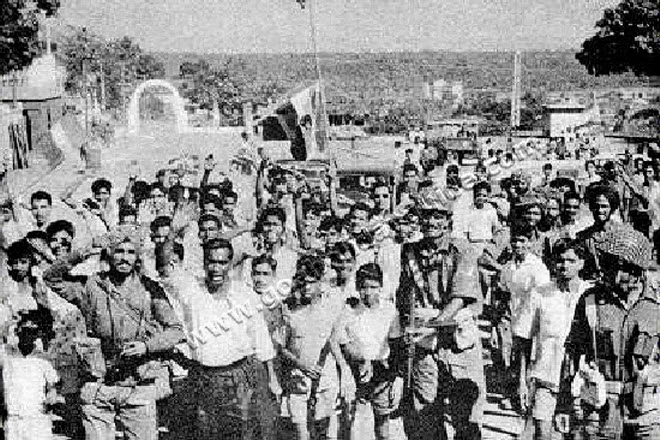
The following reveals the steps towards liberation of Goa from Portuguese rule:
-
At the time of the liberation of Goa, the Portuguese had ruled it since 1510, and had continued to rule it after India became independent in 1947.
-
Many Goan freedom fighters and other Indian leaders were involved in protests, satyagraha's, and movements to help liberate Goa.
-
India made repeated attempts to negotiate a peaceful resolution; however, these efforts were denied by the Portuguese.
-
Operation Vijay was an attack launched by India on the Portuguese on 19 December 1961, and involved the use of the Indian Army, Navy, and Air Force.
-
Within 36 hours of the assault, the Portuguese forces surrendered, and Goa was officially incorporated into India after liberation.
Operation Vijay Explained
The final military action of Operation Vijay resulted in the successful removal of Goa from Portuguese rule through military force.
On December 18, 1961, the Indian Government carried out a coordinated military action via a number of branches of the Indian Armed Forces and with Joint Action Plans developed by senior officers within the three branches of the Indian Armed Forces.
After the initial attack, Indian armed forces quickly made rapid advances into the state of Goa, as well as Daman and Diu, with little or no resistance from the Portuguese military, which was small in number and poorly trained.
The military operation lasted approximately thirty-six hours and resulted in Indian troops securing key regions and strategic sites throughout the territory of Goa.
On December 19, 1961, Portuguese Governor General, Almeida, formally surrendered and thus ended over 450 years of colonial domination over Goa and brought Goa into the Indian Union.



-1766128662526.jpg)


Comments
All Comments (0)
Join the conversation