Key Points
- India holds the 4th spot in the Global Firepower Index 2026, showing strong military growth.
- India's defence budget increased to ₹7.85 lakh crore this year for modern equipment.
- DRDO develops indigenous weapons, aiming for self-reliance in defence sector.
India’s defence sector is quickly moving towards self-reliance. Today, India is a major player globally and holds the 4th spot in the Global Firepower Index 2026.
This highlights our strong military growth and modern equipment. With more than 1.4 million active personnel, India has the world’s second-largest standing army.
Our defence budget has also increased to ₹7.85 lakh crore this year. This funding is being used to buy new jets, submarines, and drones made in India.
Before we look at the list, can you guess what DRDO and CDS stand for? In this article, we’ll look at the most important defence abbreviations and their full forms. These terms will help you understand how our forces work to keep the nation safe.
ALSO READ| Which Country Has the Best and Most Powerful Air Defence System in the World?
Full List of Important Defence-Related Abbreviations
Here’s the list of the key important defence terms that are used across air, navy and land military forces.
| Abbreviation | Full Form | Purpose / Simple Use |
| AAM | Air-to-Air Missile | A missile fired from one plane to hit another plane. |
| ABM | Anti-Ballistic Missile | A weapon used to shoot down incoming enemy missiles. |
| AC | Ashoka Chakra | India's highest peacetime military decoration for bravery. |
| ACC | Air Combat Command | The group that manages fighter jet operations. |
| ADC | Aide-de-Camp | A personal assistant to a high-ranking officer. |
| ADG | Assistant Director General | A senior administrative position in defence bodies. |
| ADM | Admiral | The highest rank for an officer in the Navy. |
| AESA | Active Electronically Scanned Array | A modern radar that can track many targets at once. |
| AFSPA | Armed Forces Special Powers Act | A law giving extra powers to soldiers in risky areas. |
| AFV | Armoured Fighting Vehicle | A protected vehicle used for combat on land. |
| ALH | Advanced Light Helicopter | A modern, Indian-made multi-role helicopter. |
| AMRAAM | Advanced Medium-Range Air-to-Air Missile | A missile that hits targets beyond the pilot's sight. |
| APC | Armoured Personnel Carrier | A "battle taxi" that carries soldiers safely to the front. |
| APO | Army Post Office | The mail service system for soldiers. |
| ASW | Anti-Submarine Warfare | Tactics and weapons used to find and sink submarines. |
| ATGM | Anti-Tank Guided Missile | A missile designed specifically to destroy tanks. |
| AVSM | Ati Vishisht Seva Medal | An award for "distinguished service of an exceptional order". |
| AWACS | Airborne Warning and Control System | An "eye in the sky" plane that tracks enemy movements. |
| Bde | Brigade | A large military unit of about 3,000 to 5,000 soldiers. |
| BMD | Ballistic Missile Defence | A system that protects a country from missile attacks. |
| Bn | Battalion | A unit made of 4–6 companies, led by a Colonel. |
| BRO | Border Roads Organisation | The team that builds roads in tough border mountains. |
| BSF | Border Security Force | The force that guards India’s borders during peace. |
| CAS | Chief of the Air Staff | The professional head and leader of the Air Force. |
| CAT | Combined Admission Test | A test for entering various military training wings. |
| Cavalry | Cav | Soldiers who fight on tanks (historically on horses). |
| CDS | Chief of Defence Staff | The single head who coordinates the Army, Navy, and Air Force. |
| CEP | Circular Error Probable | A measure of how accurate a missile or bomb is. |
| CI | Counter-Insurgency | Actions taken to stop rebels or hidden fighters. |
| CNS | Chief of the Naval Staff | The top commander of the Indian Navy. |
| CO | Commanding Officer | The officer in charge of a specific military unit. |
| COAS | Chief of the Army Staff | The highest-ranking officer of the Indian Army. |
| Coy | Company | A military unit made of about 100 to 200 soldiers. |
| CQB | Close Quarters Battle | Fighting that happens at very short distances. |
| CRPF | Central Reserve Police Force | Large force used for internal security and riots. |
| CSD | Canteen Stores Department | Shops where soldiers buy goods at lower prices. |
| C4I | Command, Control, Communications, Computers, and Intelligence | The system is used to manage a digital battlefield. |
| DARC | Defence Analysis and Research Center | A place where military strategies are studied. |
| DG | Director General | The head of a specific department or force. |
| DPSA | Deep Penetration Strike Aircraft | A jet designed to fly deep into enemy territory. |
| DRDO | Defence Research and Development Organisation | The agency that invents and builds India's weapons. |
| ECM | Electronic Countermeasures | Using signals to jam or trick enemy radar and radio. |
| ELINT | Electronic Intelligence | Gathering information by listening to electronic signals. |
| EME | Electronics and Mechanical Engineering | The branch that repairs and maintains army equipment. |
| FAC | Forward Air Controller | A person on the ground who guides fighter jets to targets. |
| FLIR | Forward-Looking Infrared | Cameras that "see" heat, used for flying at night. |
| GOC | General Officer Commanding | A general in charge of a division or corps. |
| GP | General Purpose | Equipment or bombs meant for many different uses. |
| GPS | Global Positioning System | Satellite tech is used for navigation and targeting. |
| HAL | Hindustan Aeronautics Limited | The company that builds India's planes and choppers. |
| HE | High Explosive | A type of ammunition that causes a big blast. |
| HEAT | High-Explosive Anti-Tank | A shell that uses a jet of hot metal to pierce tank armour. |
| HMG | Heavy Machine Gun | A large gun used against vehicles or groups of enemies. |
| HQ | Headquarters | The central office where orders are given. |
| IAF | Indian Air Force | The branch that protects India’s skies. |
| ICBM | Intercontinental Ballistic Missile | A giant missile that can hit a target on another continent. |
| ICG | Indian Coast Guard | The force that protects India’s coastline and sea laws. |
| ICV | Infantry Combat Vehicle | A tank-like vehicle that carries troops and also fights. |
| IDS | Integrated Defence Staff | A group that helps the three services work together. |
| IFF | Identification Friend or Foe | A radio system to tell if a plane is a friend or enemy. |
| IMA | Indian Military Academy | The place where Army officers are trained. |
| INS | Indian Naval Ship | The prefix is used for all major Indian Navy vessels. |
| IRBM | Intermediate-Range Ballistic Missile | A missile with a range of 3,000 to 5,500 km. |
| ISRO | Indian Space Research Organisation | Helps the military with satellites and tracking. |
| JCO | Junior Commissioned Officer | Experienced soldiers who bridge the gap between officers and troops. |
| LAC | Line of Actual Control | The unofficial border between India and China. |
| LCA | Light Combat Aircraft | Small, fast fighter jets like the Tejas. |
| LMG | Light Machine Gun | A portable machine gun used by a single soldier. |
| LOC | Line of Control | The military border between India and Pakistan. |
| LWT | Light Weight Torpedo | An underwater missile used to hit submarines. |
| MARCOS | Marine Commandos | Elite Navy special forces trained for sea missions. |
| MBT | Main Battle Tank | The heaviest and most powerful tank on the battlefield. |
| MGO | Master General of Ordnance | The person in charge of getting weapons for the Army. |
| MHA | Ministry of Home Affairs | The government office for internal security (BSF, CRPF). |
| MOD | Ministry of Defence | The government office that manages the entire military. |
| MRBM | Medium-Range Ballistic Missile | A missile with a range of 1,000 to 3,000 km. |
| MSL | Missile | A self-propelled flying weapon. |
| MT | Military Transport | Vehicles used to move food, fuel, and soldiers. |
| NBC | Nuclear, Biological, and Chemical | Warfare involving poison gas, germs, or radiation. |
| NCO | Non-Commissioned Officer | Enlisted soldiers with leadership roles (like Havildars). |
| NDA | National Defence Academy | Training base for young Army, Navy, and Air Force cadets. |
| NSG | National Security Guard | The "Black Cat" elite counter-terrorist unit. |
| NVG | Night Vision Goggles | Devices that allow soldiers to see in the dark. |
| OC | Officer Commanding | The specific officer in charge of a small unit or post. |
| OP | Observation Post | A hidden spot used to watch enemy movements. |
| OR | Other Ranks | Regular soldiers who are not officers. |
| OTA | Officers Training Academy | A centre for training short-service commission officers. |
| PARA SF | Parachute Special Forces | Army commandos trained for secret missions. |
| POW | Prisoner of War | A soldier captured by the enemy during a conflict. |
| PVC | Param Vir Chakra | India's highest award for bravery during wartime. |
| PVSM | Param Vishisht Seva Medal | Award for peacetime service of the highest order. |
| QRSAM | Quick Reaction Surface-to-Air Missile | A fast missile used to hit low-flying enemy jets. |
| R&R | Rest and Recuperation | Time off is given to soldiers after a long mission. |
| RECCE | Reconnaissance | Going out to gather info about the enemy. |
| Regt | Regiment | A traditional group or family of army battalions. |
| ROE | Rules of Engagement | The specific rules on when a soldier can fire their weapon. |
| RPV | Remotely Piloted Vehicle | A vehicle (usually a plane) controlled from far away. |
| SAM | Surface-to-Air Missile | A missile launched from the ground to hit a plane. |
| SAR | Search and Rescue | Missions to find and save people in danger. |
| SATCOM | Satellite Communication | Using satellites to talk over long distances safely. |
| SF | Special Forces | Highly trained elite soldiers for the toughest tasks. |
| SLBM | Submarine-Launched Ballistic Missile | A missile fired from underwater. |
| SOP | Standard Operating Procedure | A set of step-by-step rules for doing tasks. |
| SRBM | Short-Range Ballistic Missile | A missile that travels less than 1,000 km. |
| SSM | Surface-to-Surface Missile | A missile fired from land to hit a target on land. |
| SSN | Nuclear-powered Submarine | A submarine that can stay underwater for months. |
| Tgt | Target | The person, place, or thing being aimed at. |
| UAV | Unmanned Aerial Vehicle | Often called a drone, a plane with no pilot inside. |
| UXB | Unexploded Bomb | A bomb that was dropped but has not blown up yet. |
| VCOAS | Vice Chief of the Army Staff | The second-in-command of the Indian Army. |
| VHF | Very High Frequency | A radio band used for clear military communication. |
| WO | Warrant Officer | A high-ranking soldier who is an expert in their job. |
Understanding the Structure of Our Forces
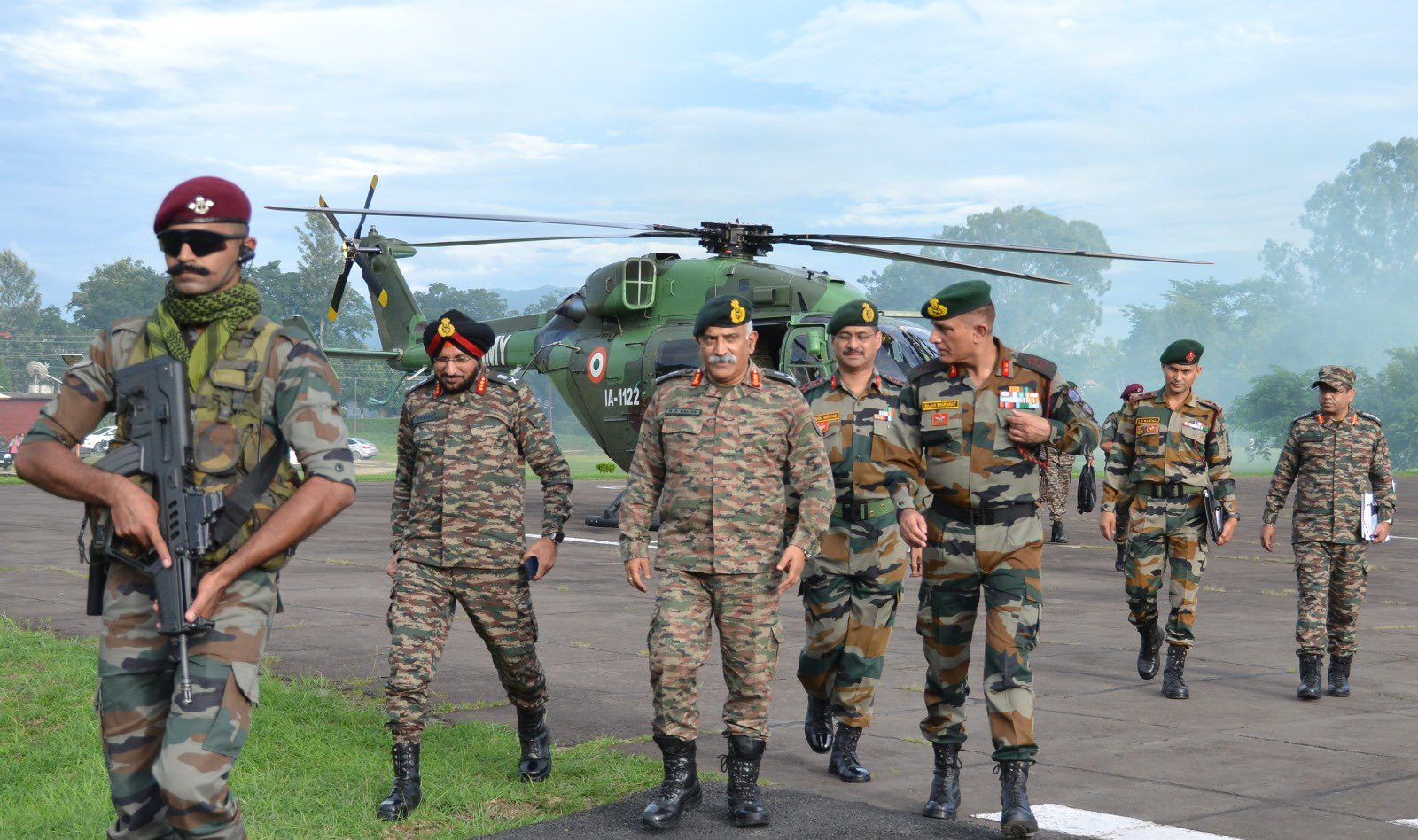
Source: Defence Direct Education
> LOC vs. LAC: What is the Difference?
The Line of Control, or LOC, is the military border that separates India and Pakistan in Jammu and Kashmir.
It is not an official international border, but both countries' armies keep watch over it. The Line of Actual Control, or LAC, is the working border between India and China.
Unlike the LOC, which is often marked with fences, the LAC is usually just an idea of where the border should be. This is why there are often standoffs in those regions.
> NDA: Where it All Begins
The National Defence Academy (NDA) stands out as the world’s first academy where the Army, Navy, and Air Force train together.
Cadets from all three services spend three years learning side by side, which helps them form close bonds and work as a team before moving on to their specialised training. This experience lays the groundwork for India’s military leadership.
> BSF: The First Line of Defence
The Border Security Force (BSF) is often known as the "First Line of Defence". While the Army is called in during wartime, the BSF protects India’s borders with Pakistan and Bangladesh every day in peacetime. They stop smuggling, infiltration, and illegal entry to keep our internal security safe.
IN CASE YOU MISSED| Top 10 Most Powerful Countries in the World by Military Strength (2026) | Check India's Rank
Detailed Breakdown of Key Specialised Terms
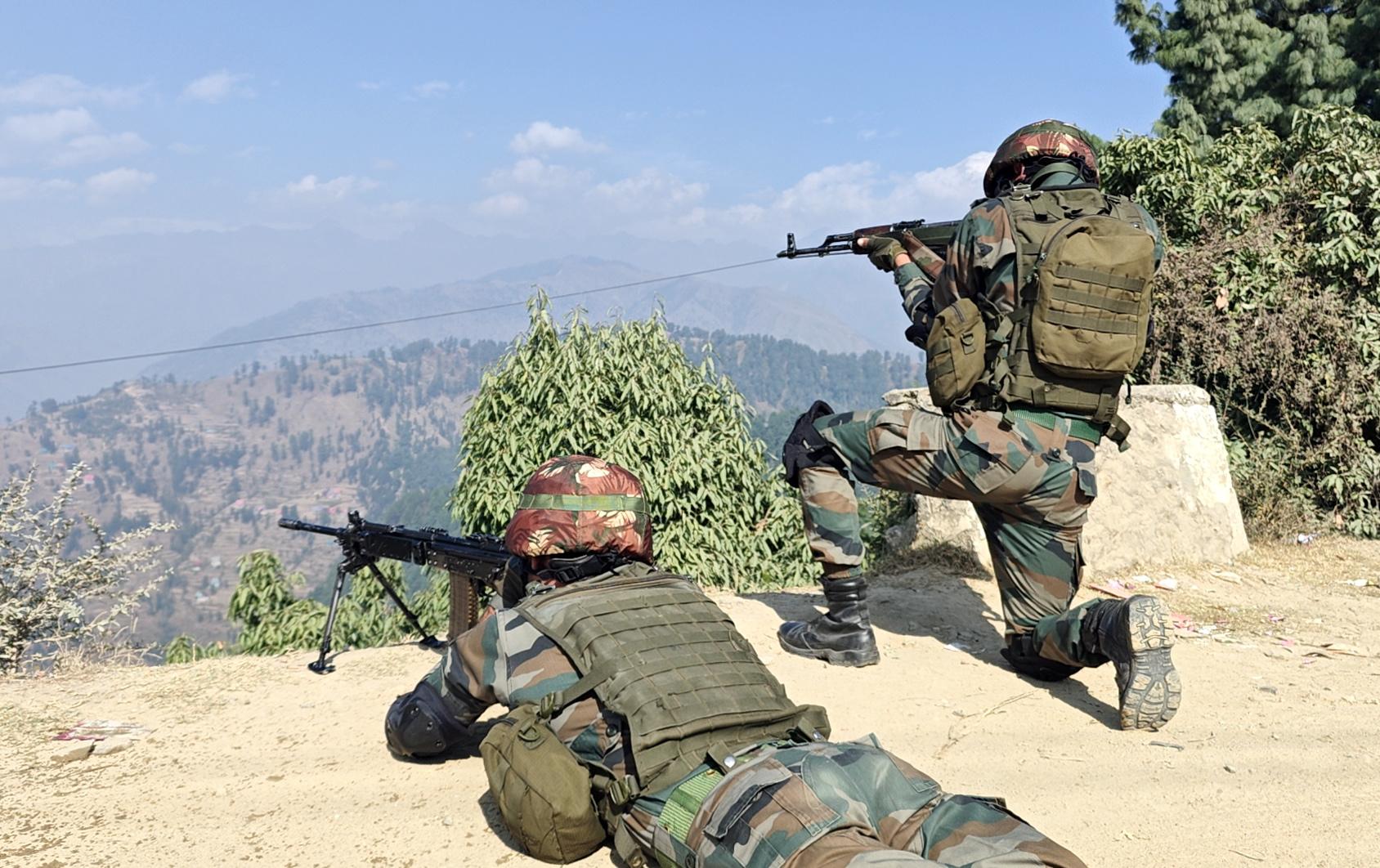
Source: Business Standard
> ICBM
Intercontinental Ballistic Missiles (ICBMs) are long-range weapons that can travel over 5,500 kilometres. They are the most powerful missiles a country can have.
In India, the Agni-V is a well-known example. ICBMs are built to carry heavy warheads across continents and serve as a "shield" to deter attacks from other countries.
> SAM
Surface-to-Air Missiles, or SAMs, are defensive weapons fired from the ground to target enemy aircraft, drones, or incoming missiles.
Examples include the Akash and the S-400 Triumf. These systems help protect key cities and military bases from air attacks and keep our airspace secure.
> MARCOS
MARCOS, or Marine Commandos, are the elite special forces of the Indian Navy. They train to work in sea, air, and land environments but focus mainly on underwater and maritime missions.
They are known for their secrecy and the nickname "Blackman", and they take on counter-terrorism and rescue operations at sea.
> PARA SF
The Parachute Special Forces (PARA SF) serve as the special operations unit of the Indian Army. Their training prepares them for missions behind enemy lines, high-altitude combat, and precise strikes.
Known for their maroon berets, they complete some of the world's toughest training to face dangerous combat situations.
> DRDO
The Defence Research and Development Organisation (DRDO) is India’s top agency for military research. Headquartered in New Delhi, it oversees more than 50 laboratories.
These labs develop a range of technologies, including missiles like Agni and Prithvi, light combat aircraft, and radar systems.
DRDO’s main aim is to make India less reliant on foreign imports by producing weapons in the country.
> CDS
The Chief of Defence Staff (CDS) is a 4-star General who serves as the main military advisor to the Government of India. This position was set up to improve teamwork between the Army, Navy, and Air Force.
The CDS also helps plan long-term defence purchases and makes sure all three branches work well together in both war and peace.
> BRO
The Border Roads Organisation (BRO) is important for national security because it builds roads and bridges in remote, high-altitude border areas.
Although it is part of the Ministry of Defence, the BRO’s work helps move troops and heavy tanks quickly to the borders.
Without the BRO, it would be very difficult to keep a military presence in places like Ladakh or Arunachal Pradesh.
> HAL
Hindustan Aeronautics Limited (HAL) plays a key role in India’s military aviation. The company manufactures and repairs aircraft, with the Tejas Light Combat Aircraft being its most well-known recent project.
By making helicopters and jets in India, HAL helps the Air Force keep up with new technology and saves the country a lot of money that would otherwise go abroad.
WHAT'S NEXT| Which is the Most Powerful Military Tank in the World?




Comments
All Comments (0)
Join the conversation