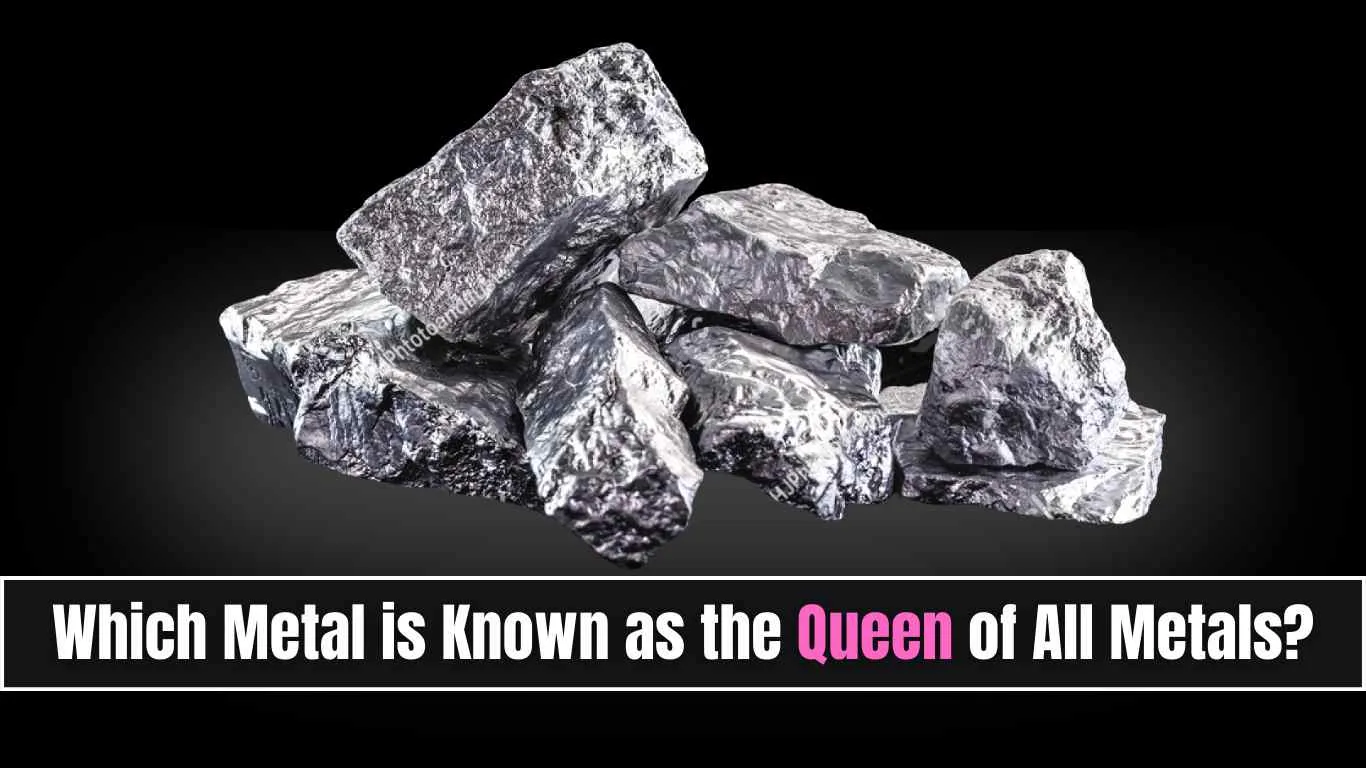
In the dazzling hierarchy of precious metals, Silver (Ag, Atomic Number 47) holds a unique and powerful position. While Gold may possess chemical immortality, Silver is often crowned the "Queen of Metals" due to its extraordinary physical prowess: it is the best conductor of both electricity and heat of all known metallic elements. Furthermore, its brilliant, reflective white color has indelibly linked it to the Moon (Luna), making it a primary symbol of feminine energy, intuition, and clarity across history and mythology.
This superior performance, coupled with its historical role in global finance and its sensitivity to light, gives Silver a profound relevance in modern life that goes far beyond jewelry. We dive into the chemistry, history, and current applications that solidify Silver's claim to royalty.
Truth Behind the Name👑
The true reason Silver (Ag) holds the title "Queen of Metals" lies in its unmatched utility and physical dominance, particularly its capacity to conduct electricity and heat better than any other element. This scientific fact, combined with its profound cultural link to the Moon (symbolizing femininity, purity, and cool light) and its historical role as the backbone of global commerce, solidifies Silver's enduring claim to the throne as the most functional and symbolically rich of all the white metals.

Silver in Physical Science
Silver earns its royal status not through nobility (as it readily tarnishes) but through its supreme physical conductivity. This is a measure of sheer utility and performance unmatched by any competitor, including gold and copper.
Unmatched Conductivity: Silver's Crown
Silver’s unique electronic structure allows it to transfer electricity and heat with maximum efficiency.
Property | Quantitative Insight | Significance |
| Electrical Conductivity | Highest of all metals (6.3 x 10⁷ Siemens/m) | Used in critical electronics where minimal signal loss is mandatory. |
| Thermal Conductivity | Highest of all metals (429 W/m.K) | Essential for rapid heat dissipation in thermal management systems. |
| Reflectivity | Reflects 95% of visible light when polished. | Makes it the ideal choice for high-performance mirrors and solar collectors. |
| Ductility/Malleability | Second only to Gold, allowing it to be drawn into extremely thin wires or sheets. | Used in specialized electronic paints and pastes. |
The Tarnish Trade-Off: Chemical Weakness
While physically superior, Silver lacks Gold's chemical nobility. Its tendency to tarnish is its primary drawback, earning it the distinction of being the "Queen of Metals" rather than the absolute Queen of all metals.
-
Tarnish Reaction: Silver reacts readily with sulfur compounds (like Hydrogen Sulfide, naturally found in air and some foods) to form a layer of Silver Sulfide, which gives it the familiar dull, black appearance.
-
The Sacrifice of Performance: Because of this tarnish, Gold (despite being a slightly poorer conductor) is often used over Silver in critical electrical contacts, as the oxidized silver sulfide layer can impede conductivity over time.
The Lunar Connection
Silver's unique aesthetic properties have eternally linked it to the celestial sphere, establishing its symbolic role in culture and mythology.
The Lunar Association
In alchemy, astrology, and ancient Roman culture, Silver was universally associated with the Moon (Luna), just as Gold was associated with the Sun (Sol).
-
Reflective Luster: Silver's brilliant, cool, and highly reflective white sheen perfectly mimics moonlight. This association cemented its use in divination mirrors, sacred vessels, and artifacts meant to reflect cosmic energy.
-
Feminine Energy: Historically, the Moon is a powerful symbol of the feminine principle, intuition, emotional tides, and cyclical life (linked to tides and menstrual cycles). By extension, Silver became the primary metal representing these qualities: grace, wisdom, and inner truth.
-
Purity and Clarity: Silver is often worn for its perceived ability to bring clarity and protect against negative energy, mirroring the way moonlight dispels darkness.
Silver’s High-Tech Applications
Half of the world's silver consumption is vital for industrial, medical, and electronic uses, making it crucial for future technology. Silver is essential for the efficiency of the renewable energy sector, as silver paste forms the conductive grids in all silicon-based photovoltaic cells. Furthermore, silver's unique properties are invaluable in medicine due to its use as an antimicrobial agent in wound dressings and filters, and its photosensitivity still plays a role in specialized film and X-rays.




-Model-Paper-2026_-Download-PDF-1765974851736.jpg)
Comments
All Comments (0)
Join the conversation