Show Key Points
The AI revolution has hit a major obstacle: the power grid. Former Google CEO Eric Schmidt recently warned Congress and tech leaders that America is "running out of electricity.”
The numbers behind his warning are striking. Schmidt says the U.S. will need 92 more gigawatts of power to keep up with AI growth. For context, one gigawatt is about the same as the output of one nuclear power plant.
This means the U.S. would need to build about 90 new nuclear plants very quickly. Right now, data centres use about 4.4% of the country's electricity, but that number could rise to 12% by 2028.
This increase comes from large data centres that run day and night and require a lot of water to stay cool. If the power grid cannot keep up, electricity bills for regular households could double, and the U.S. could lose ground in the global AI race.
Why Is AI "Blowing Out" the U.S. Grid?
The numbers driving the AI revolution are huge. Former Google CEO Eric Schmidt says the U.S. needs 92 more gigawatts of power right away.
To put this in perspective, one gigawatt is about the same as the output of one nuclear power plant. So, the U.S. would need to build almost 90 new nuclear plants to keep pace with AI’s growth.
- The problem is that the U.S. electrical grid is more than 50 years old and considered outdated.
- One AI prompt uses ten times as much electricity as a regular Google search.
- In 2024, data centres used 4.4% of all U.S. electricity. By 2028, that number could rise to 12%.
How Does AI Power Affect Your Monthly Bill?
This growing demand for energy is not only a technology issue; it also affects your wallets. Experts warn that as data centres use huge amounts of electricity every day, people could end up paying more.
Venture capitalist Chamath Palihapitiya says electricity rates for consumers could double over the next five years due to increased demand.
- Upgrading the power grid costs billions of dollars, and utilities usually pass these expenses on to regular households.'
- AI doesn't just need power; it needs billions of gallons of water for cooling.
- Schmidt warns that if the U.S. cannot secure enough energy, the country could fall behind China in the "Global AI Race".
Conclusion: Are Space-Based Data Centres the Only Solution?
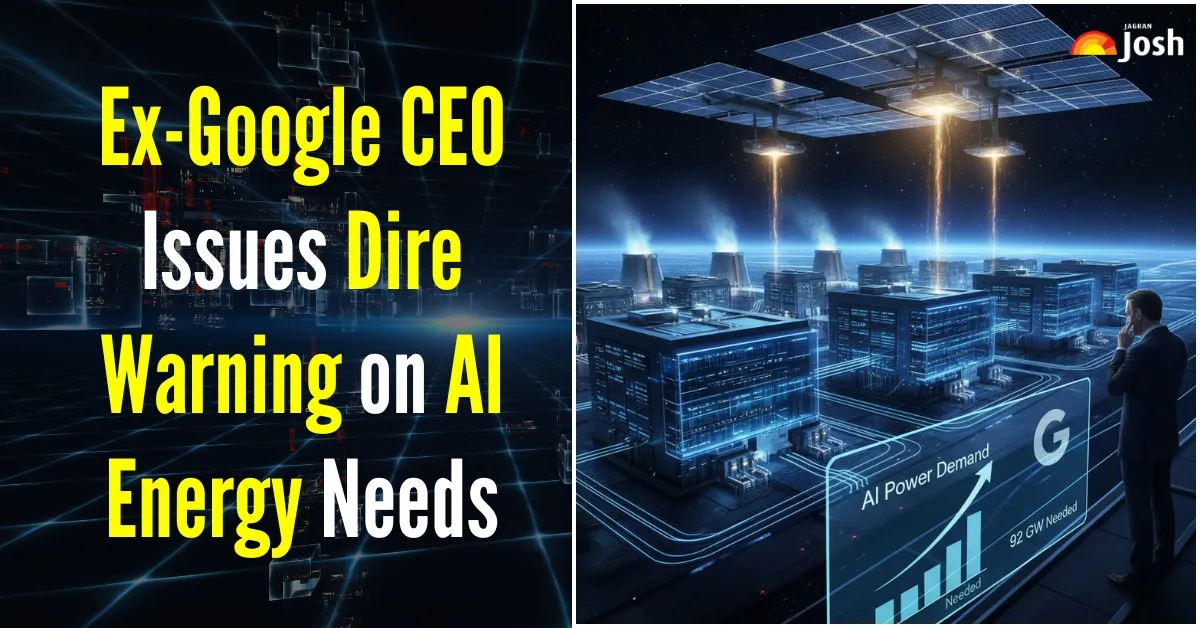
As land and energy become scarce, leading tech figures are turning their attention to space. Eric Schmidt and Elon Musk have both suggested that orbital data centres could be the answer.
| Item | Energy Consumption / Need |
| Traditional Google Search | 0.0003 kWh |
| One AI Query (ChatGPT/Gemini) | 0.0029 kWh (10x more) |
| U.S. Data Centre Power (2024) | 4.4% of total U.S. electricity |
| U.S. Data Centre Power (2028) | 12% of total U.S. electricity |
| Total New Power Needed | 92 Gigawatts |
These data centres would operate in space, using constant solar energy and the vacuum of space to stay cool. Alphabet (Google) plans to test its Project Suncatcher orbital data centre prototype.
Additionally, Microsoft is taking a different approach by signing a 20-year agreement to restart the Three Mile Island nuclear plant. As Eric Schmidt told Congress, "We need energy in all forms... and we need it quickly.
References:



Comments
All Comments (0)
Join the conversation