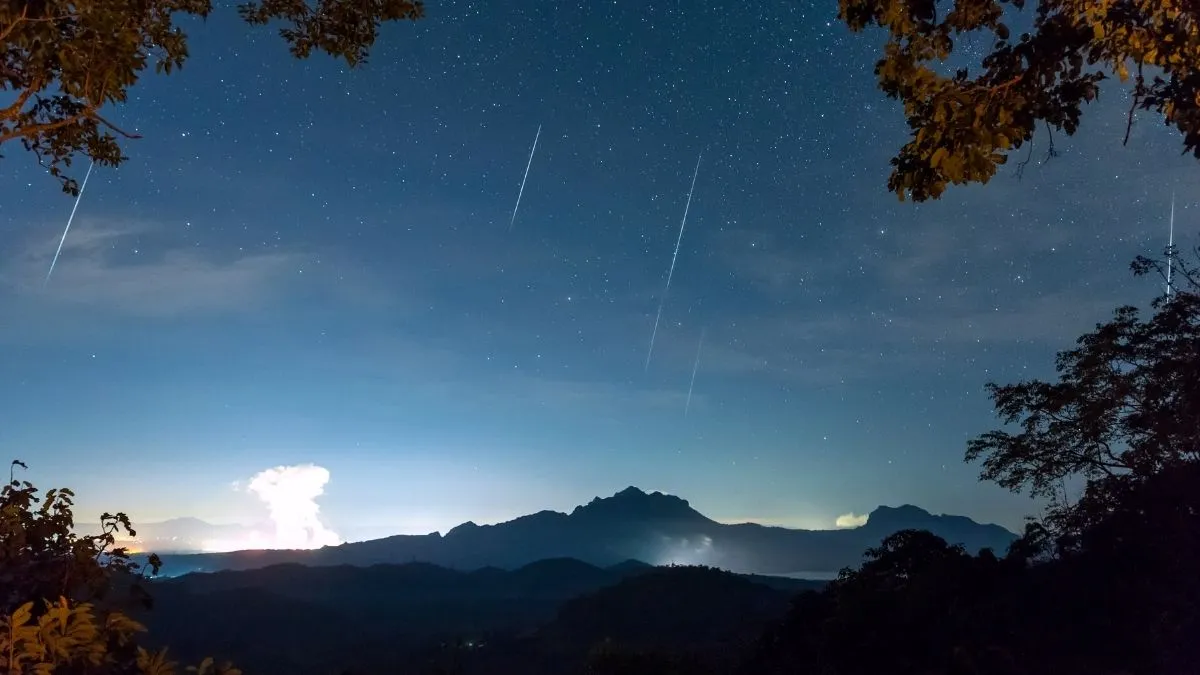
Geminids Meteor Shower peak 2025: The annual Geminids Meteor Shower is returning to the skies in December 2025, promising a truly dazzling display. What makes this year particularly special for US-based observers is the near-perfect dark-sky conditions, as the peak activity coincides with a minimal waning crescent moon. With forecasts of up to 150 meteors per hour (known as the Zenithal Hourly Rate or ZHR) under ideal conditions, the 2025 Geminids are highly anticipated.
Unlike most other cosmic fireworks that come from comets, this shower originates from the debris of the strange "rock comet" asteroid 3200 Phaethon, often yielding bright, colorful streaks. This complete guide will help you find the best location, timing, and even a conceptual geminid meteor shower peak visibility map to catch the show.
When and Where to Watch the Geminids Meteor Shower
The Geminids are active for several weeks, but catching the shower at its maximum requires knowing the precise peak time. This shower is famously reliable and offers high viewing rates across most of the continental United States.
Peak Activity for US Viewers
The Geminids meteor shower peak is set for the night of Saturday, December 13, into the pre-dawn hours of Sunday, December 14, 2025.
| Time Detail | December 2025 Peak Time | Viewing Rates (ZHR) |
| Global Predicted Peak | 3:00 AM UTC (December 14) | Up to 150 per hour |
| Best US Viewing Time | Midnight to 2:00 AM Local Standard Time (December 14) | 60–120+ per hour |
| Moonlight Interference | Minimal (Waning Crescent) | Excellent for dark skies |
The shower's radiant, the point from which the meteors appear to originate, is the constellation Gemini (near the bright stars Castor and Pollux). This constellation rises in the mid-evening, meaning you don't have to wait until deep in the pre-dawn hours to start observing.
Geminids Meteor Shower Peak Visibility Map
To determine where to see Geminid Meteor Shower activity best, you must locate the radiant point, which will be highest in the sky (nearly overhead) around 2:00 AM local time, regardless of your position in the contiguous US. The higher the radiant, the more meteors you will likely see.
-
Location: Look East/Northeast in the early evening, shifting to nearly straight overhead (the Zenith) by 2:00 AM.
-
The Radiant: Find the constellation Gemini, located northeast of the easily recognizable constellation Orion.
The night skies have some special gifts for you this December:
- The peak of the Geminid meteor shower
- The closest approach of 3I/ATLAS to Earth (at about 170 million miles)
- A Jupiter-Moon conjunction
Get more details on this month’s celestial sights: https://t.co/wmmYGYDqgb pic.twitter.com/hpm5fyOmTc
— NASA (@NASA) December 1, 2025
Check Out: Meteor Showers List 2025: When & How to See the Shooting Stars Tonight in the US
How to Watch the Geminids Meteor Shower in the US?
Maximizing your chance to see the Geminid meteor shower requires preparation and patience. The beauty of this event is that you need absolutely no special equipment.
Essential Viewing Tips
For the optimal experience, especially for US-based skywatchers new to meteor hunting, follow these steps:
-
Seek the Darkest Skies: This is the most critical step. Get as far away as possible from city light pollution. State parks, rural areas, or designated dark-sky reserves offer the best visibility.
-
Give Your Eyes Time to Adjust: Plan to be in your viewing spot for at least 30 minutes before you expect to see the most meteors. Your eyes must fully adapt to the dark to catch fainter streaks.
-
No Equipment Needed: Put down the binoculars and telescopes! Meteor watching is a naked-eye activity. You want to scan as much of the sky as possible.
-
Get Comfortable: Viewing in December means cold temperatures. Bring warm layers, sleeping bags, blankets, and a lounge chair or mat. Lie flat on your back so you can gaze upwards comfortably for long periods.
-
Look Away from the Radiant: When you look about 30 degrees away from the radiant point, the meteors look longer and more impressive as they streak from Gemini. Look at the space between the radiant and the zenith (right above you).
-
Avoid White Light: If you must use a flashlight, ensure it has a red filter, as red light preserves your night vision. Put your phone on silent and dim its brightness.
Also Read - Missed the Draconid Meteor Shower 2025? Check the Orionids Peak Date and Time
The Geminids Meteor Shower 2025 is shaping up to be a stunning spectacle due to the favorable lunar cycle, making it a perfect night to look up. By following these simple tips, finding a dark spot and setting your alarm for the pre-dawn hours of December 14, you are guaranteed a free, reliable, and dazzling show provided by the debris of asteroid 3200 Phaethon.




Comments
All Comments (0)
Join the conversation