Show Key Points
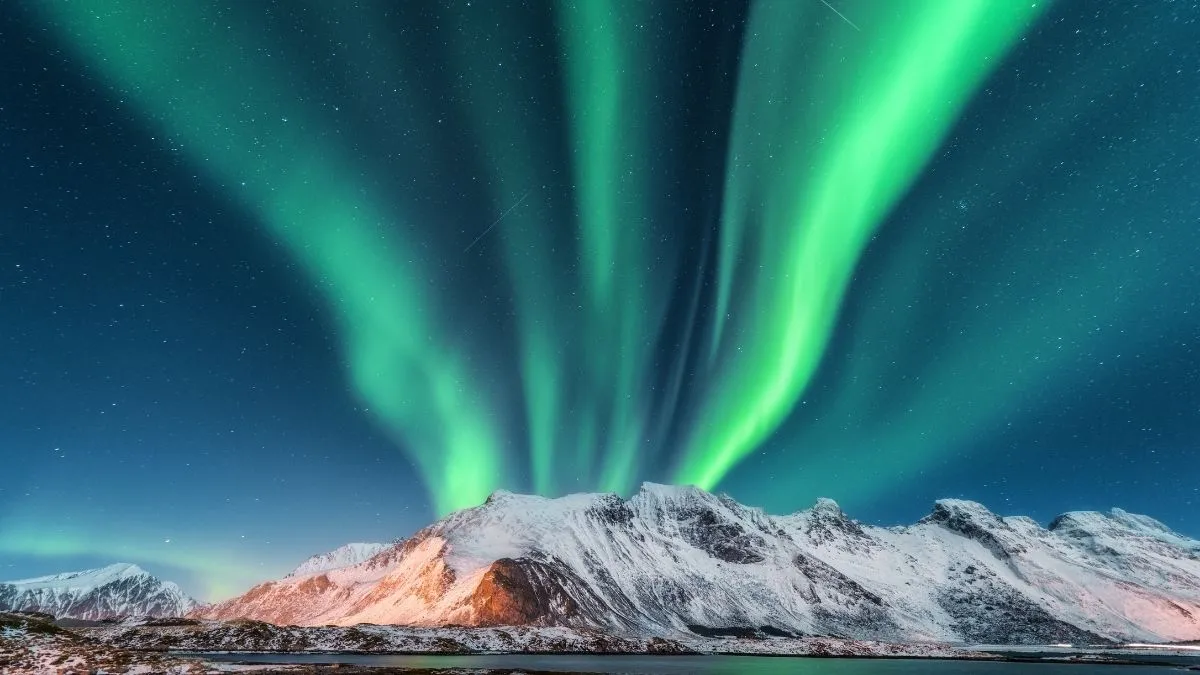
The night sky is preparing for a breathtaking display as a series of solar eruptions head toward Earth, significantly upgrading the Aurora Forecast for the weekend of March 20-22, 2026. The National Oceanic and Atmospheric Administration (NOAA) has put out a G3 (Strong) geomagnetic storm watch after seeing several M-class solar flares between March 16 and 18.
The Russell-McPherron effect, near the spring equinox, makes this increase in activity even stronger. It makes temporary cracks in Earth's magnetic field, which lets solar particles in. For U.S. skywatchers, this means the Northern Lights could shimmer far beyond the Canadian border, potentially reaching as far south as Illinois and Oregon.
Where will the Northern Lights be visible tonight?
According to the latest NOAA Space Weather Prediction Center (SWPC) modeling, the intensified solar wind is pushing the aurora view line deep into the continental United States. While the most vibrant displays remain over Alaska and Canada, the following states have a high probability of sightings under clear, dark skies:
-
Primary Viewing Zone: Montana, North Dakota, Minnesota, Wisconsin, Michigan, and Maine.
-
Extended Visibility (G3 Conditions): Washington, Idaho, Wyoming, Nebraska, South Dakota, Iowa, Illinois, Vermont, New Hampshire, New York, and Massachusetts.
| Storm Level | Kp Index | Potential Southern Visibility |
| G1 (Minor) | 5 | Northern Tier (AK, MN, ND) |
| G2 (Moderate) | 6 | Upper Midwest & New England |
| G3 (Strong) | 7 | Midwest and Central Plains (IL, IA, OR) |
WATCH: Geomagnetic Storm Category G2 Predicted
— NOAA Space Weather Prediction Center (@NWSSWPC) March 18, 2026
Highest Storm Level Predicted by Day:
Mar 19: G2 (Moderate) Mar 20: G2 (Moderate) Mar 21: G2 (Moderate)
Issue Time: 2026 Mar 18 2114 UTChttps://t.co/ZbtuNtJdza
What is the Best Time to Watch Aurora Borealis Tonight?
Timing is everything when chasing the Northern Lights. Forecasters suggest that the peak of the geomagnetic storm activity will coincide with the late-night hours in North America.
To maximize your chances, plan to be outside between 10:00 PM and 2:00 AM local time. Unlike a scheduled eclipse, the aurora can pulse, appearing faint one moment and exploding into vibrant greens and purples the next.
"The arrival of multiple CMEs means we could see prolonged storming periods rather than a single burst," says the Space Weather Prediction Center. Skywatchers should look toward the northern horizon, away from city light pollution, to catch the subtle glow of the Aurora Borealis.
Also Read - Northern Lights vs Southern Lights: What’re the Key Differences?
How does the Spring Equinox Affect the Aurora March Forecast?
The timing of this solar event is particularly significant because of the March 20 spring equinox. During this period, the orientation of Earth’s magnetic field aligns more effectively with the solar wind’s magnetic field. This phenomenon, known as the equinox effect, historically doubles the frequency of geomagnetic storms compared to the solstices. With a Kp index projected to hit 7, this weekend represents one of the most promising windows for astrophotography and stargazing this year.
This rare multi-day solar event offers a prime opportunity to witness the Northern Lights from your own backyard. With G2 to G3 conditions expected to persist through March 22, persistence will be rewarded. For the best experience, keep an eye on real-time NOAA dashboards for sudden Kp index spikes and make sure you can see the northern sky clearly.


-1774027388814_t.webp)


Comments
All Comments (0)
Join the conversation