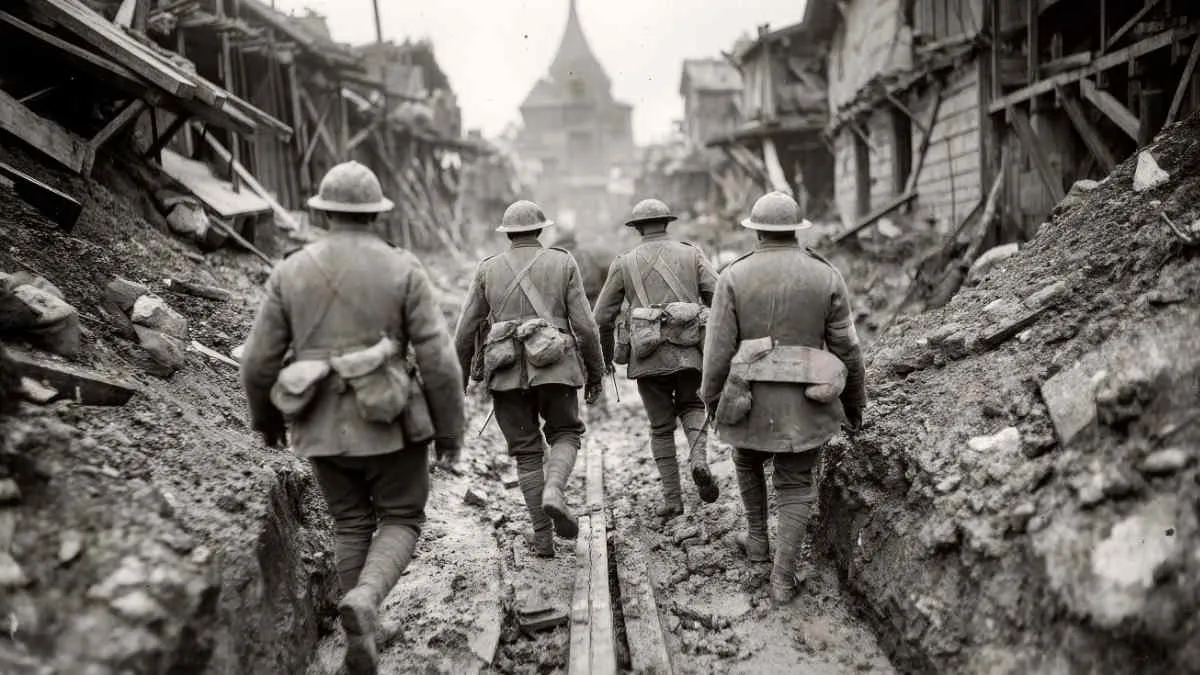
When World War II finished, the United States and the Soviet Union began a long conflict between their two countries. This rivalry continued from the end of World War II (around 1940-1990) for almost half of a Century and affected everything in the world concerning Governmental Politics and Military Alliances as well as International Relations.
The rivalry did not result in a Major Direct Military Conflict between the superpowers. During this time, The United States was the most powerful supporter of Democracy, Capitalist Economic Systems, and Individual Freedom that opposed Soviet-Style Communism.
The United States was therefore forming Alliances and supporting Politically Controlling events in Europe, Asia, etc., to help prevent the Expansion of Communist Governments and, likewise, develop a greater military strategic superiority over the Soviet Union. The activities of the United States during the Cold War created the current Global Structure of Geopolitics.
Check Out: Why Are U.S. Elections Held on Tuesdays?
What was the Role of the U.S. in the Cold War?
The following are three points that represent general trends throughout American foreign policy through the use of the containment, military alliances, and economic support for allies.
1. Containment of the Communist Influence
During the Cold War, The United States' main objective was to contain Communism as it spread beyond the borders of the Soviet Union and, thus, prevent the Soviet Union from extending its influence anywhere in Asia, Europe, Latin America, the Middle East, or any other place in the world.
The United States used a combination of political, economic and military strategies to contain and limit Soviet expansion into these regions.
2. Creation of Military Alliances
In response to the power of the U.S.S.R., the United States took a leading role in the creation of Military Alliances to provide it a way to counter the Soviet Union.
The NATO (North Atlantic Treaty Organization), created in 1949, was the most significant military alliance created by the United States. NATO provided a mechanism for the U.S. and other Western Nations to work together to defend Western Nations from any Soviet expansion into Europe.
3. Economic Aid to its Allies
In addition to forming Military Alliances, the United States provided Economic Aid to Countries that were vulnerable to Soviet influence so that they could resist Communism and remain free and democratic.
In addition to creating Economic Cooperation with its western Allies through the Marshall Plan and billions of dollars in Economic Aid to help rebuild Western Europe after World War II, the United States created similar programs in the Asia-Pacific Region and around the World.
4. Involvement in Proxy Wars
On several occasions, the US and the USSR supported opposing sides in proxy wars; they were both involved in the Korean War (when the US supported South Korea) and in Vietnam (when the US supported South Vietnam) because the US viewed both wars as important places to combat communism.
In the years after World War II, the US also conducted covert operations in Iran, Afghanistan, Latin America
5. Nuclear Arms and Space Competition
The prolonged and large-scale competition between the US and the Soviet Union during the Cold War was marked by an arms race and the development of nuclear weapons.
Both nations were committed to the doctrine of Mutually Assured Destruction (MAD). However, during this same period, the US and the USSR also competed for technological and ideological superiority by competing in the Space Race.


Comments
All Comments (0)
Join the conversation