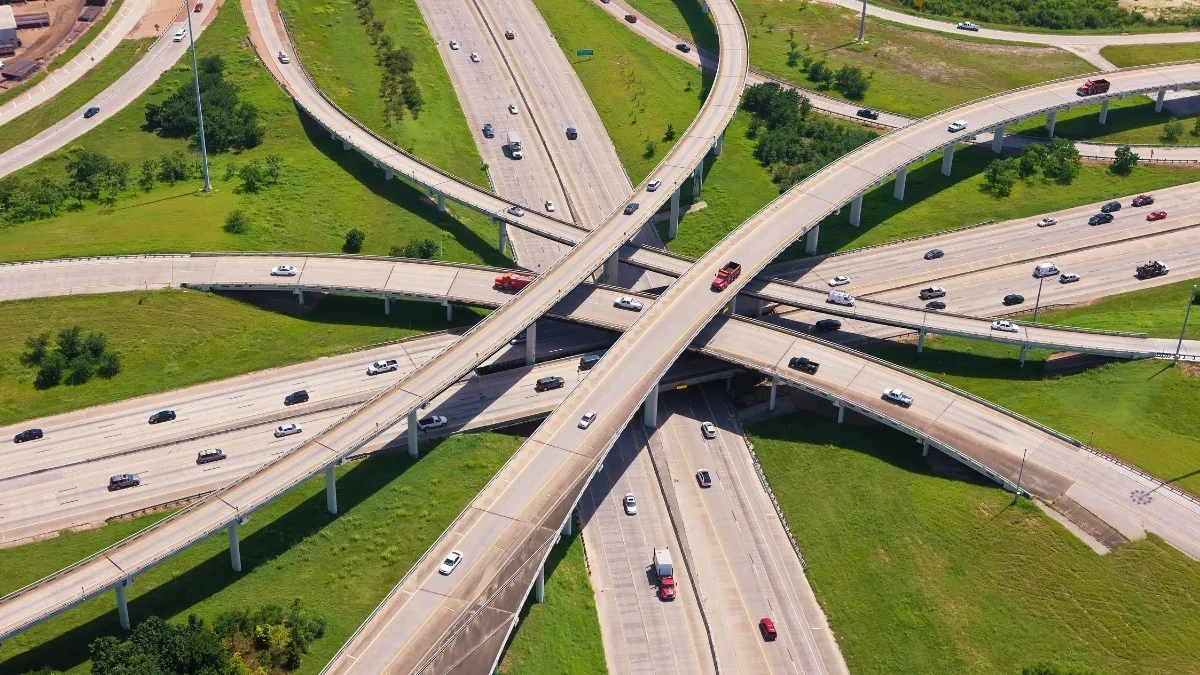
Route 1 in the United States of America, also known as U.S. Route 1, is the longest north-south highway route that runs along the Atlantic Coast, measuring 2,400 miles from Fort Kent in Maine to Key West in Florida.
This road route follows the original colonial routes taken by early colonists and revolutionaries, thus making it a direct connection to the country’s history.
As per the Federal Highway Administration, this route passes through major cities such as Boston, New York, Philadelphia, and Washington D.C., and receives a large amount of traffic, with some parts experiencing more than 100,000 vehicles per day.
Learn about Route 1, its rich history, key landmarks, interactive map details, and enduring fame as a vital tourist and historic route for travelers today.
What is Route 1 in America?
What is Route 1 in America? U.S. Route 1 is a significant road that travels parallel to the Atlantic coast in America. It was numbered in 1926 as part of the U.S. numbered highway system.
The route connects the areas of the 13 original colonies, which were originally made up of dirt trails that have developed into a paved road that is a lifeline for trade and travel.
This particular road is special because it follows the coastline with varied scenery, ranging from the forests of Maine to the beaches of Florida.
It is used by commuters, vacationers, and truckers, who help stimulate the economy of the East Coast.
Why is Route 1 Famous?
Route 1 is famous for its historical significance in American culture, passing by sites of the Revolutionary War and the Civil War, as well as the first capitals of America, such as New York and Philadelphia.
George Washington frequently traveled on this route in times of peace and war, making it legendary.
Tourists come to this place because of its combination of beaches, diners, and attractions such as the Chesapeake Bay Bridge-Tunnel.
Pop culture references it in songs and movies as an icon of adventure on the East Coast.
Key highlights include:
-
Iconic spots like Key West's southern terminus and Maine's remote start.
-
Heavy use: The New York-Philadelphia stretch has the world's busiest equal-length road traffic.
-
Tourism draw: Principal route to Florida winters and New England summers.
Is U.S. Route 1 the Oldest Highway?
U.S. Route 1 is not the oldest paved road in existence, but it is one of the oldest roads in America, tracing back to the 300-year-old colonial foot trails established by settlers.
FHWA recognizes it as a "highway of history" that was fully improved early on because of state development.
Five states it passed through, Massachusetts, New York, Pennsylvania, Maryland, and Virginia, were the first to establish highway departments, facilitating improvements.
In the 1920s, 84% of the road was paved, 15% graded, and less than 1% unimproved. Today, it is all bridged over streams, which is important for military and commercial purposes.
Milestones:
-
Pre-1926: Grew from trails linking settlement hubs like Hudson Valley and Chesapeake Bay.
-
1925 designation: First major north-south coastal route.
-
Modern status: Mostly complete interstate-quality pavement.
U.S. Route 1 Map
The map of U.S. Route 1 traces a serpentine route paralleling I-95, but closer to the ocean for sightseeing. Online mapping tools such as Google Maps or FHWA overlays call attention to its 2,370-mile main range, with branches extending its mileage.
Begin at Fort Kent, Maine (mile 0), passing through Portland, Boston, Providence, New Haven, New York City, Trenton, Baltimore, Washington D.C., Richmond, Raleigh, Florence, Jacksonville, and finally Key West, Florida.
| Section | Key Cities Passed | Notable Features | Distance (miles) |
| North (ME-NH-MA) | Portland, Boston | Forests, beaches, lobster shacks | ~500 |
| Mid (NY-PA-MD-DC) | NYC, Philly, Baltimore | Battlefields, bridges, heavy traffic | ~400 |
| South (VA-NC-FL) | Richmond, Jacksonville, Miami | Swamps, keys, resorts | ~1,400 |
This table clarifies regional vibes for trip planners.
US Route 1 is the essence of America's coastal experience, spanning colonial paths to a 2,400-mile route of history and adventure. Its legend lives on in scenic routes, economic connectivity, and historical foundations, encouraging travelers to follow the spine of the nation. Whether in search of beaches or battles, it provides classic road trip fun in a straightforward and accessible manner.




Comments
All Comments (0)
Join the conversation