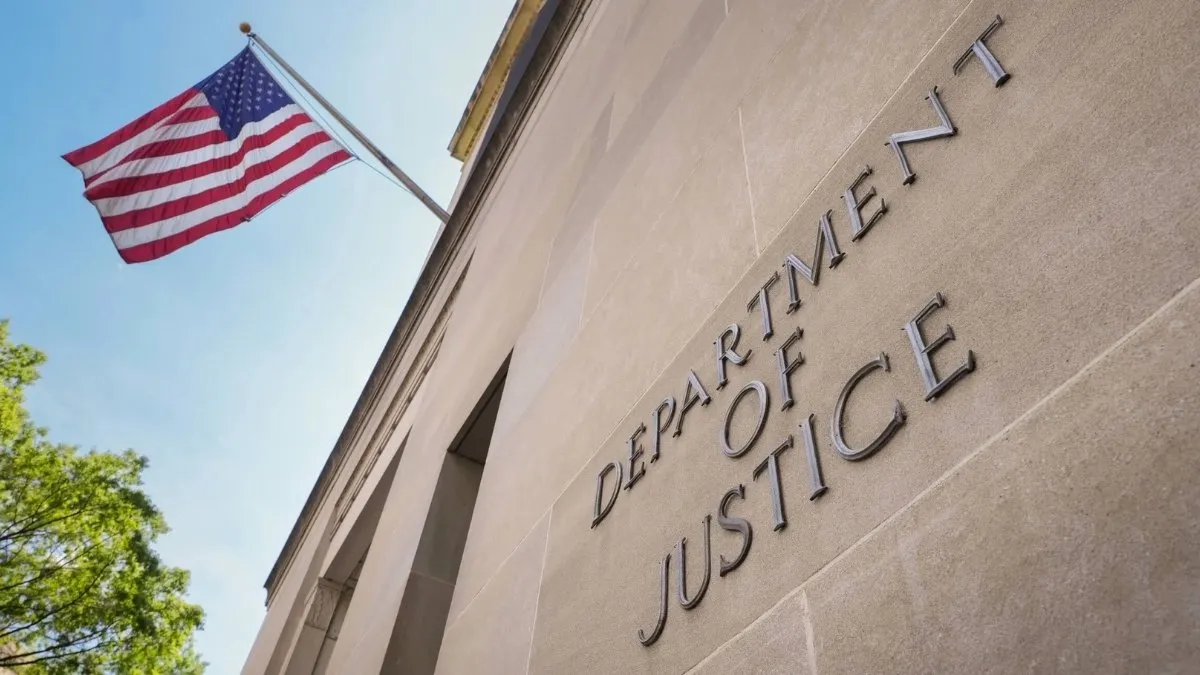
If you have ever watched a courtroom drama or a news report on federal investigations, you have likely heard of the US Department of Justice (DOJ). But beyond the badge-heavy imagery, what does this massive government department actually do?
In simple terms, the DOJ is the "law firm" for the American people. It is the executive department responsible for enforcing federal laws and ensuring that justice is administered fairly across the United States.
Who Leads the Department of Justice?
At the very top of the hierarchy sits the Attorney General. Unlike a typical minister in a UK cabinet, the Attorney General has a dual role: they serve as the chief law enforcement officer of the federal government and as the primary legal adviser to the President.
The DOJ operates on a massive scale, with over 100,000 employees. While its headquarters are the Robert F. Kennedy Building, in Washington, D.C. Its reach extends through 94 US Attorneys' offices located across every state and territory.
What are the Main Responsibilities of the DOJ?
The DOJ isn't just one single office; it is an "umbrella" that covers several of the world’s most famous law enforcement agencies. Their work generally falls into three main buckets:
-
Federal Prosecution: Taking people or corporations to court when they break federal laws, such as tax evasion, civil rights violations, or organised crime.
-
National Security: Protecting the country against foreign threats, espionage, and domestic terrorism.
-
Public Safety: Managing the federal prison system and overseeing agencies that handle firearms, explosives, and illegal narcotics.
Which Key Agencies Fall Under the DOJ?
To understand how the DOJ functions, it helps to see the "tools" in its kit. Each agency has a specific focus.
| Agency | Primary Responsibility |
| FBI | Investigating domestic crimes, terrorism, and cyber warfare. |
| DEA | Combatting the trafficking and distribution of illegal drugs. |
| ATF | Regulating firearms, explosives, and the illegal tobacco/alcohol trade. |
| BOP | Managing the Federal Bureau of Prisons and inmate rehabilitation. |
Source: U.S. Department of Justice
How Does the DOJ Impact Civil Rights?
One of the most vital, yet often overlooked parts of the department is the “Civil Rights Division”. This wing is tasked with upholding the constitutional rights of all Americans.
They investigate police misconduct, ensure fair voting access, and fight against discrimination in housing and employment.
In 2026, this remains a cornerstone of the department's mission as it adapts to modern challenges like digital privacy and algorithmic bias.
Why is Judicial independence important?
While the DOJ is part of the Executive Branch, there is a long-standing tradition of independence. This ensures that criminal investigations are based on facts and law, rather than political pressure. This "firewall" is what allows the DOJ to remain a credible institution in the eyes of the public.



Comments
All Comments (0)
Join the conversation