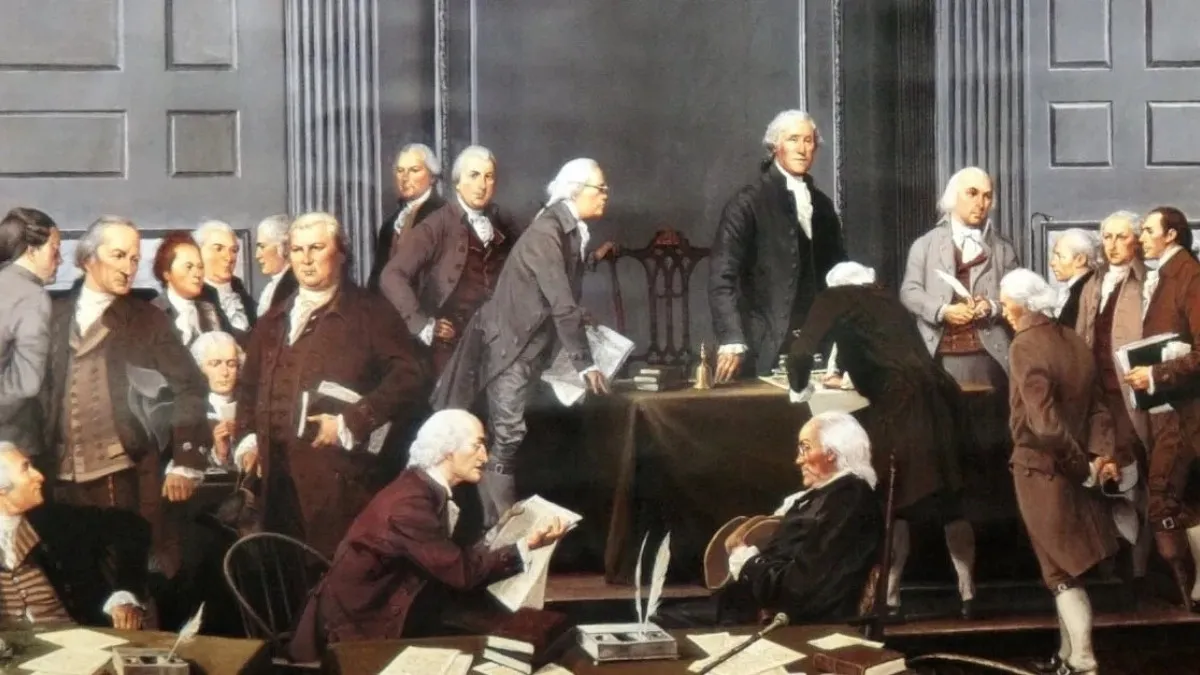
Key Points
- The Articles of Confederation were the first U.S. Constitution & created a loose union of states.
- They limited federal power and left most authority with individual states.
- Their weaknesses led to economic issues & replacement by the U.S. Constitution.
Have you ever heard of the Articles of Confederation? If not, then it refered the first constitution of the United States. It was officially adopted by the Continental Congress on 15 November 1777.
They came into effect on 1 March 1781 and remained in force until 1789, when they were replaced by the U.S. Constitution.
According to the U.S. National Archives, the Articles created a “firm league of friendship” among the thirteen newly independent states rather than a strong central government.
In essence, the Articles were an early attempt to balance unity with independence during a fragile post-war period. In this article, we have covered why they failed and how they were replaced.
Why Were the Articles of Confederation Created?
After declaring independence from Britain, the former colonies needed a system to cooperate during the American Revolutionary War. However, fear of another powerful central authority shaped the document’s design.
The Articles clearly state that “each state retains its sovereignty, freedom, and independence” (Article II, Articles of Confederation). This reflects the founders’ priority: protecting state power while coordinating defence and diplomacy.
Who Wrote the Articles of Confederation?
The Articles were drafted by a committee of the Second Continental Congress, with John Dickinson of Delaware acting as the principal author.
According to the National Archives confirms that Dickinson’s draft first used the name “The United States of America”, a title that has remained ever since.
Check Out: What is Popular Sovereignty?
How Did the Government Work Under the Articles?
The system created a unicameral legislature, known as the Confederation Congress. Each state had one vote, regardless of population.
-
There was no president, no national judiciary, and no executive branch.
-
Congress could declare war, negotiate treaties, manage relations with Native American tribes, and resolve disputes between states.
-
However, it could not collect taxes, regulate interstate commerce, or enforce laws, and any amendment required unanimous approval from all states.
What Were the Weaknesses of the Articles of Confederation?
The Articles’ greatest weakness was the lack of central authority. As Encyclopaedia Britannica explains, the national government had “no power to compel the states to comply with its decisions”.
This led to unpaid war debts, economic instability, trade disputes between states, and political unrest, most notably Shays’ Rebellion in 1786.
Why Did the Articles of Confederation Fail?
The Articles failed because they could not manage the nation’s finances, debt, or trade effectively. The National Archives notes that Congress was often left powerless, with an empty treasury and no way to regulate commerce or support national defence.
Check Out: What is the SAVE Act?
How Were the Articles Replaced?
In 1787, delegates met at the Constitutional Convention to revise the Articles. Instead, they drafted a new framework. The U.S. Constitution, ratified in 1789, replaced the Articles and established a stronger federal government that continues today.




-1770373140615.jpg)
Comments
All Comments (0)
Join the conversation