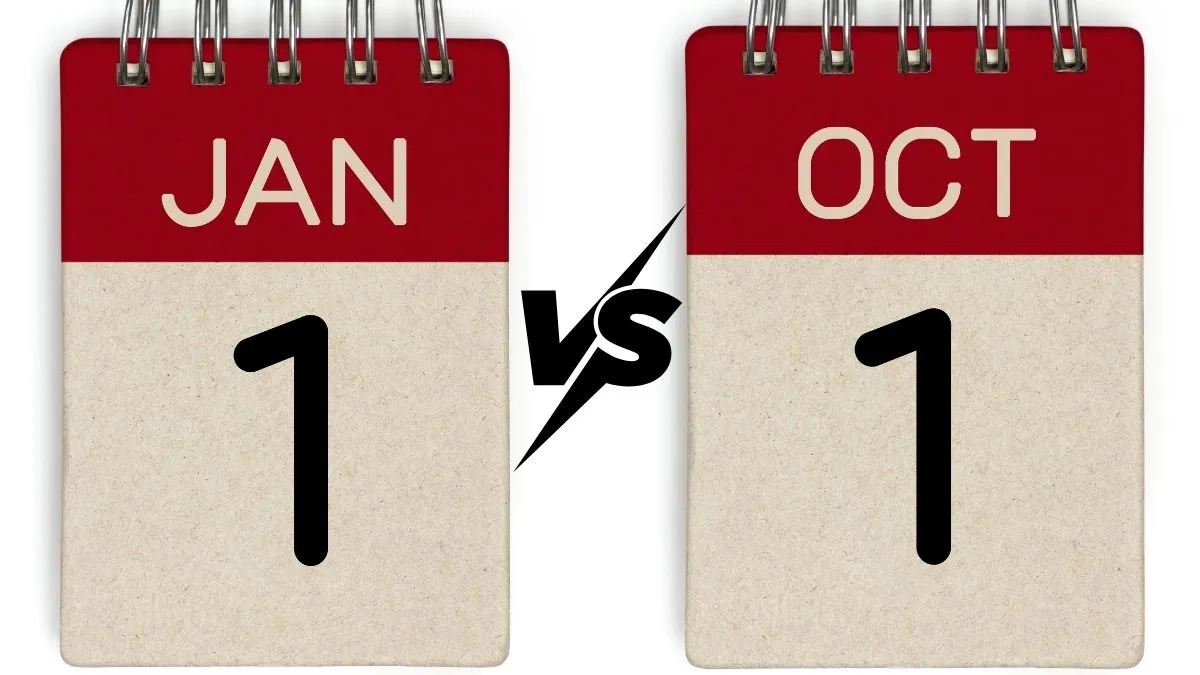
Calendar vs Fiscal Year: Calendar Year and Fiscal Year are two commonly used time periods that often confuse people, especially when it comes to business, taxes, and financial planning. Since both are divided into 12 months and cover one year, many assume they mean the same thing. However, that is not true.
Calendar year follows the standard January-to-December format that we use in our daily lives, and fiscal year is a customized 12-month period mainly used by businesses, governments, and organizations for accounting and budgeting purposes. The start and end dates of a fiscal year can vary depending on the country or organization.
In this article, we will clearly explain the difference between Calendar Year and Fiscal Year, so you don’t get confused the next time you hear these terms anywhere.
READ | Types of Calendars In the World
Difference Between Calendar Year and Fiscal Year
Although both the calendar year and the fiscal year consist of 12 months, they differ in purpose, usage, and time period.
1. Meaning
A calendar year is the standard year used worldwide. It starts on 1 January and ends on 31 December. This is the year we follow for dates, festivals, birthdays, and most personal planning.
A fiscal year, on the other hand, is a financial year used mainly for accounting, budgeting, and tax purposes. It does not have to start in January and can begin in any month, depending on government rules or organizational needs.
2. Time Period
The calendar year always runs from January to December.
The fiscal year varies from country to country and organization to organization. For example, in the United States, the federal fiscal year runs from 1 October to 30 September.
3. Purpose
The calendar year is used for general and everyday purposes, such as tracking dates, planning events, and recording annual activities.
The fiscal year is used mainly for financial reporting, including preparing budgets, filing taxes, calculating profits, and auditing accounts.
4. Usage
Calendar Year is commonly used by individuals, schools, and for international date references.
The fiscal year is mostly used by businesses, governments, and financial institutions. Companies choose a fiscal year that best suits their business operations and revenue cycle.
5. Tax and Accounting
Personal income and many official records often follow the calendar year.
Tax filings, government budgets, company profits, and annual financial statements usually follow the fiscal year.
Trivia Time
The concept of a fiscal year evolved, starting with the calendar year, moving to July 1 in 1842, as signed by President John Tyler, and then finally shifted to October 1-September 30 in 1976.
So, overall, the main difference between a calendar year and a fiscal year lies in their starting and ending dates and purpose.
We hope this article helped you understand the difference between a calendar year and a Fiscal Year.
Recommended Reading:






Comments
All Comments (0)
Join the conversation