Blue vs Red States: Blue states and red states are terms commonly used to describe political preferences in the United States. These labels gained popularity during election coverage, where states voting for the Democratic Party were depicted in blue, while those supporting the Republican Party were marked in red. Over time, the terms have become a simple way to explain political trends across the country.
Although blue and red states are often discussed as opposites, the difference is not limited to election results alone. These states tend to differ in their views on government policies, social issues, economic priorities, and the role of federal authority. While blue states generally support progressive policies and government-led programmes, red states usually favour limited government involvement and traditional values.
In this article, we will examine the key differences between blue states and red states so that you can understand what these words truly mean and how they shape American politics.
READ | What are Swing States? Check Meaning, Importance and List
Differences Between Blue States and Red States
Blue states and red states represent two broad political ideologies in the United States. Although both operate under the same constitution, their policy preferences and public opinions often differ. Below are some of the major differences between blue states and red states.
1. Political Party Preference
The most basic difference lies in political alignment. Blue states typically vote for Democratic candidates in presidential and congressional elections. States such as California, New York, and Washington are considered blue states.
Red states, on the other hand, usually support Republican candidates. Texas, Alabama, and Oklahoma are common examples of red states.
However, it is important to note that no state is entirely blue or red, as voters within states can have diverse political views.
2. Government Role
Blue states generally support a stronger role for government in public life. This includes government involvement in healthcare, education, housing, and social welfare programs. Supporters believe that government action helps reduce inequality and provides essential services to citizens.
Red states prefer limited government involvement. They emphasize individual responsibility and believe that private businesses and communities should handle most social and economic matters, with minimal government interference.
3. Economic Policies
In blue states, higher taxes on wealthier individuals and corporations are often supported to fund public programs such as education, healthcare, and infrastructure.
Red states usually favour lower taxes and fewer regulations on businesses. The belief is that reduced taxes encourage economic growth, job creation, and investment.
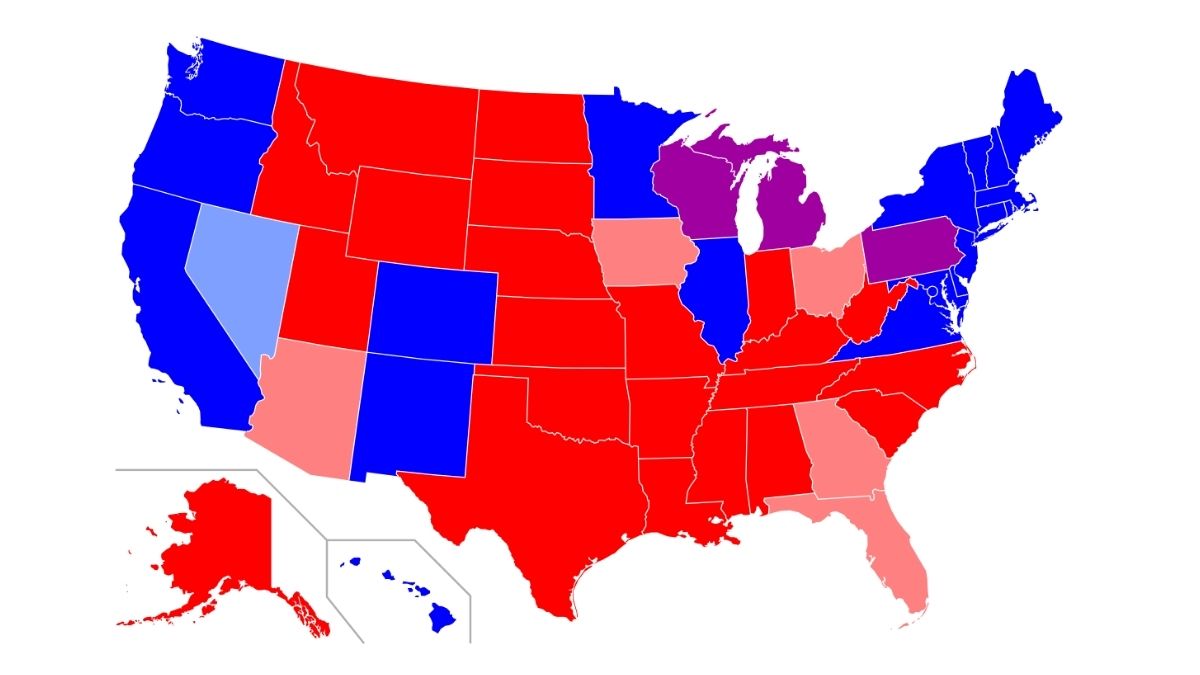
Blue states Red states Map
4. Social Issues
Social values mark another clear difference. Blue states tend to support progressive views on issues such as abortion rights, same-sex marriage, and immigration reform.
Red states often support conservative positions, emphasizing traditional family values, stricter immigration laws, and religious freedom.
5. Environment and Energy
Environmental policies also differ. Blue states generally support climate change regulations, renewable energy sources, and environmental protection laws.
Red states often prioritise energy independence and traditional industries such as oil, gas, and coal. They may oppose strict environmental regulations that could impact economic activity.
Are Blue and Red States Fixed?
Despite these differences, political identities are not permanent. States can change over time due to population shifts, economic fluctuations, and shifting public opinion. Urban areas in red states may vote Democratic, while rural areas in blue states often lean Republican.
Final Thoughts
Blue states and red states represent two distinct political approaches within the United States. Blue states generally support government-led solutions and progressive social policies, while red states emphasise limited government and traditional values.
Understanding these differences helps explain political debates and election outcomes.
Recommended Reading:

-1766122756042.jpg "Kennedy Center: What was It Originally Called?")



Comments
All Comments (0)
Join the conversation