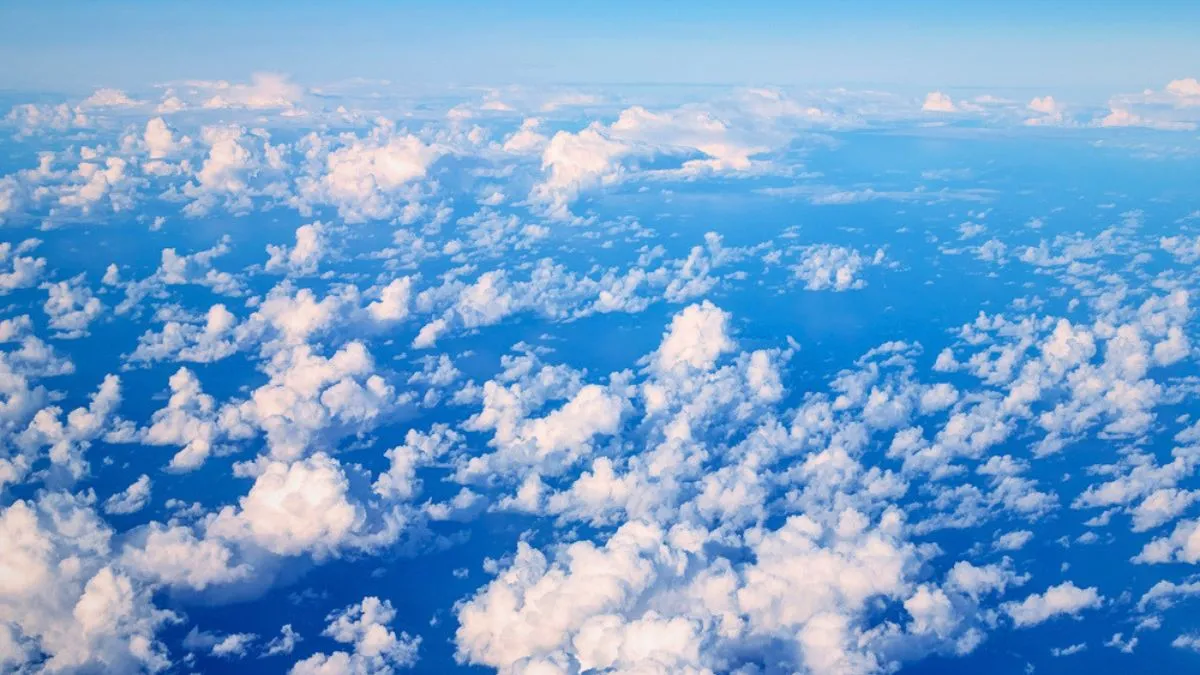
The planet Earth is covered by a huge blanket of gases. The name given to this gaseous envelope is atmosphere. To get an idea of what the atmosphere is, think of it as a blanket. The gases are held in place by gravity. It is essential for life on Earth. It gives us air to breathe and shields us from space. In this article, we'll look at the composition, gases, and important functions of the atmosphere.
The atmosphere is a layer of gases enveloping Earth. It is made up of mostly nitrogen (78%) and oxygen (21%). The atmosphere is held in place by gravity. It is divided into five layers according to temperature changes. These layers are vital for life as they absorb harmful ultraviolet light and help keep the planet warm.
What is the Composition of the Earth's Atmosphere?
Atmosphere is not made up of just one gas. It is a carefully balanced mixture of various elements. The most abundant gas in the atmosphere is nitrogen (78 percent). Oxygen is the second most abundant at about 21 percent. The remaining one percent is made up of argon, carbon dioxide and a few other gases.
There is also water vapor and dust in the air. Water vapor content depends on the location and weather. Air contains only 0.04 percent carbon dioxide. But it is important in retaining heat. This allows Earth to be warm enough for humans to live.
What are the Five Layers of the Atmosphere?
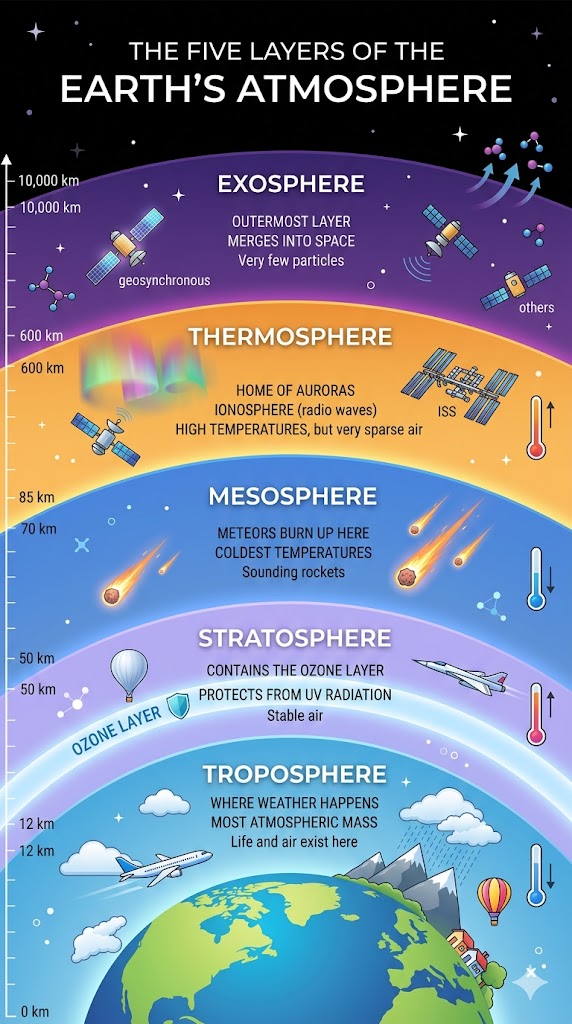
The atmosphere is made up of five layers. These layers have different temperatures and densities and are discussed in detail below:
Source: Google Gemini
Troposphere
The troposphere is the lowest layer. It reaches from the surface to 12 kilometers above the Earth. It's where we live and where almost all weather-related changes happen. Almost all water vapor and clouds are in the troposphere.
Stratosphere
The stratosphere is the layer above the troposphere. It extends to 50 kilometers above Earth. This is where the ozone layer is found. The ozone layer blocks most of the Sun's harmful ultraviolet light. Commercial aircraft fly at this height to avoid bad weather.
Mesosphere
The mesosphere is situated between 50 and 85 kilometers. It's the coldest layer of the atmosphere. The temperature ranges from -90 oC degrees Celsius. This part of the atmosphere shields Earth from space. Meteors usually burn up in the mesosphere.
Thermosphere
The thermosphere extends from 85 kilometers to 600 kilometers. The air is very thin here. It can reach up to 1,500 degrees Celsius as it absorbs the Sun's high-energy X-rays. The International Space Station is located in this layer.
Exosphere
The exosphere is the outer-most layer of the atmosphere. It starts at the top of the thermosphere and merges with space. It contains gases such as hydrogen and helium. The gravitational pull is so weak in the exosphere that these atoms can escape into space.
Why is the Atmosphere Important for Life?
The atmosphere is a multi-purpose filter and regulator. It does many things. First, it supplies the oxygen needed by most life forms. Second, the ozone layer stops harmful ultraviolet radiation. These rays can cause skin cancer and harm plants. Third, the atmosphere keeps the Earth warm. It stops the Earth getting too warm during the day. It prevents the Earth from cooling down at night. This maintains a stable climate. Lastly, the atmosphere is part of the water cycle. It carries the moisture from the oceans which ultimately fall to the land as rain.
What is the Kármán line?
The Kármán line is a fictional line 100 kilometers above the Earth. It's considered the boundary of space by most international bodies. Air is dense enough below this line to support normal aircraft. Above this line, spacecraft must follow the laws of orbital mechanics.
Where is the ozone layer located?
The ozone layer is found in the stratosphere. It is found between 15 and 35 kilometers above the Earth. It is made up of a dense layer of ozone molecules. It is essential for life as it absorbs 97 to 99 percent of the Sun's medium-frequency ultraviolet light.
Why does the temperature vary in different layers of atmosphere?
The temperature changes are due to the way each layer absorbs the Sun's energy. The troposphere is warmed from the bottom up by the Earth's surface. The stratosphere is hotter due to UV radiation being absorbed by the ozone layer. The thermosphere is heated from the top by high-energy radiation from the Sun.
Which layer protects us from meteors?
Meteors are blocked by the mesosphere. When meteors enter this layer, they run into gas molecules. This produces heat and friction. The majority of meteors are vaporized in this way, creating "shooting stars". Only the largest survive to hit the Earth's surface.
Earth's atmosphere is a layered system of five layers that supports life. It is primarily made up of nitrogen and oxygen and is held by gravity. This protective gas envelope allows us to breathe, shields us from radiation and keeps the planet at a comfortable temperature. Knowing about the layers of the atmosphere gives us a glimpse of what is needed to make Earth habitable.
Check out some more interesting articles from the general knowledge section to boost your knowledge of national and international topics. Stay connected with Jagran Josh for more topics like this.
ALSO READ